If you own a home in Pittsburgh's South Hills, you've probably dealt with standing water in your yard at some point. The combination of clay-heavy soil, steep hillsides, and heavy seasonal rainfall makes drainage problems one of the most common issues homeowners face in communities like Peters Township, Upper St. Clair, Bethel Park, Mt. Lebanon, and beyond.
The good news: most drainage problems have a straightforward solution. The bad news: ignoring them gets expensive fast. Here's how to tell if your property needs a French drain or other drainage work - and what to expect from a proper installation.
Some drainage issues are obvious. Others build gradually until they become serious. Watch for these signs around your Pittsburgh property:
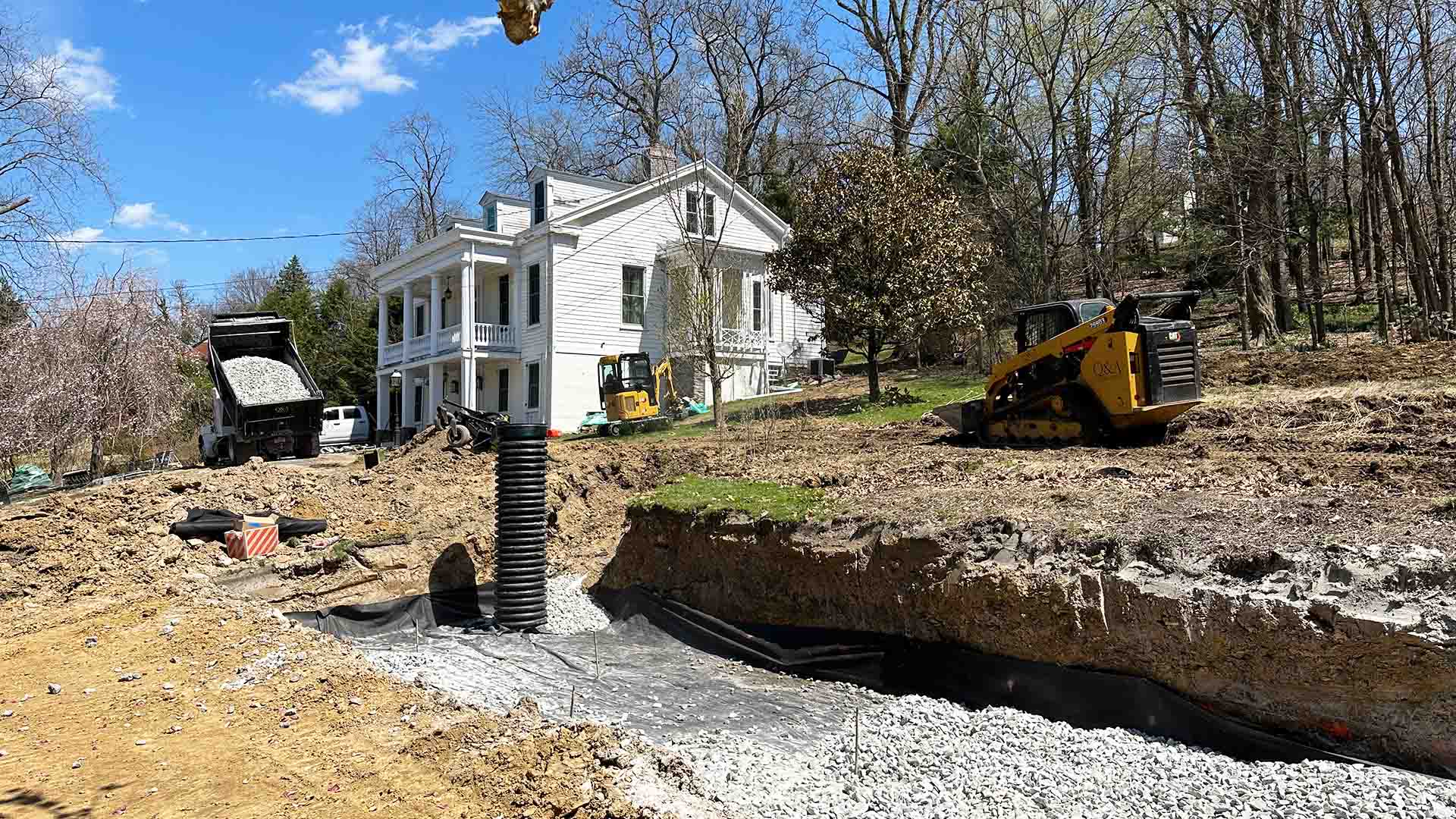
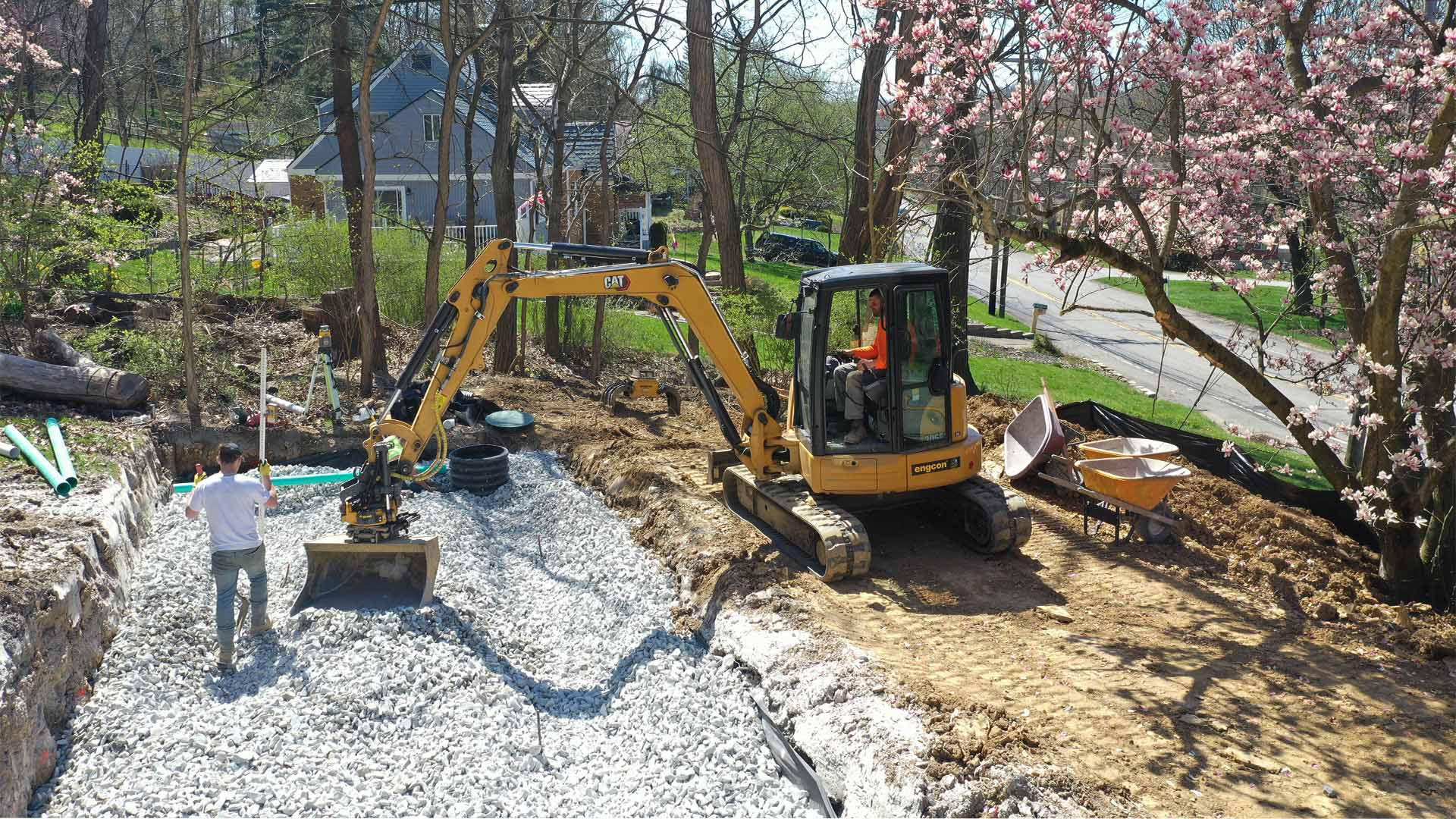
A French drain is a trench filled with gravel surrounding a perforated pipe. It collects groundwater and channels it away from the problem area to a safe discharge point - typically a storm drain, dry well, or downhill outlet.
The concept is simple, but the execution matters enormously. A properly installed French drain includes:
Sandy or loamy soil absorbs water naturally. Pittsburgh's dense clay soil does not. After heavy rain, water sits on top of clay or flows across it instead of soaking in. That's why properties in the South Hills are particularly prone to basement water, yard flooding, and hillside erosion.
A French drain intercepts this trapped water underground and gives it a path to drain away - something the clay soil simply cannot do on its own.
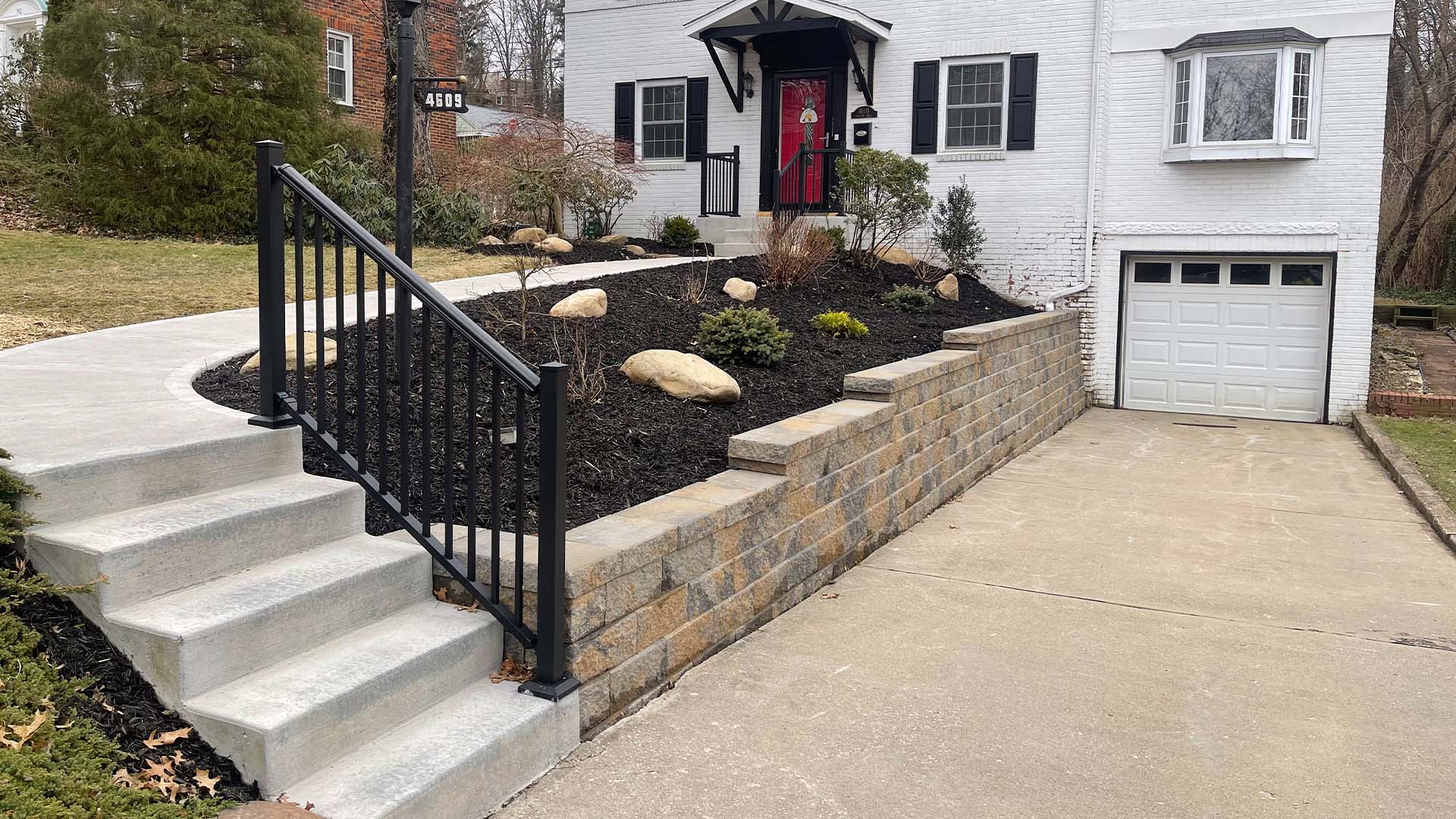
A French drain isn't always the right answer. Here are the most common drainage solutions we install and when each one applies:
Many projects combine two or more of these approaches. For example, regrading the yard and installing a French drain along the foundation is a common pairing for Pittsburgh homes built into hillsides.
NDS is the industry leader in stormwater management products - the pipes, fittings, catch basins, and channel drains used in residential and commercial drainage systems. An NDS certified contractor has completed training on proper drainage system design and installation methods.
This matters because most drainage failures come down to installation mistakes: wrong pipe size, insufficient slope, missing filter fabric, or a drain that empties into a spot that just floods the neighbor's yard. Very few landscaping companies in Pittsburgh's South Hills carry NDS certification - it requires dedicated training and a commitment to doing drainage work the right way.
A typical French drain installation in Pittsburgh follows these steps:
Most residential French drain projects take 1-3 days depending on the length of the run and site conditions.
Late winter and early spring are actually ideal times to plan drainage work. The ground is saturated, which makes it easy to see exactly where water is collecting and flowing. By scheduling your estimate now, you can have the system installed before the heavy spring rains hit Pittsburgh.
Waiting often means the problem gets worse. Water that sits against a foundation season after season causes cumulative damage. Fixing the drainage now is significantly less expensive than repairing a cracked foundation or waterproofing a basement later.
If you're seeing any of the warning signs above, schedule a free estimate with our NDS certified drainage team. We serve Peters Township, Upper St. Clair, Bethel Park, Mt. Lebanon, Jefferson Hills, South Park, and communities throughout Pittsburgh's South Hills.