Mulch Installation & Bed Edging in Pittsburgh
Mulch is a great way to refresh your existing landscape or add beds in areas difficult to maintain. Fresh mulch is effective in preventing weeds, retaining moisture, and maintaining a crisp edge along the beds to keep the grass out.
Mulch Blowing & Delivery Service Pittsburgh
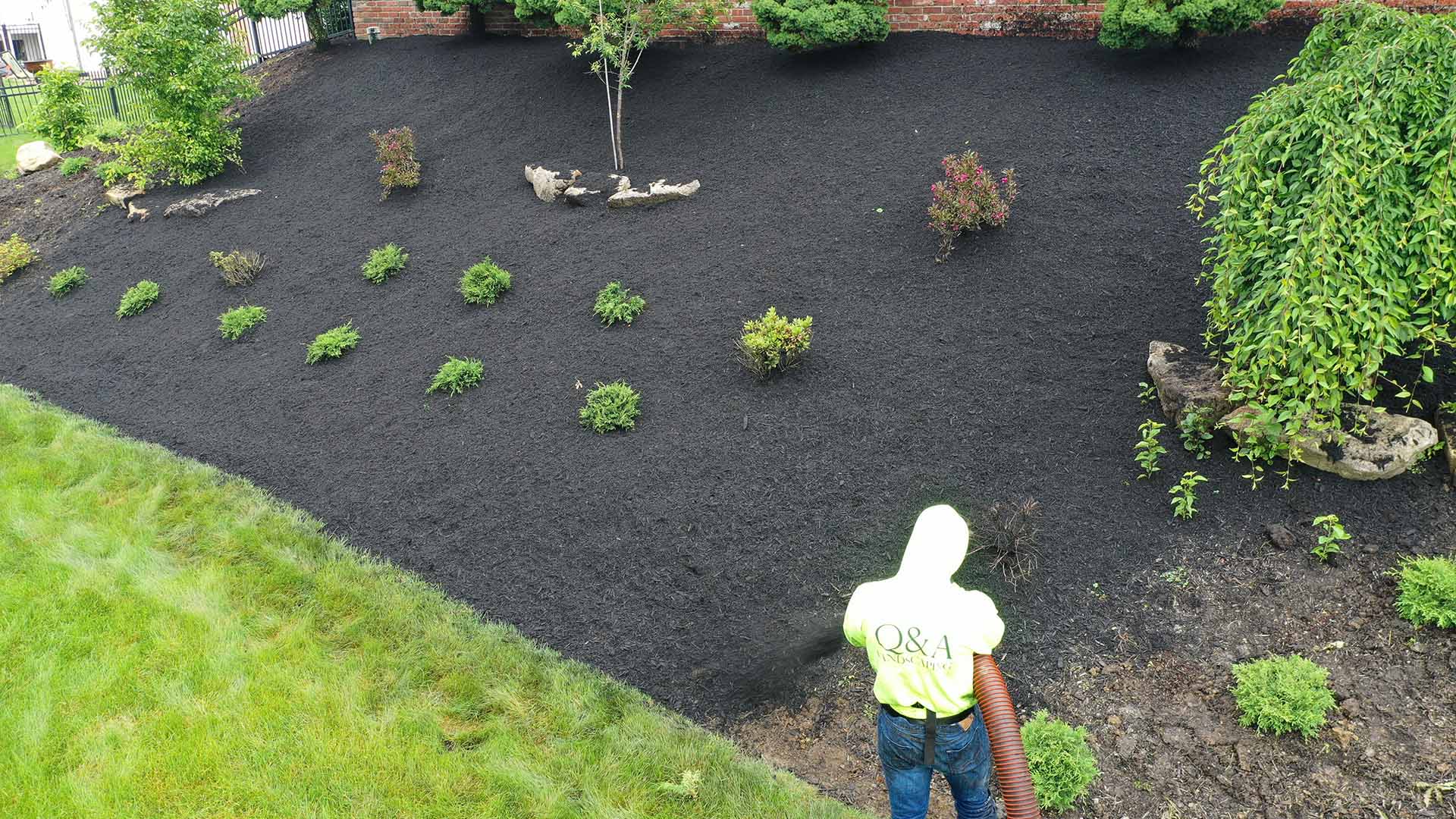
We have a mulch blower that is able to pump the mulch through a hose to the beds around your property. This results in a smooth finish utilizing an efficient amount of mulch. Plus there is less wear and tear on your yard.
Double Shredded Bark Mulch Options
We utilize high-quality bark mulch that is double shredded and free of foreign debris. While most customers prefer brown or black mulch, we also offer natural and playground mulch options.
Mulch FAQs
How much mulch do I need?
+
We recommend 2-3 inches of mulch depth. One cubic yard covers approximately 100 square feet at 3 inches deep. During your estimate, we'll measure your beds and calculate exactly what you need.
When is the best time to mulch?
+
Spring (April-May) is the most popular time to refresh mulch after winter cleanup. Fall mulching helps protect plant roots over winter. We install mulch throughout the growing season.
What type of mulch do you use?
+
We use double-shredded hardwood bark mulch that's free of debris and dyed with non-toxic colorants. Brown and black are most popular, but we also offer natural and playground-safe options.
Do you edge beds before mulching?
+
Yes, bed edging is included with our mulch installation. We cut clean lines between beds and lawn, remove debris, and apply mulch to a consistent depth. For permanent edging, consider our
concrete border installation.
How often should mulch be replaced?
+
Most beds benefit from fresh mulch annually or every other year. Mulch breaks down over time, which is actually good for soil health, but needs replenishing to maintain appearance and weed suppression.
Should I choose mulch or decorative stone for my beds?
+
Mulch breaks down over time and feeds the soil as it decomposes, which is good for plant health, but it needs to be refreshed periodically. Stone doesn't decompose and holds up longer without replacement, but it doesn't add anything back to the soil and can make it harder to move plants around later. Which one makes more sense depends on the bed and how much upkeep you want. We install both and can walk through the tradeoffs during your estimate.
What's the difference between blown mulch and hand-spread mulch?
+
Our mulch blower pumps mulch through a hose directly to the beds, which lets us cover large areas quickly and reach spots that are hard to access, like hillsides or beds behind fencing. It also distributes mulch more evenly than hand-spreading and puts less wear on your lawn since equipment isn't driving across it. We still hand-edge every bed regardless of whether the mulch itself is blown or spread by hand.
How does mulch help prevent weeds?
+
A consistent 2-3 inch layer of mulch blocks sunlight from reaching weed seeds in the soil, which keeps most of them from germinating in the first place. It's not a complete weed barrier, since some weeds will still find their way through or blow in on top, but it significantly cuts down on how much you'll need to pull. Combined with clean bed edging, mulch is one of the most effective low-maintenance ways to keep beds looking sharp.
Is it possible to put down too much mulch?
+
Yes. Piling mulch more than 3-4 inches deep can suffocate plant roots and hold too much moisture against stems and trunks, which invites rot and disease. This is especially a problem when mulch is mounded up against tree trunks in a "volcano" shape. We keep depth in the 2-3 inch range and leave clearance around trunks and stems for that reason.
Can fresh mulch harm my plants?
+
Very fresh wood chips, less than about seven or eight months old, can temporarily pull nitrogen from the soil as they start to break down. This is one of the reasons we use properly aged, double-shredded bark mulch rather than raw chips. If you're ever topping beds with mulch from another source, give it time to age before applying a heavy layer.
Why does timing matter so much for mulching?
+
Mulching too early in spring, while the soil is still cold, can trap that cold in and delay the ground from warming up. Waiting too long into summer lets weeds get established before the mulch layer is down to block them. Mid-spring is the sweet spot in Pittsburgh, though we install mulch throughout the growing season as schedules allow.