A fire feature turns a regular patio into a year-round gathering spot. In Pittsburgh, where spring and fall evenings can drop into the 40s and 50s, having a firepit or fireplace extends your outdoor season by months. Beyond warmth, fire features create a natural focal point that draws people together. They add ambiance that no amount of string lights can match.
Whether you're building a new patio or adding to an existing one, there's a fire feature that fits your space and budget.
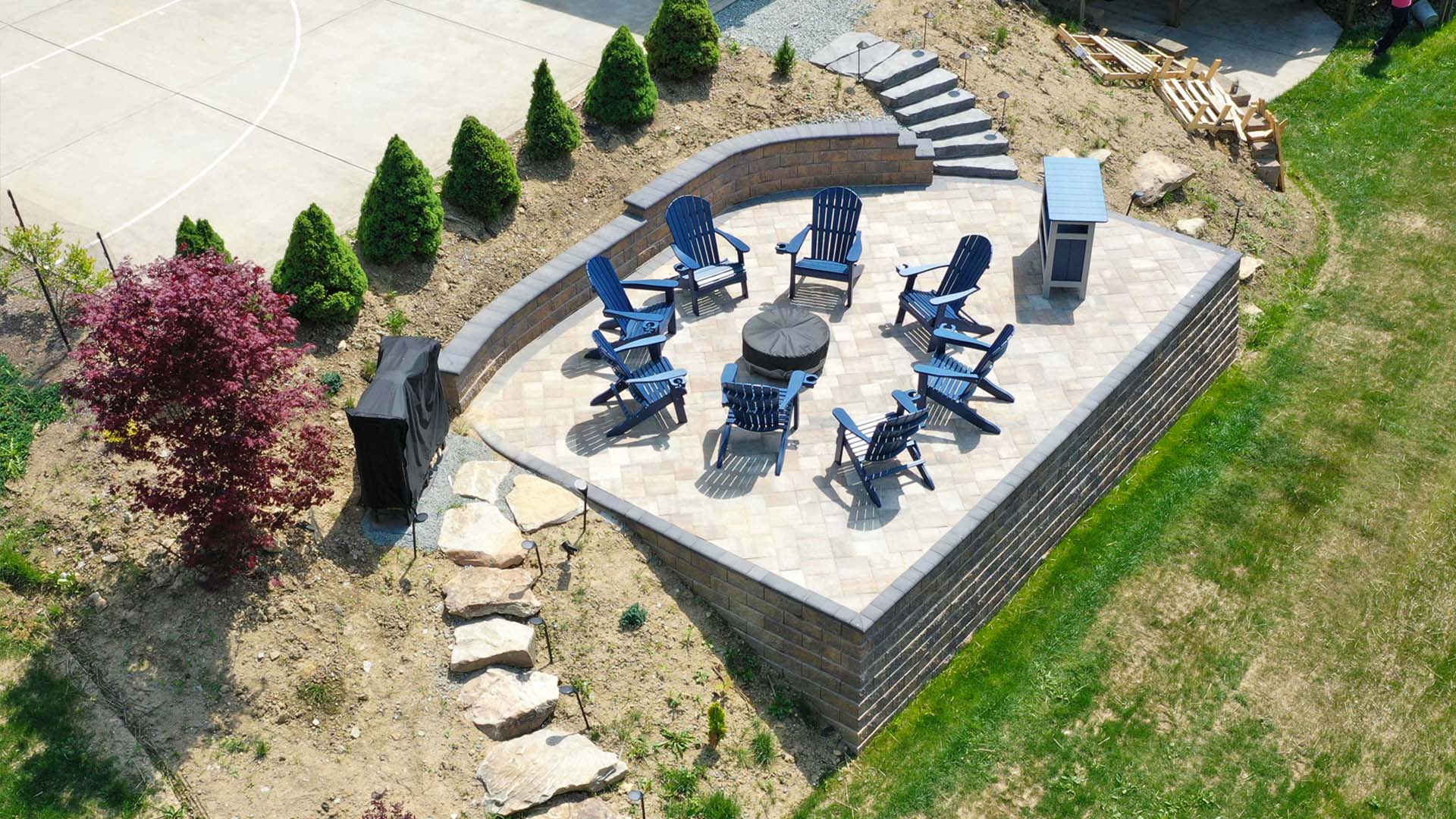
Firepits are the most popular choice for residential patios. They sit low, usually at seating height, and provide 360-degree warmth. A built-in firepit can be constructed from natural stone, concrete block, or paver materials to match your existing hardscape. They range from simple circular designs to more elaborate rectangular or custom shapes.
Firepits work well in open areas where you want a casual, social atmosphere. People naturally pull chairs around them. They're also the most cost-effective fire feature to install.
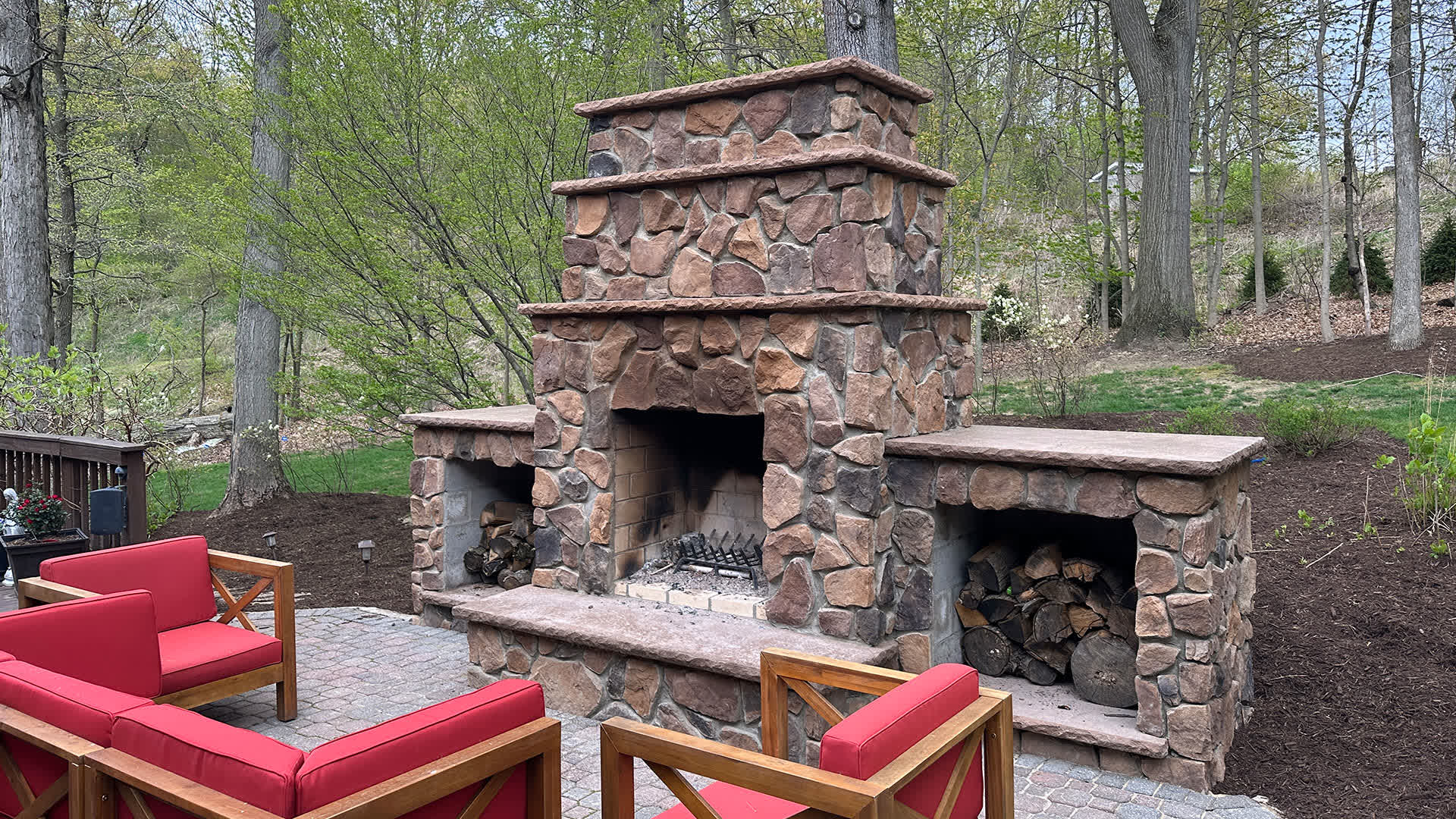
Outdoor fireplaces are a step up in both presence and investment. A full masonry fireplace creates a dramatic vertical element and directs heat toward the seating area rather than dispersing it in all directions. They pair especially well with covered patios or outdoor living rooms where you want a more finished, architectural look.
Because fireplaces require a chimney structure and proper footing, they involve more engineering and material than a firepit. But the result is a genuine showpiece that anchors your entire outdoor space.
Fire tables combine a dining or coffee table with a gas burner in the center. They're clean, modern, and functional. Fire bowls are similar but typically standalone, sitting on a pedestal or integrated into a wall. Both are almost always gas-powered for convenience.
These options work particularly well on smaller patios or as secondary fire features on larger properties.
This is usually the first decision you'll need to make.
Wood-burning firepits and fireplaces deliver that classic campfire experience with crackling wood and real flames. They cost less to install since no gas line is required, and many homeowners prefer the smell and feel of a real wood fire. The tradeoff is maintenance: ash cleanup, smoke direction depending on wind, and keeping firewood stocked.
Gas fire features (natural gas or propane) light with a switch and turn off just as easily. There's no smoke, no ash, and consistent heat output. Gas is the better choice if your fire feature is close to the house or under a covered structure where smoke would be a problem. Running a gas line does add to the installation cost, but the convenience is hard to beat.
Both options can look equally impressive. We install gas and wood-burning features and can help you weigh the pros and cons for your specific setup.
Pittsburgh's freeze-thaw cycles are tough on outdoor materials. The stone or block you choose for your fire feature needs to handle temperature swings from 0 to 90 degrees without cracking.
Regardless of the outer material, every fire feature we build includes a fire-rated interior liner and proper drainage to handle Pittsburgh weather.
A few things to think about before you start:
We build custom fire features throughout the Pittsburgh area, from simple firepits to full outdoor fireplaces with stone veneers and integrated seating. If you're thinking about adding a fire feature to your property, reach out for a free estimate. We'll walk through your options on-site and help you design something that fits your space, your style, and your budget.