If you have a hill you can't mow, we turn it into a landscape bed. That's either evergreen plants with mulch, or large jagged stone on landscape fabric with a few plants and boulders mixed in. Both stop the mowing and hold the soil, and most hills don't need a retaining wall.
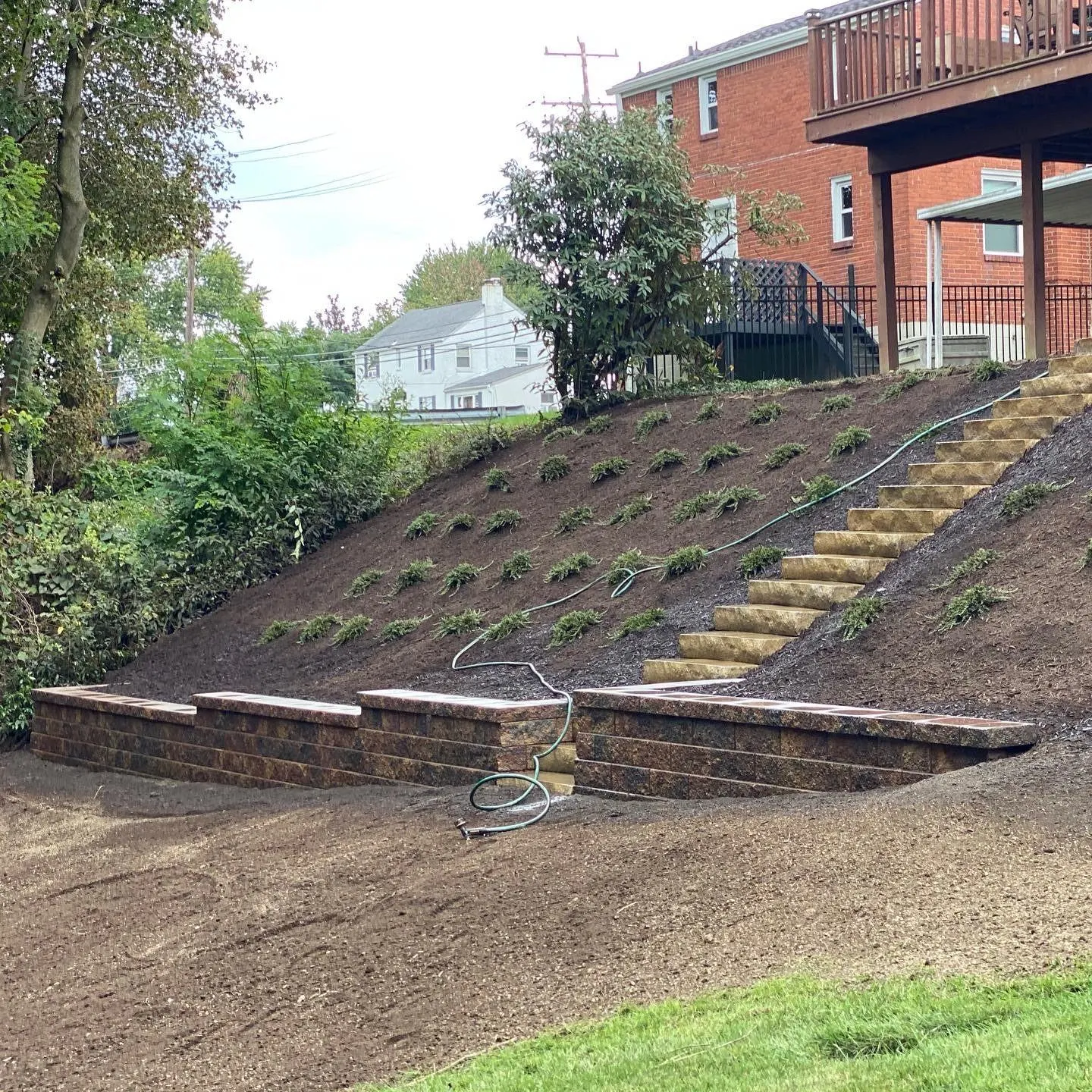
This is the greener, more natural look. We start with a spreading evergreen groundcover, usually blue rug juniper. Then we mix in mid-height evergreens with a fat bottom, like gold star juniper, gold lace juniper, nest spruce and dwarf globe blue spruce. They take up the space low on the hill, and weeds have a hard time growing underneath them.
Then we add some things that rise up out of that sea of evergreen groundcover for color: flowering shrubs, a dwarf Japanese maple, a dogwood or a redbud. Most of our hillsides get a few boulders too, either grouped together or set along the bottom.
More on choosing plants in What to Plant on a Steep Hill in Pittsburgh's South Hills.
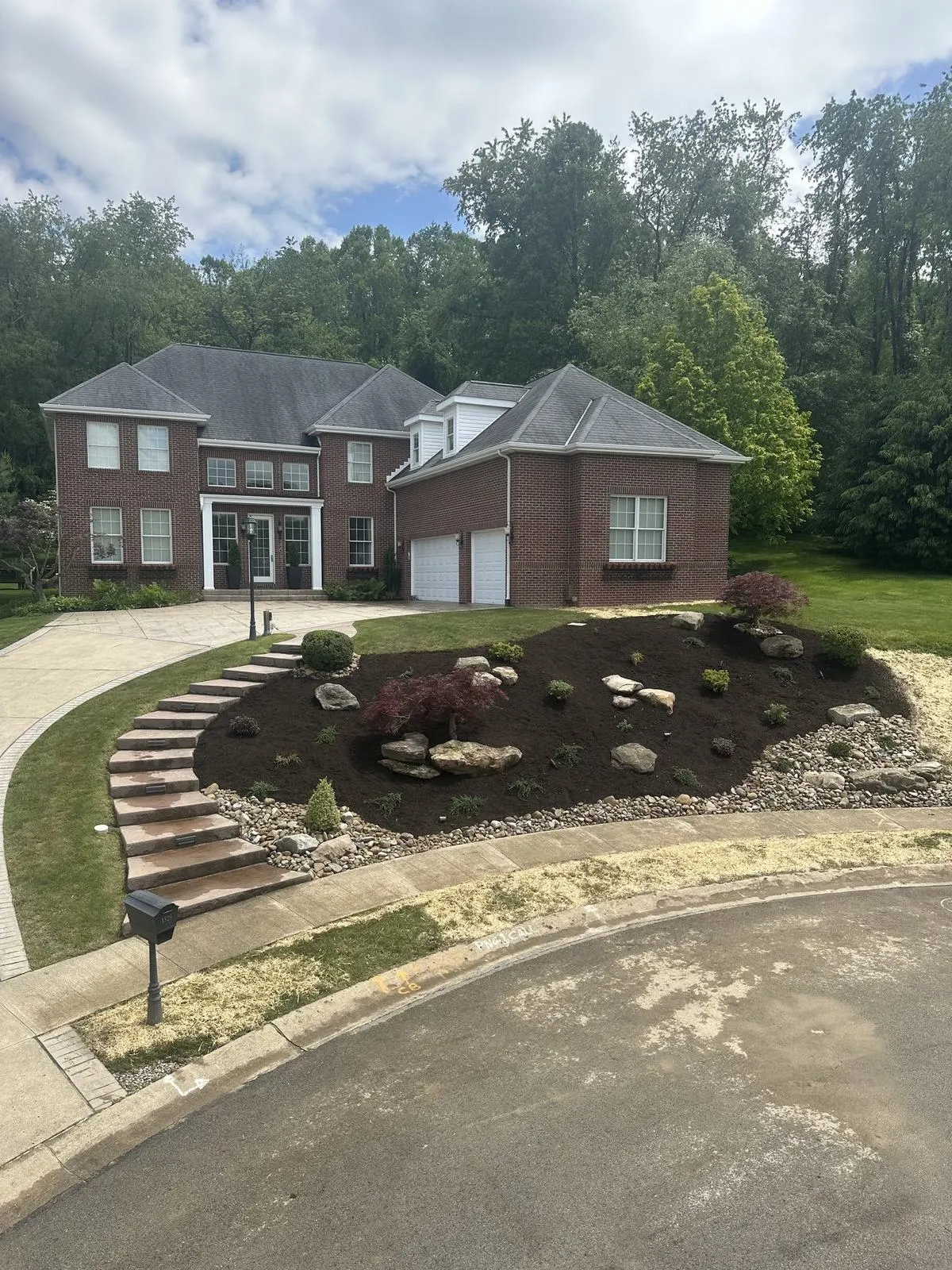
Stone has a cleaner look and less upkeep. On a slope it needs to be big and jagged, like #3 or #4 limestone or a large red stone, so it stays put. Round river rock works if you love the look, but it rolls more.
We always put a thick landscape fabric under the stone. It really makes a difference. A stone hill gets fewer plants than a mulch bed, since nobody wants to cover up the stone they paid for, but we still mix in some color, a small tree here or there and a couple of boulders.
Stone costs more up front than mulch. Over the years it costs less, because you aren't remulching every year.
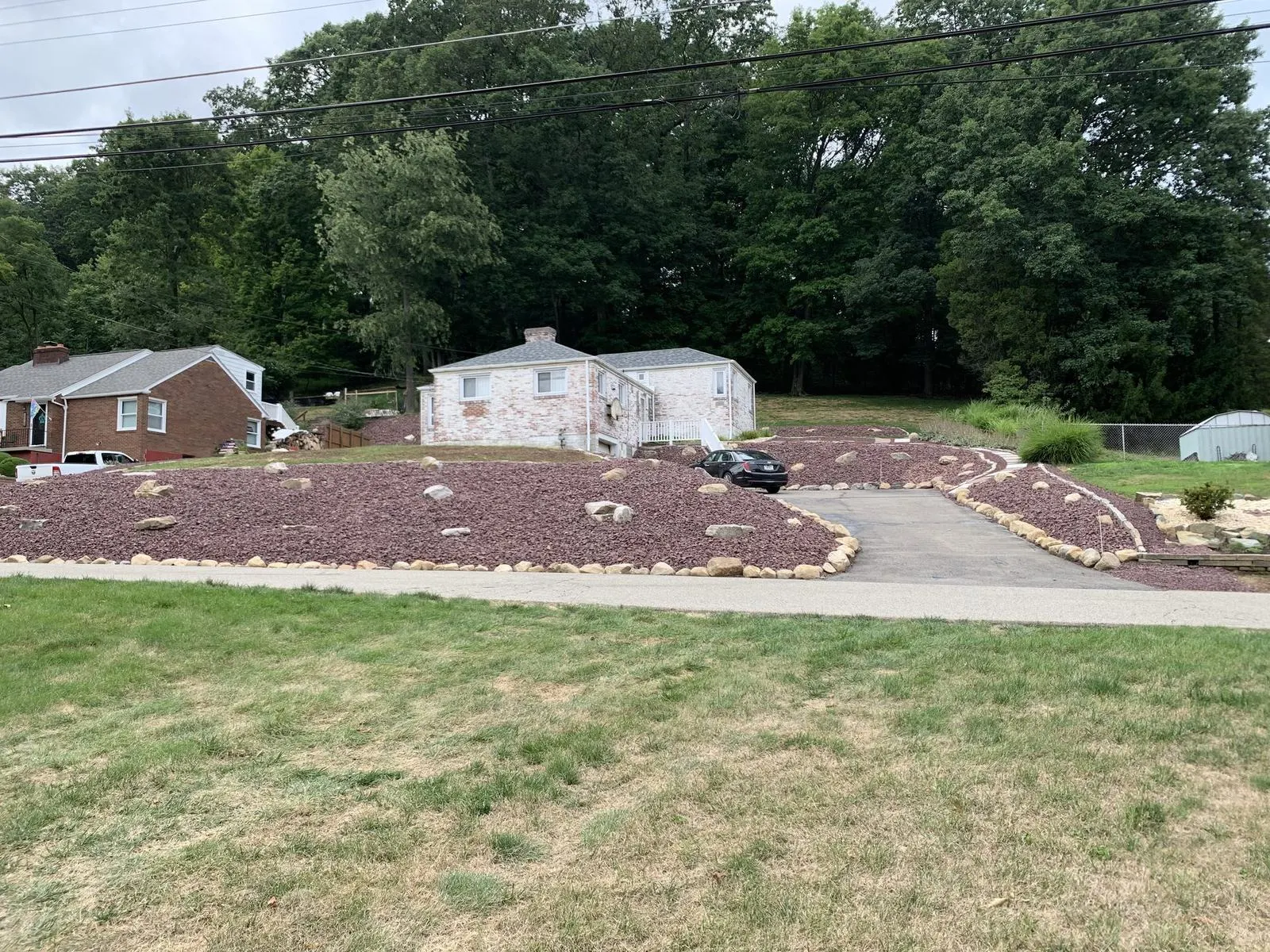
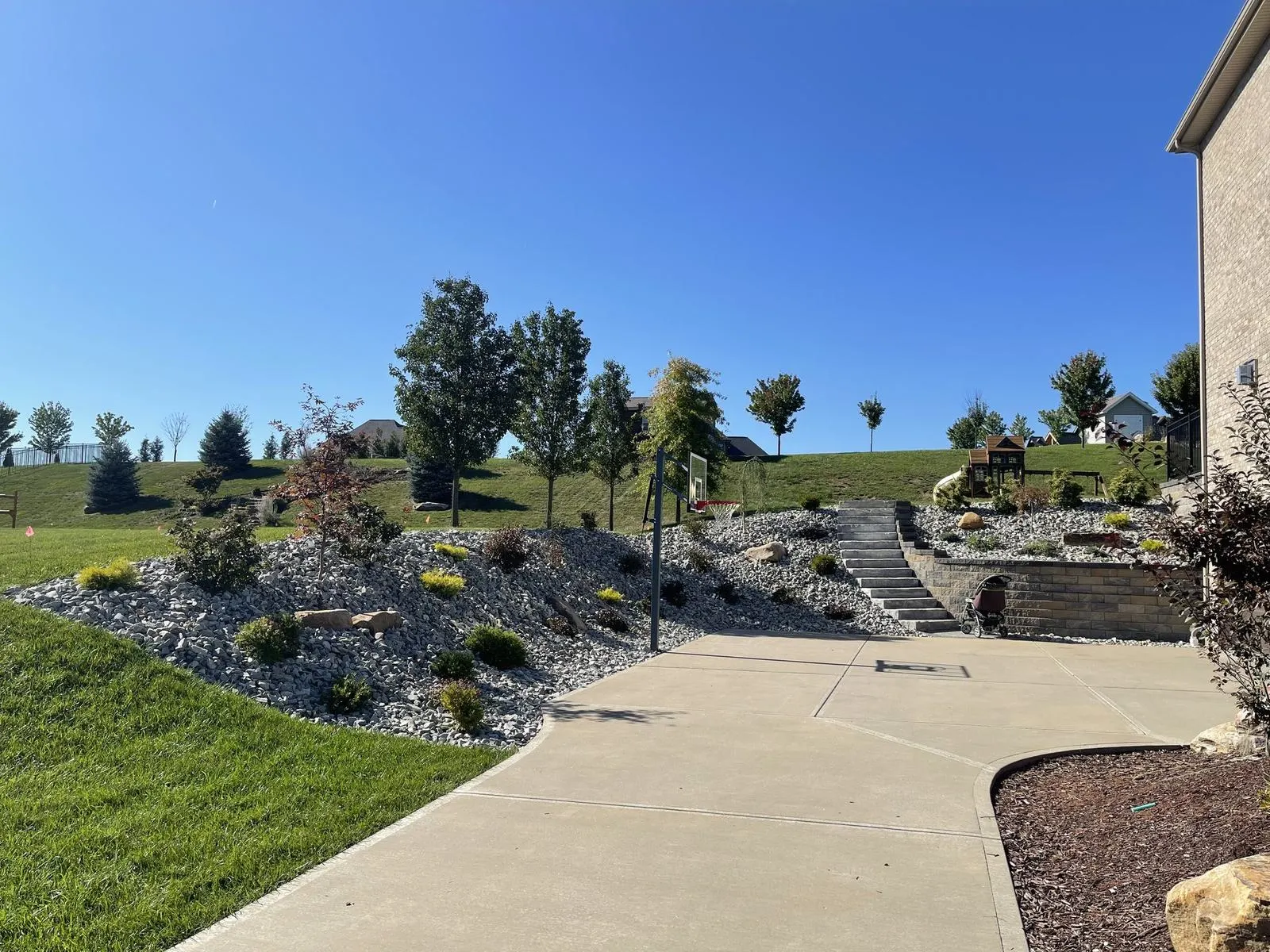
A lot of people only do part of the slope. We've done as little as the bottom third, half the hill, or just a strip along the front. If you plant a row of Spartan juniper or blue point juniper along the back of the bed, you won't see the rest of the hill behind it. They grow into the teens of feet tall, not huge like a green giant arborvitae.
Once the hill is clear, most jobs are done in a day. You don't need to be home while we work.
A hillside planting usually costs a lot less to start than a retaining wall. "If you didn't really need the wall for the function, I probably wouldn't buy the wall," Quinten says. Read more in Hillside Planting or a Retaining Wall?
If water runs across the hill or collects in a low spot, we fix that first. Plants in a wash-out path get carried away, and a lot of evergreens will drown in ground that stays wet. If you have a smaller spot where the mulch washes out every year, we can run a strip of river rock or #3 limestone through it like a dry creek bed to carry the water.
You'll pull a few weeds until the plants fill in, which takes a season or two. Water every day it doesn't rain at first, then watch the plants and adjust. With mulch, plan on fresh mulch every year or two. With stone, maybe a little touch-up after a few years.
April through November. Spring and fall are best. July and August are hard on new plants, and late in the fall small groundcovers may not root before the first frost.
Quinten's guides: What to Plant on a Steep Hill in Pittsburgh's South Hills and Hillside Planting or a Retaining Wall: Which Does Your Slope Need?
Send us a photo of your hill with the form below, or call 412-337-1039. We'll come walk it with you and talk through plants or stone for your yard.