
If you need more flat yard, build the wall. If you just want the hill to look good and stop washing away, you probably don't need one. We build both, and this is how I talk people through it.
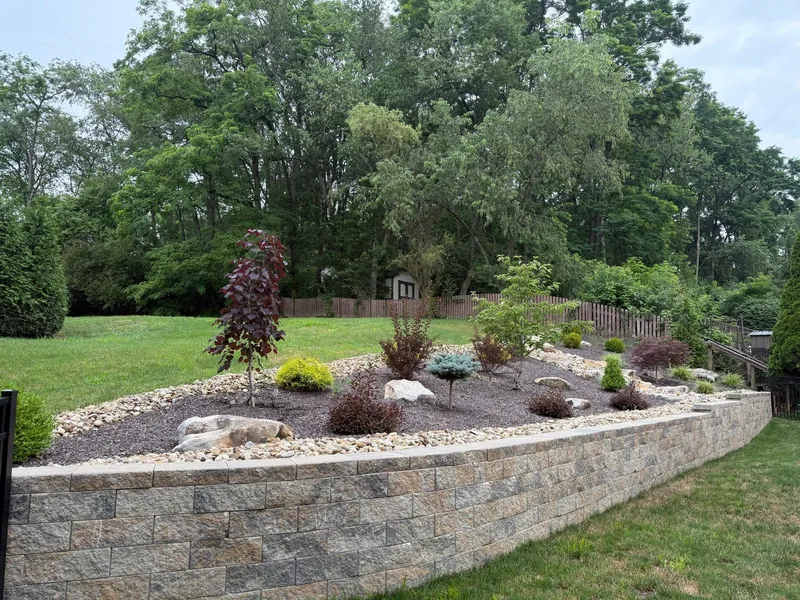
A wall makes sense when you want to gain usable flat space, like a bigger level backyard or room for a patio. It also makes sense when there's already a wall at the bottom of the hill that's failing.
In Pleasant Hills, the old wood wall at the bottom of a hillside had rotted out, and so had the steps down to the lower yard. We replaced it with a Versa-Lok wall and new steps, then planted the hill above it in blue rug juniper. That job needed the wall. The hill was eroding and there had always been a wall there.
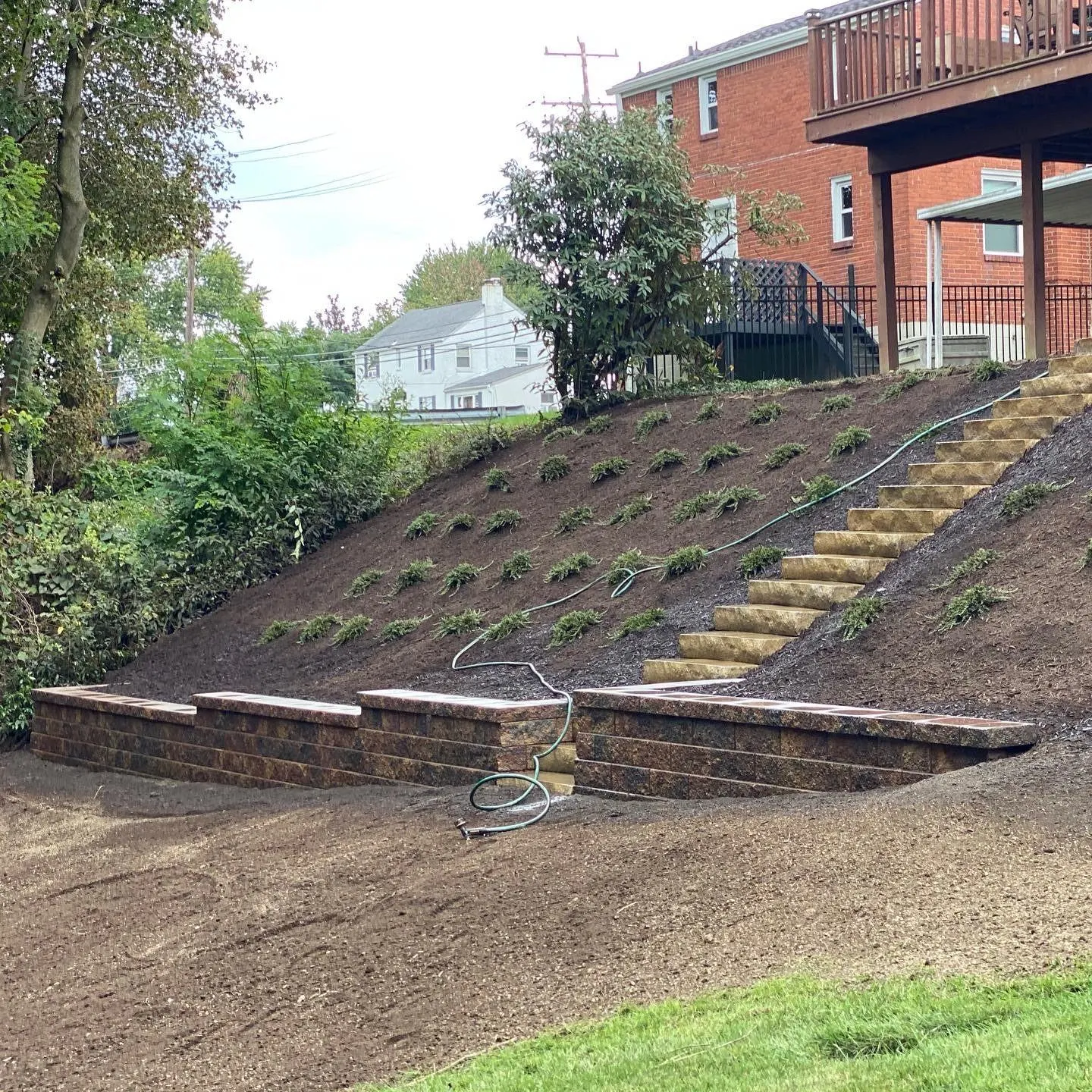
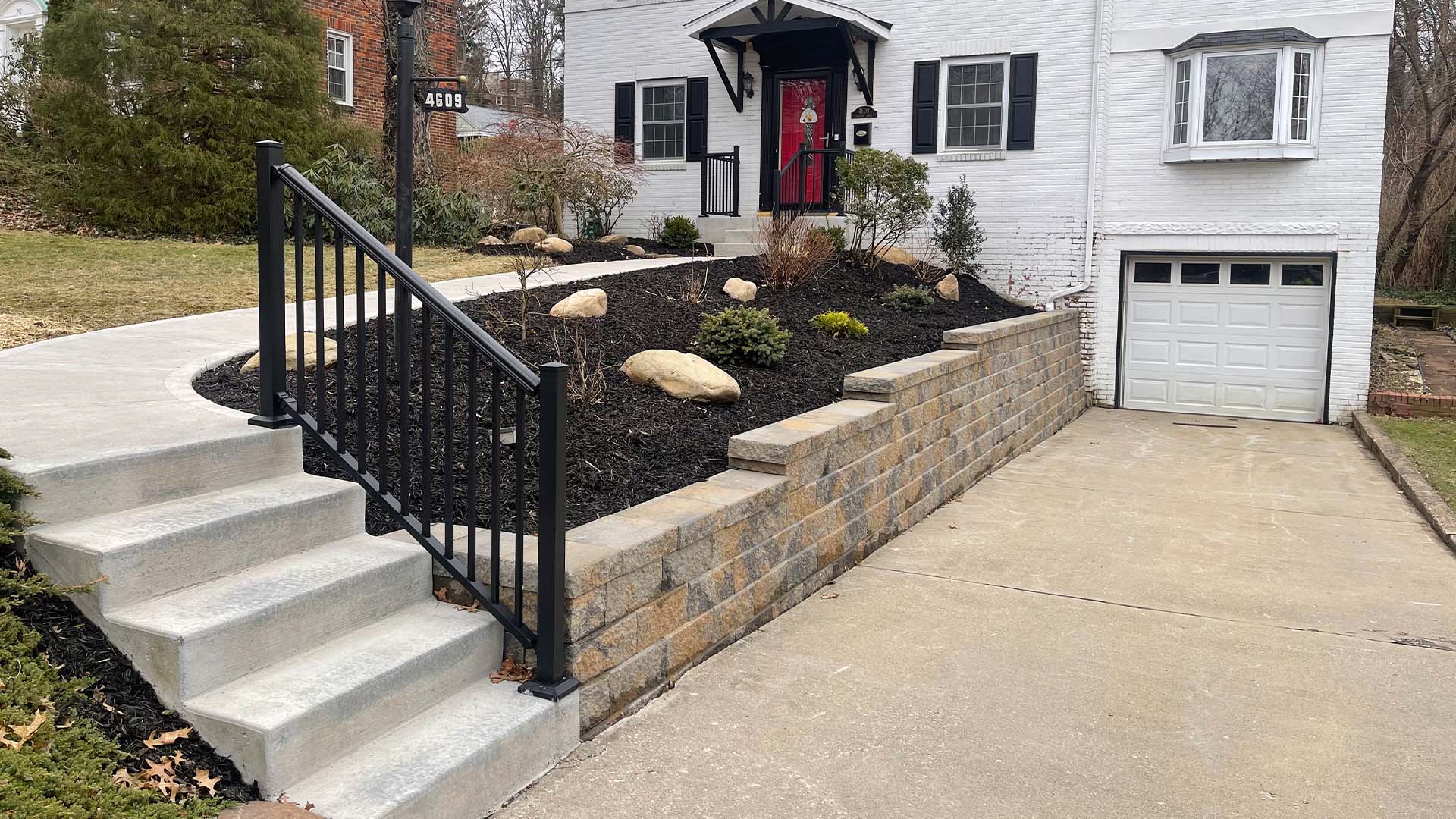
A wall adds a big layer of cost to a hillside job, and it doesn't replace the landscaping. It usually goes along the bottom, and you still plant the hill above it. The machines that build it also tear up some lawn getting in and out, so most wall jobs end with lawn repair too.
So when someone wants a wall only to take up part of the slope for looks, I tell them: "If you didn't really need the wall for the function, I probably wouldn't buy the wall." For less money we can put a lot more plants, stone and boulders on that hill, and it'll look more natural.
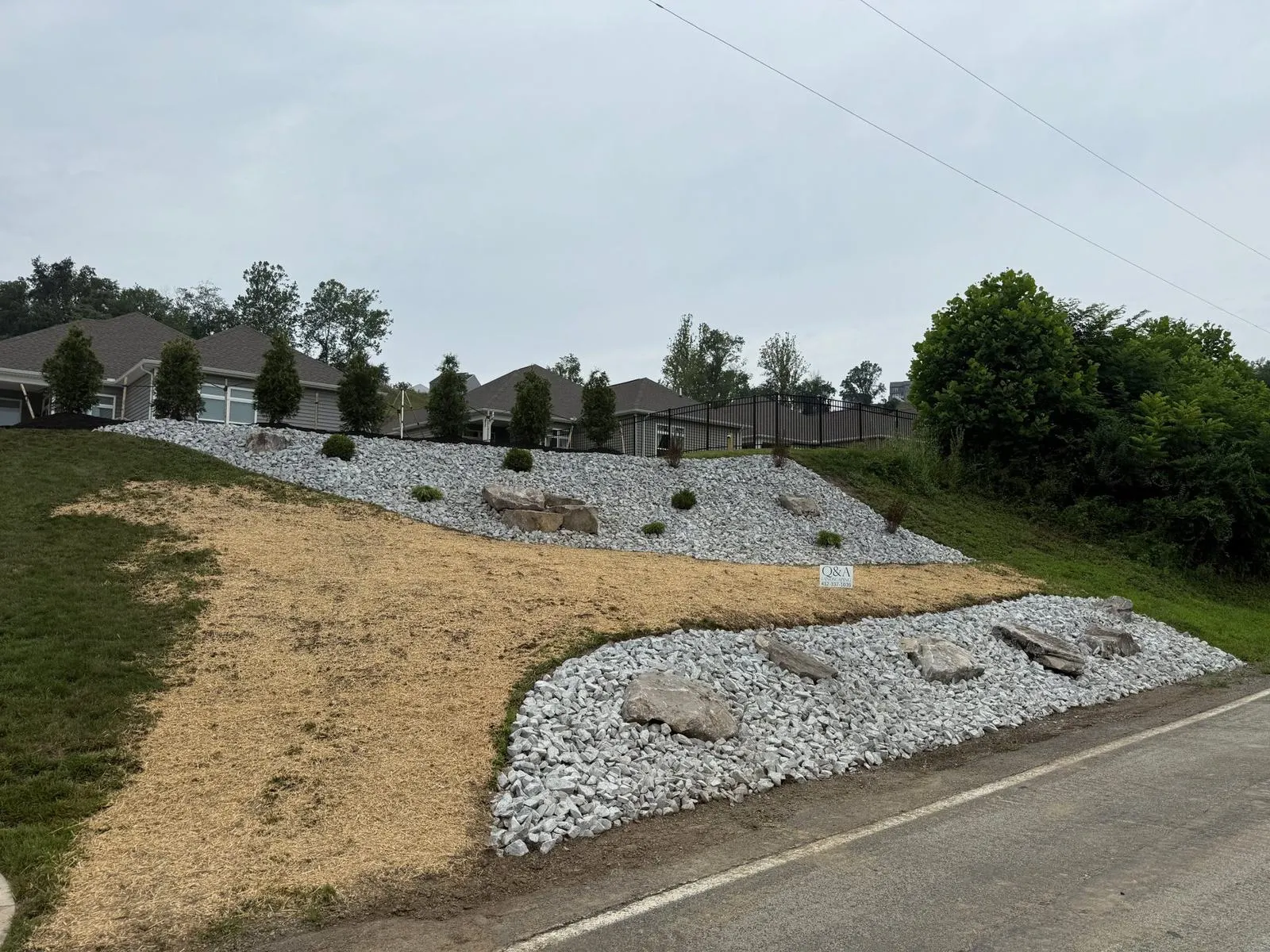
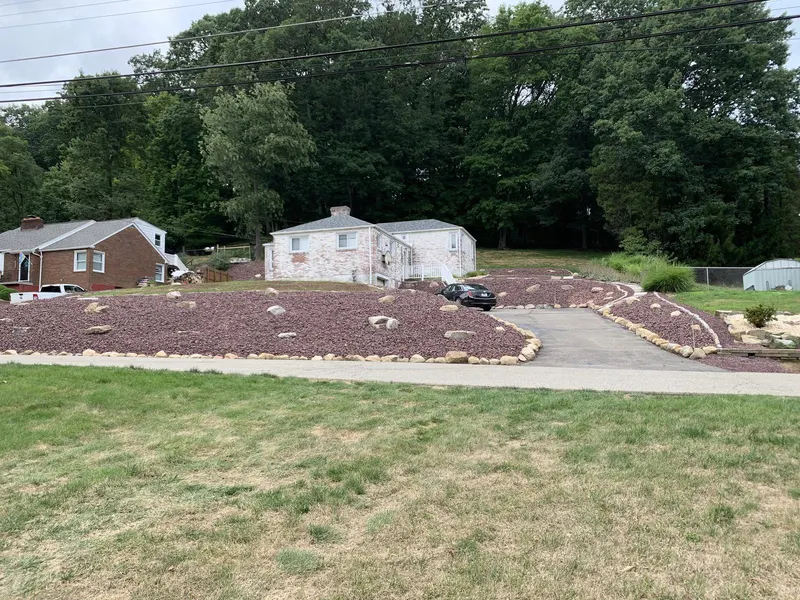
Large jagged stone on fabric. In South Park we covered a roadside hill in #4 limestone with boulders mixed in and a row of arborvitae across the top. In Jefferson Hills we used #4 limestone with gold evergreens and a Japanese maple.
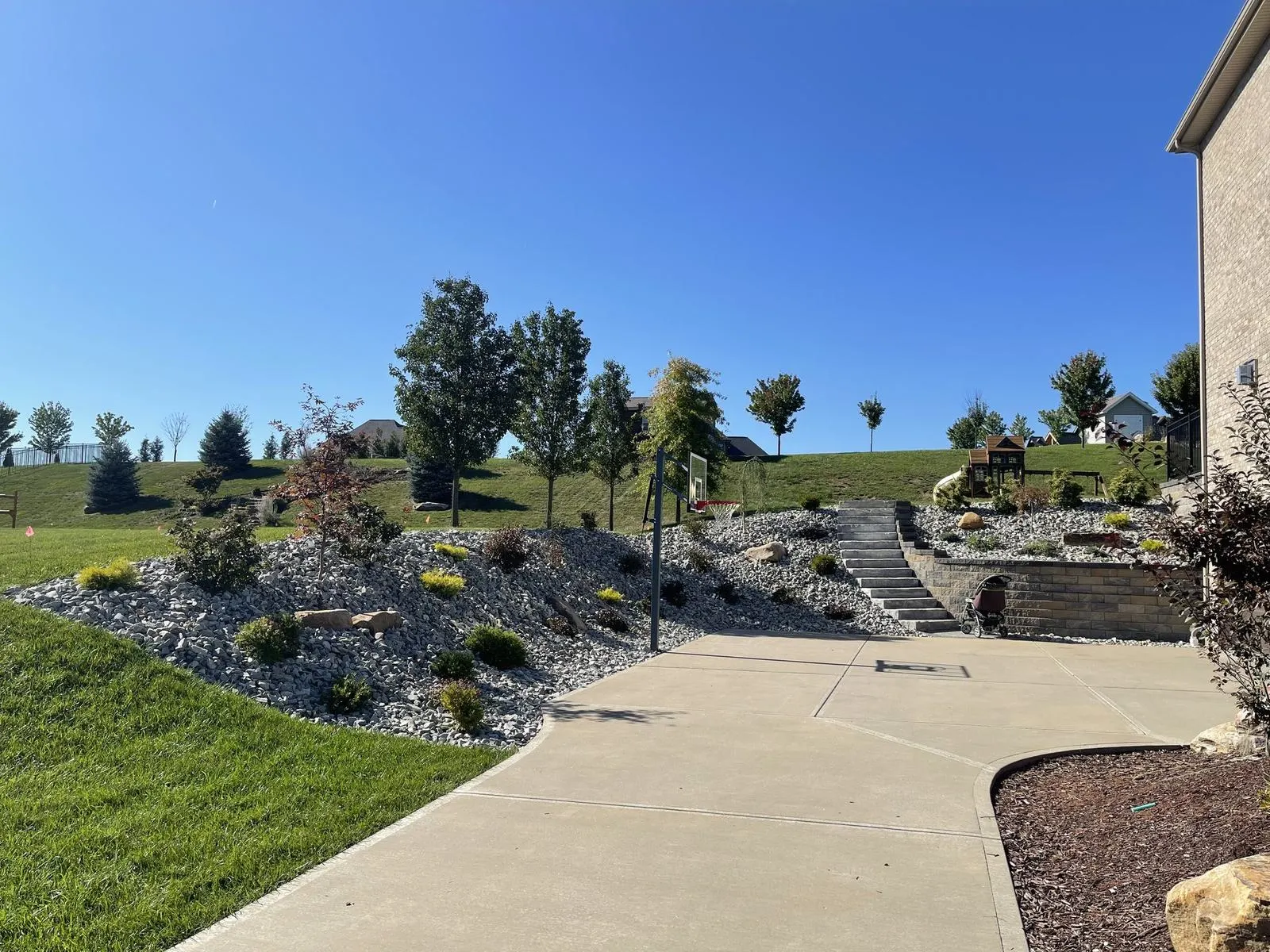
Evergreens and mulch. A spreading evergreen groundcover with mid-height evergreens and a few small trees for color.
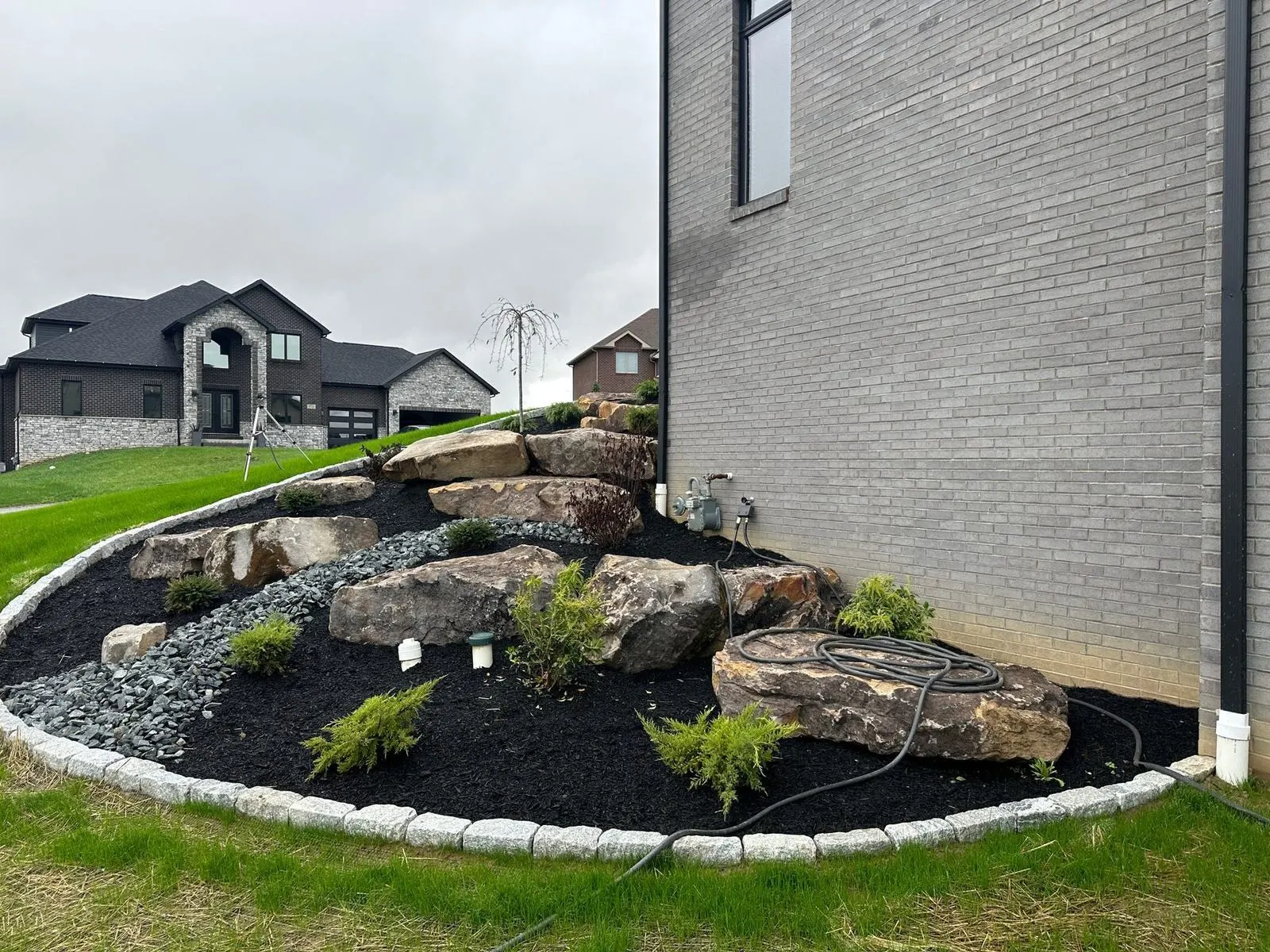
Boulders along the bottom. A row of boulders, or a small informal boulder wall, holds the bottom of the hill and looks natural. In North Huntingdon we stepped big boulders up the slope next to the house, with a jagged stone creek bed running through the mulch.
Cover the dirt and get roots growing. Bare topsoil on a hill is going to wash away over time. A mix of plants works best: groundcovers whose roots spread across the surface, shrubs with clumping roots, and a tree or two with roots that go deep. Jagged stone on fabric covers the dirt too, and boulders along the bottom help hold it.
If the same pocket of mulch washes out every year, don't fight it. Run a strip of river rock or #3 limestone through that spot like a dry creek bed. It carries the water and the mulch stops sliding. Some homeowners also spray a clear mulch sealer, sometimes called mulch lock, that glues the mulch together. You'd have to redo it a couple times a year, and some people like it more than others.
Send us a photo of your hill. I'll tell you whether you really need a wall or whether plants and stone will do the job.
Choosing plants for the hill? Read What to Plant on a Steep Hill in Pittsburgh's South Hills.




From the blog
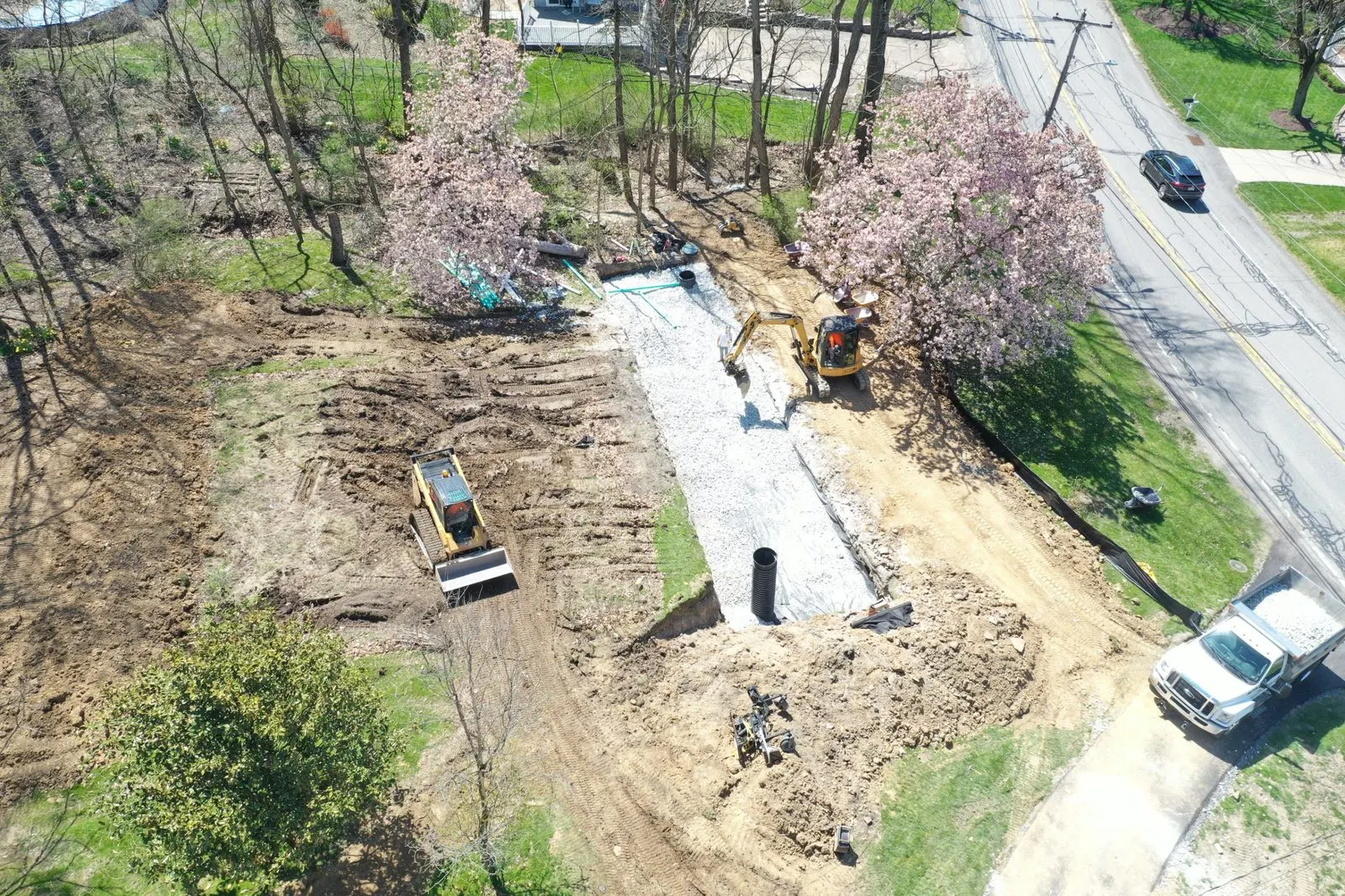 Why Is My Yard Always Soggy?
Clay soil, low spots, water from next door and old downspout lines. Why yards around Pittsburgh stay soggy after rain, and how to fix it.
Read the article
What to Plant on a Steep Hill
Most hills we plant start out too steep to mow, full of weeds, and slowly washing downhill. My answer is almost always evergreens.
Read the article
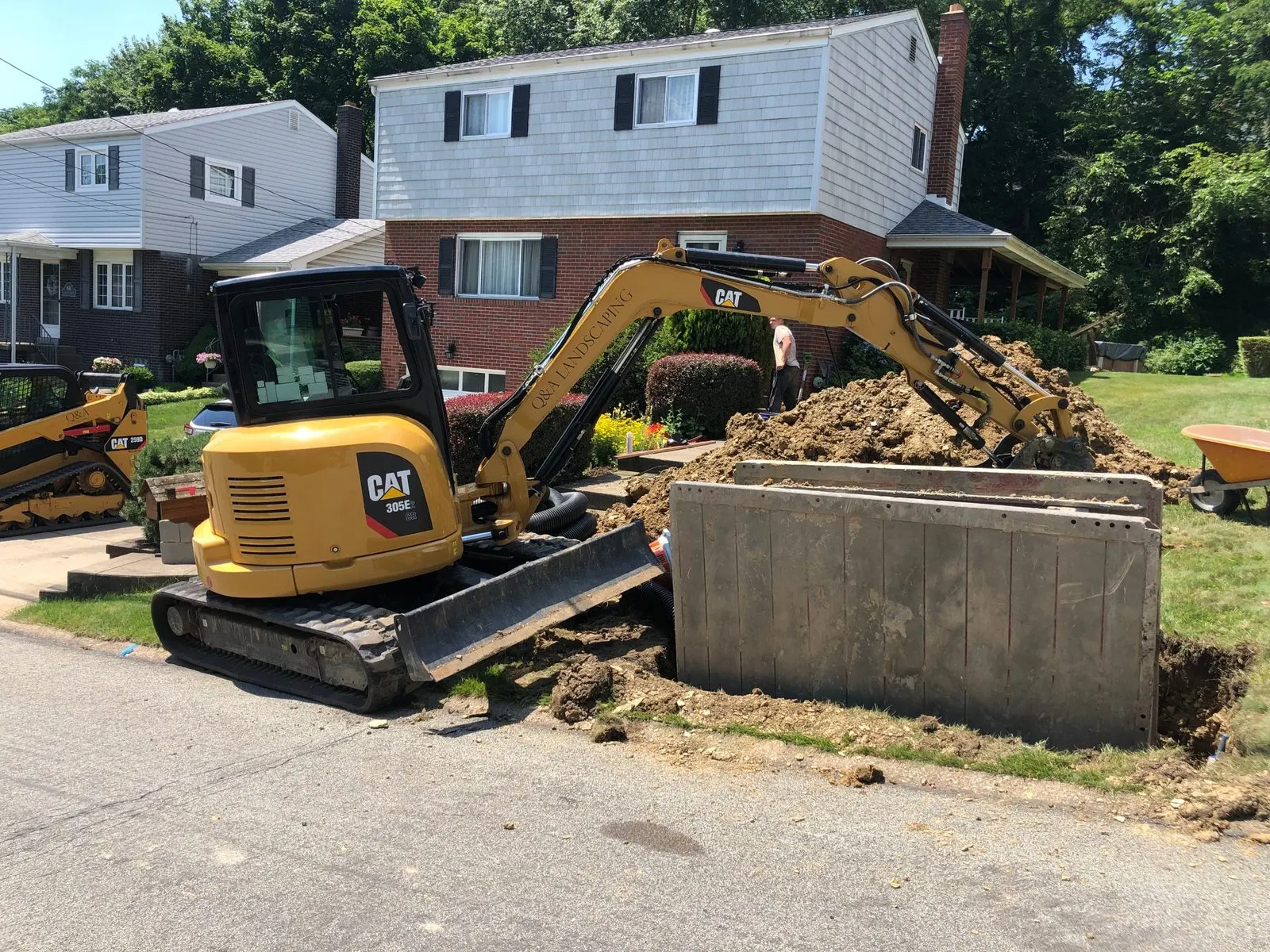 French Drain Cost in Pittsburgh
Most French drains we install in the South Hills cost about $5,000 to $12,000. How we build them and how long they last.
Read the article
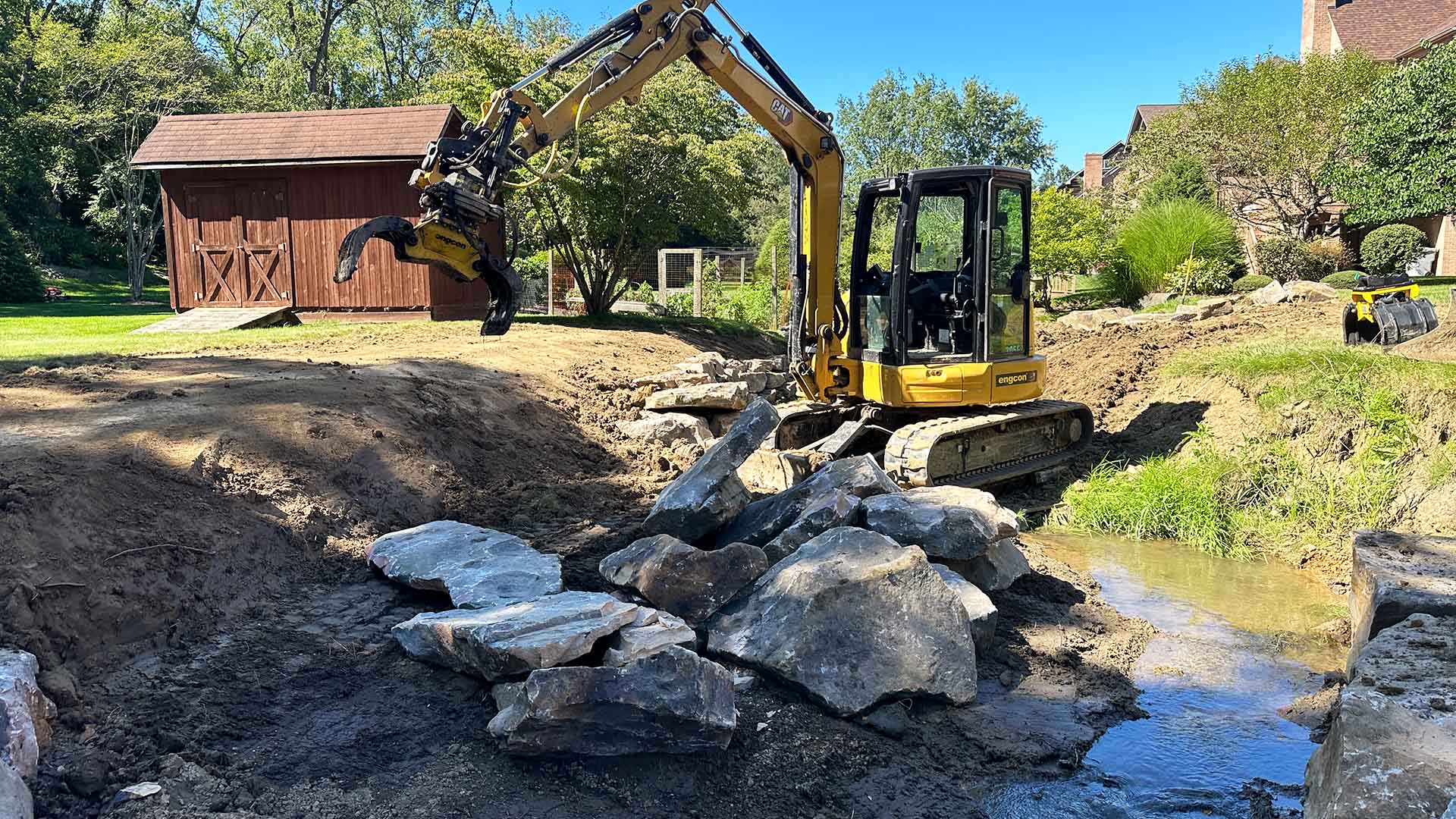 Hillside Landscaping: What Holds a Slope
Water, soil, and a good base decide whether a slope stays put. Here is how walls, boulders, and stone work on South Hills hillsides.
Read the article
 Protecting New Sod, Seed and Plantings Over Winter
What a new lawn and new plants need to get through their first Pittsburgh winter, and what to check when the ground thaws.
Read the article
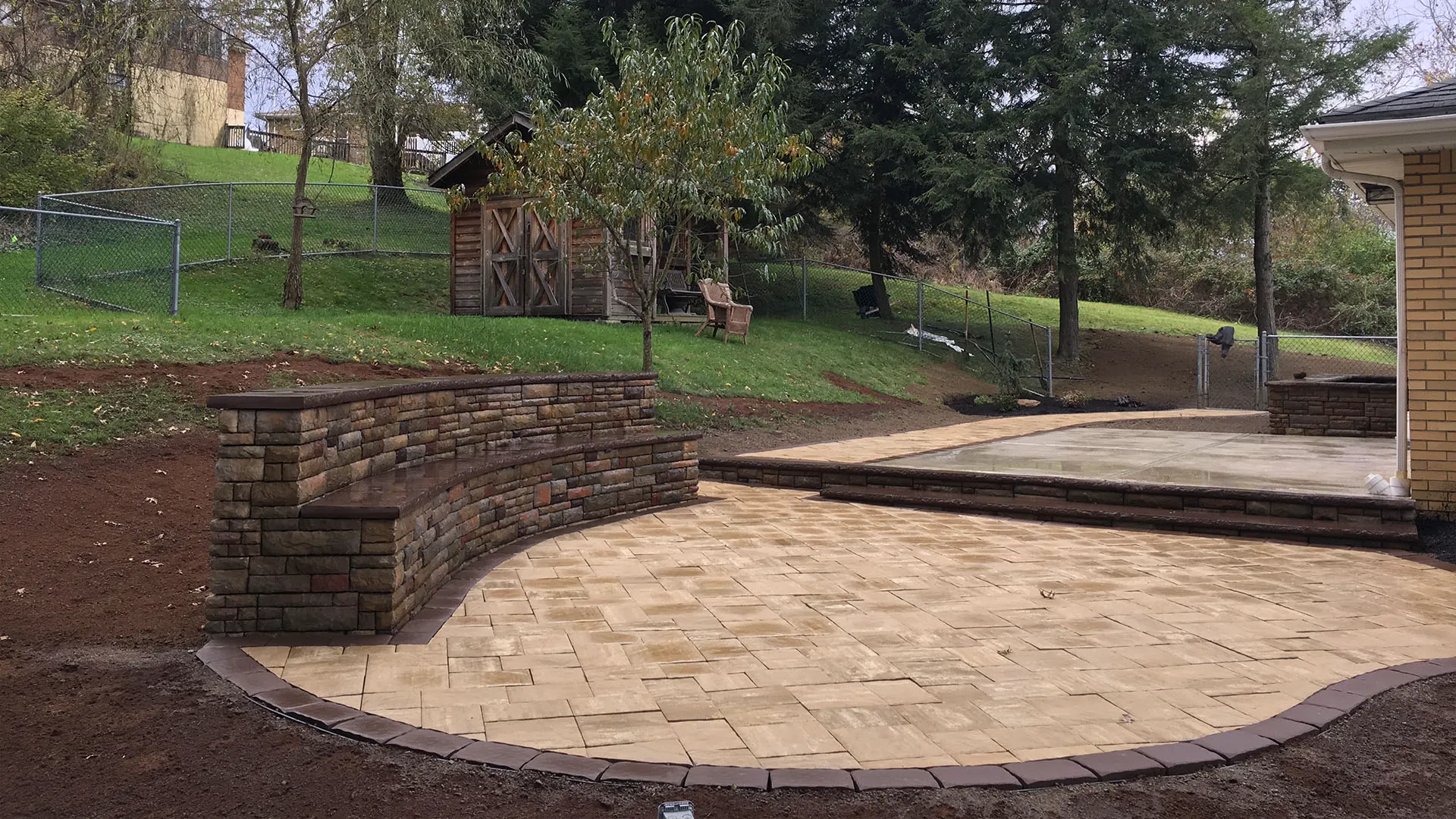 Rock Salt and Pavers: Winter Care
How salt, snow piles, and ice affect patios, walls, and steps in a Pittsburgh winter, and what to do instead.
Read the article
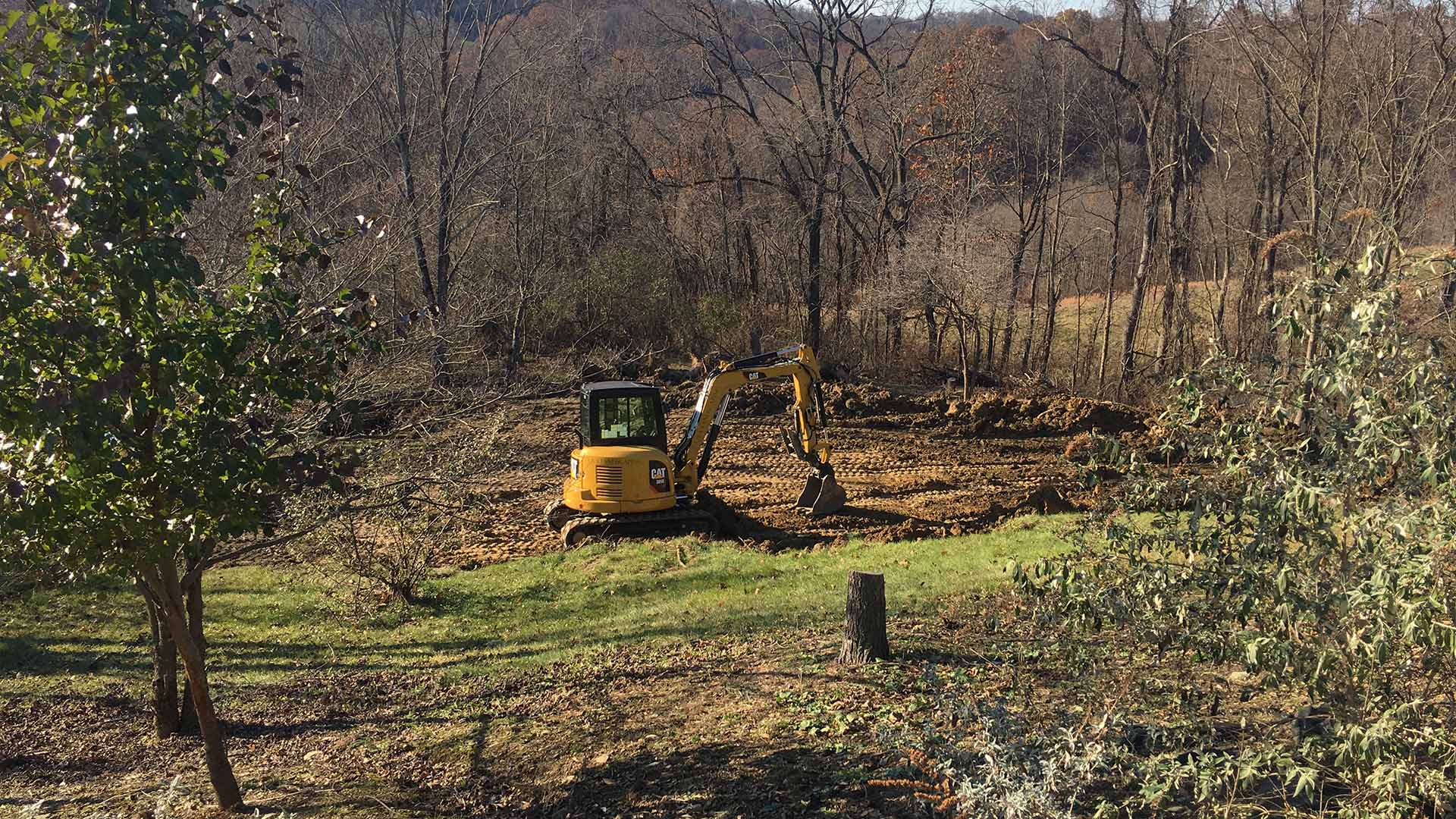 Six Signs Your Yard Needs Drainage Work
Standing water and soft ground are the early ones. Here are six signs to watch for on a South Hills property, and what to do about them.
Read the article
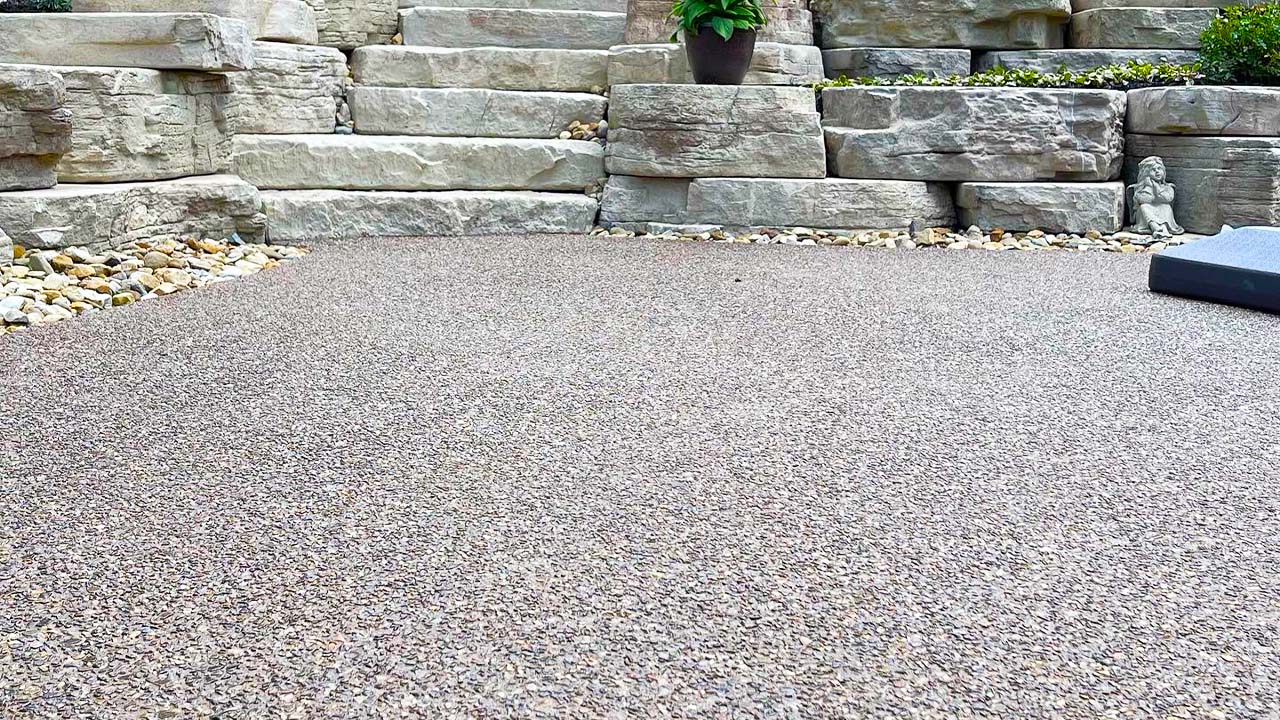 Pavers, Exposed Aggregate, or Stamped Concrete
Three good patio surfaces, and Pittsburgh winters treat them differently. Here is how they compare on freeze-thaw, repair, look, and price.
Read the article