Most retaining walls fail because of water trapped behind them, a base that was not compacted, or both. We repair block and boulder walls: we assess the wall, find out what is happening behind the face, and repair or rebuild it with a compacted stone base, a drain, and clean stone backfill.
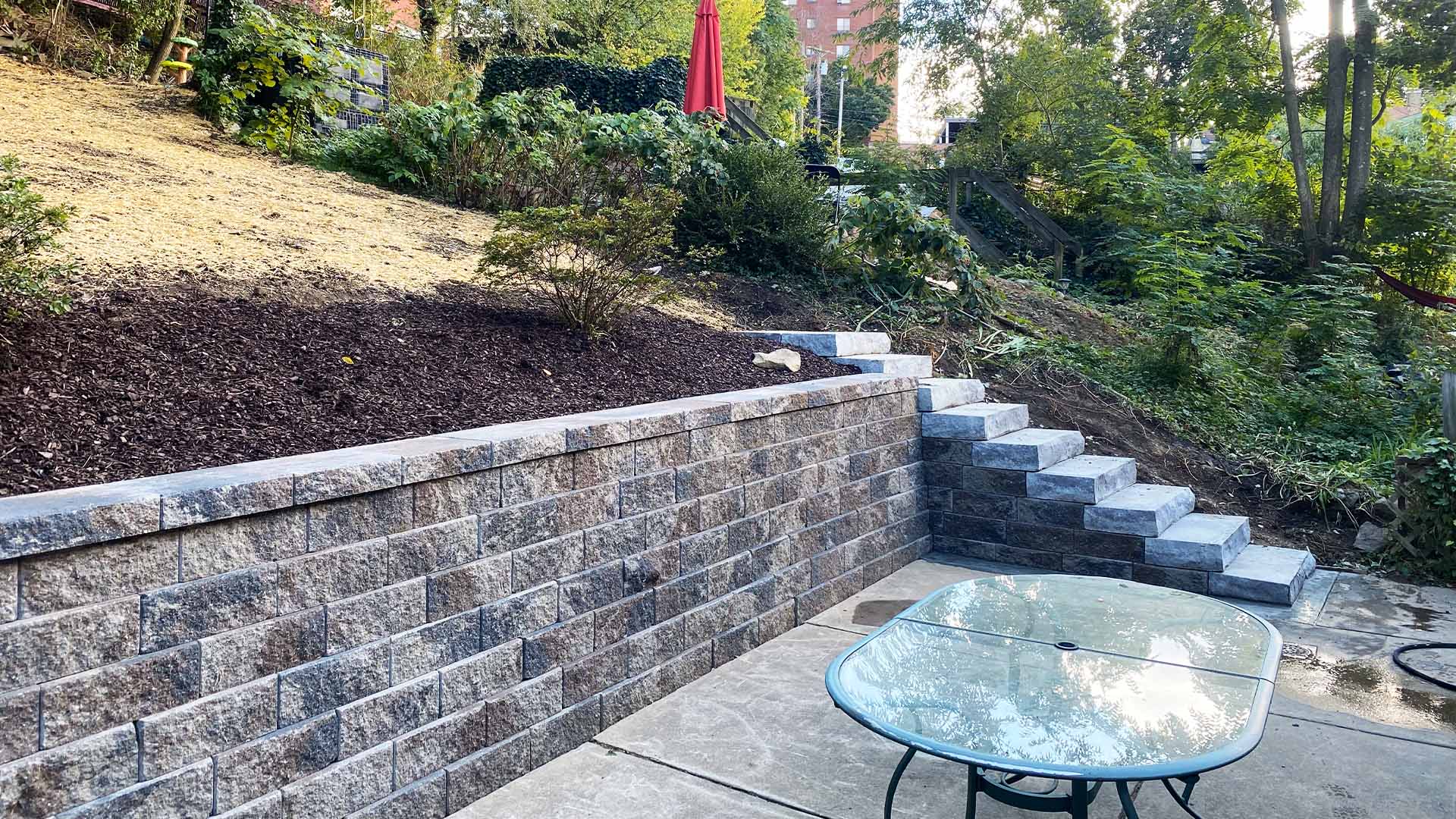
Drainage failures rarely happen overnight. Catching them early is what keeps a repair small.
A wall face that is no longer flat, especially a bulge in the lower half, is a strong sign of pressure building up behind it.
Any forward tilt, even a slight one, means the wall is losing its fight against the soil and water pressing on it.
Cracked block, blocks or boulders shifting out of line, or gaps opening between wall sections are often the visible result of pressure the wall was never designed to hold.
Efflorescence is not the damage, but it is proof water is passing through the wall where it should not be.
Wet, mucky soil at the foot of the wall after the rest of the yard has dried out means water is exiting in the wrong place, or not exiting at all.
Several of these at once usually means the drainage behind the wall has failed. More in how to fix retaining wall drainage problems.
Soil behind a wall holds water after every rain and every snowmelt. With no way out, it saturates the soil and builds hydrostatic pressure, and saturated soil is far heavier than dry soil. That pressure freezes and expands through Pittsburgh's winters and slowly pushes block courses and boulders out of line. A wall built strong enough to hold dry soil can still fail within a few seasons if the water never gets a path out.
Failure to thoroughly compact the base is the other common cause, and it is devastating to the longevity and appearance of a Versa-Lok wall. Heavy South Hills clay makes both problems worse.
We assess the wall during a free estimate and recommend the most practical fix. Caught early, a drainage problem can mean a smaller repair. In many cases, a full rebuild with proper drainage is more cost-effective long-term than patching a compromised wall, because patching the face does not remove the water pressure that caused the damage.
A rebuilt wall is built the way every new wall we build is built: a compacted stone base, a drain pipe along the bottom behind the wall, clean stone backfill, Geogrid where the height calls for it, and the grass or landscaping around it fixed when we finish. If a rebuild is on the table, our Pittsburgh retaining wall cost guide shows what new walls run, and walls holding back a steep yard are covered on our hillside landscaping page.
"Quinten walks every property himself before anything gets quoted or scheduled." Quinten, Owner
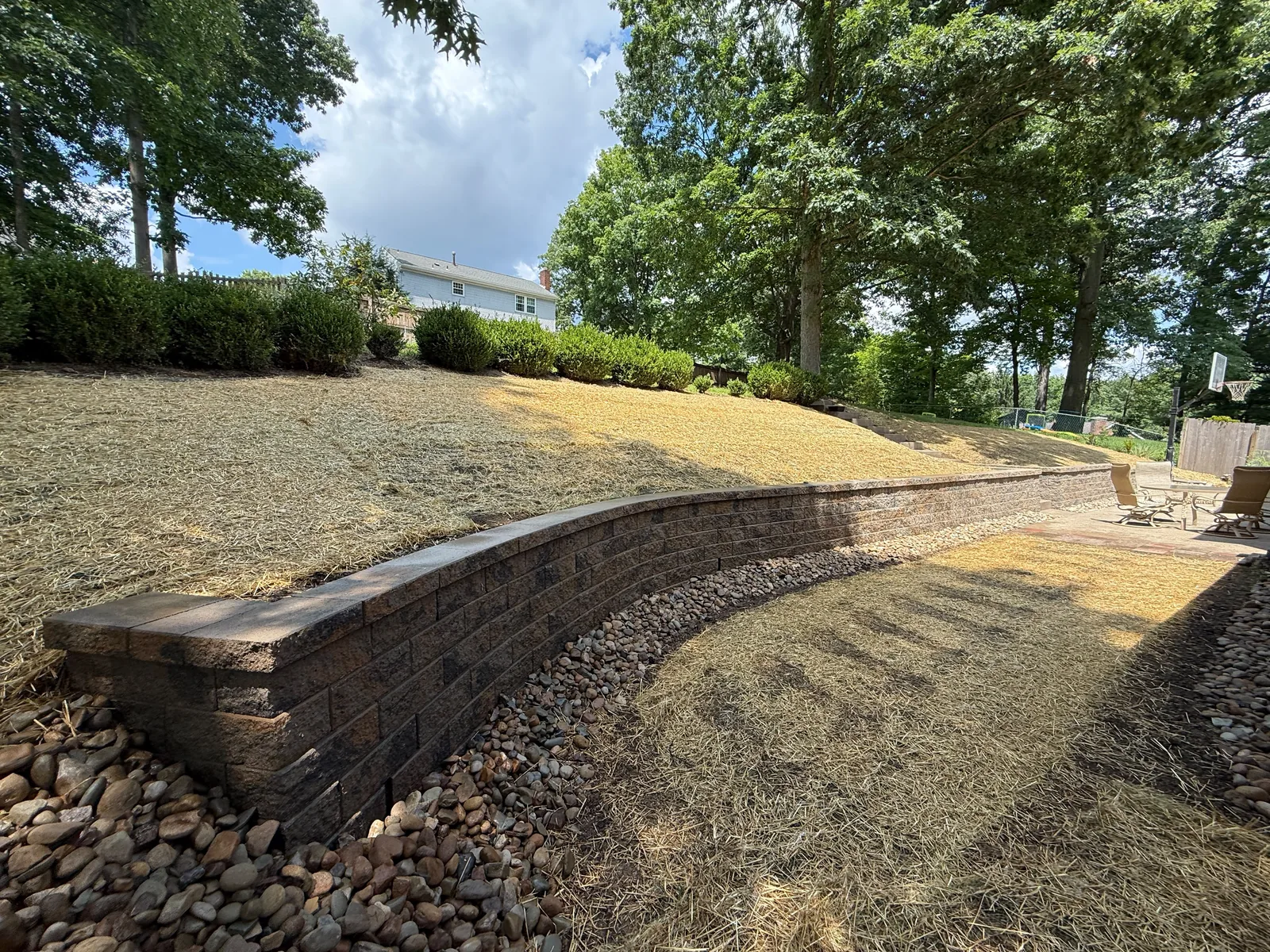
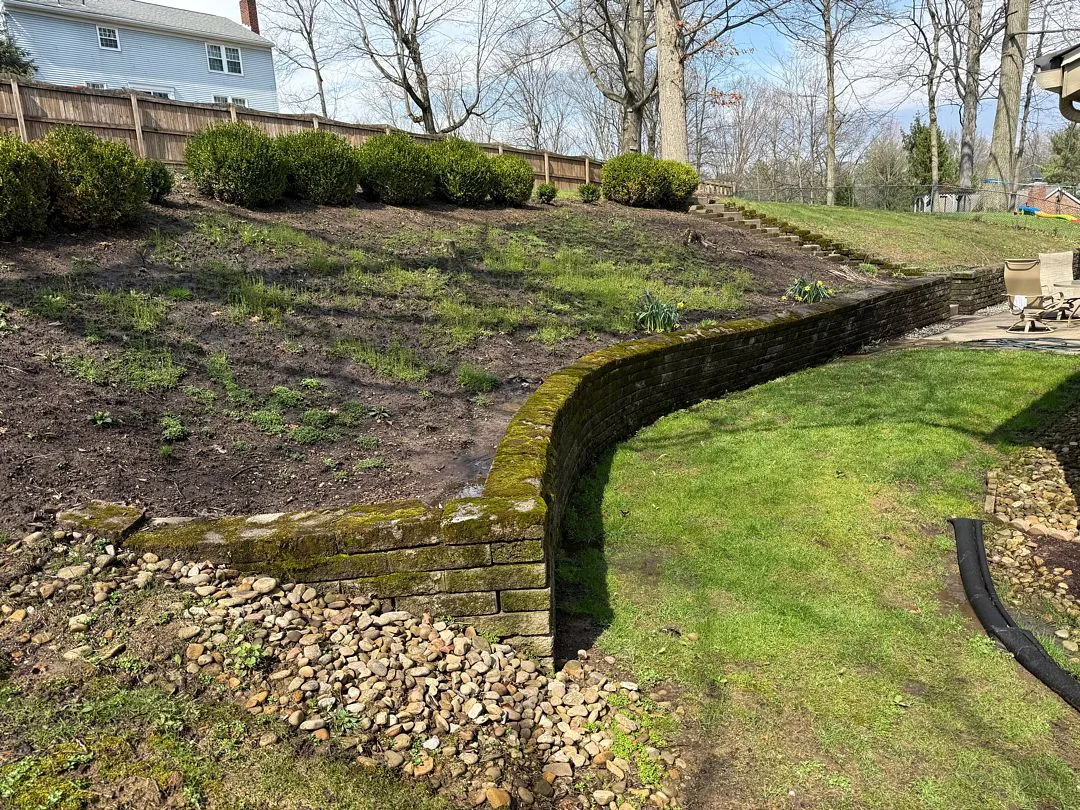
Two recent South Hills jobs where old walls came out and new Versa-Lok walls went in. Drag the divider to compare the same spot. Upper St. Clair and West Mifflin project pages have the full photos.
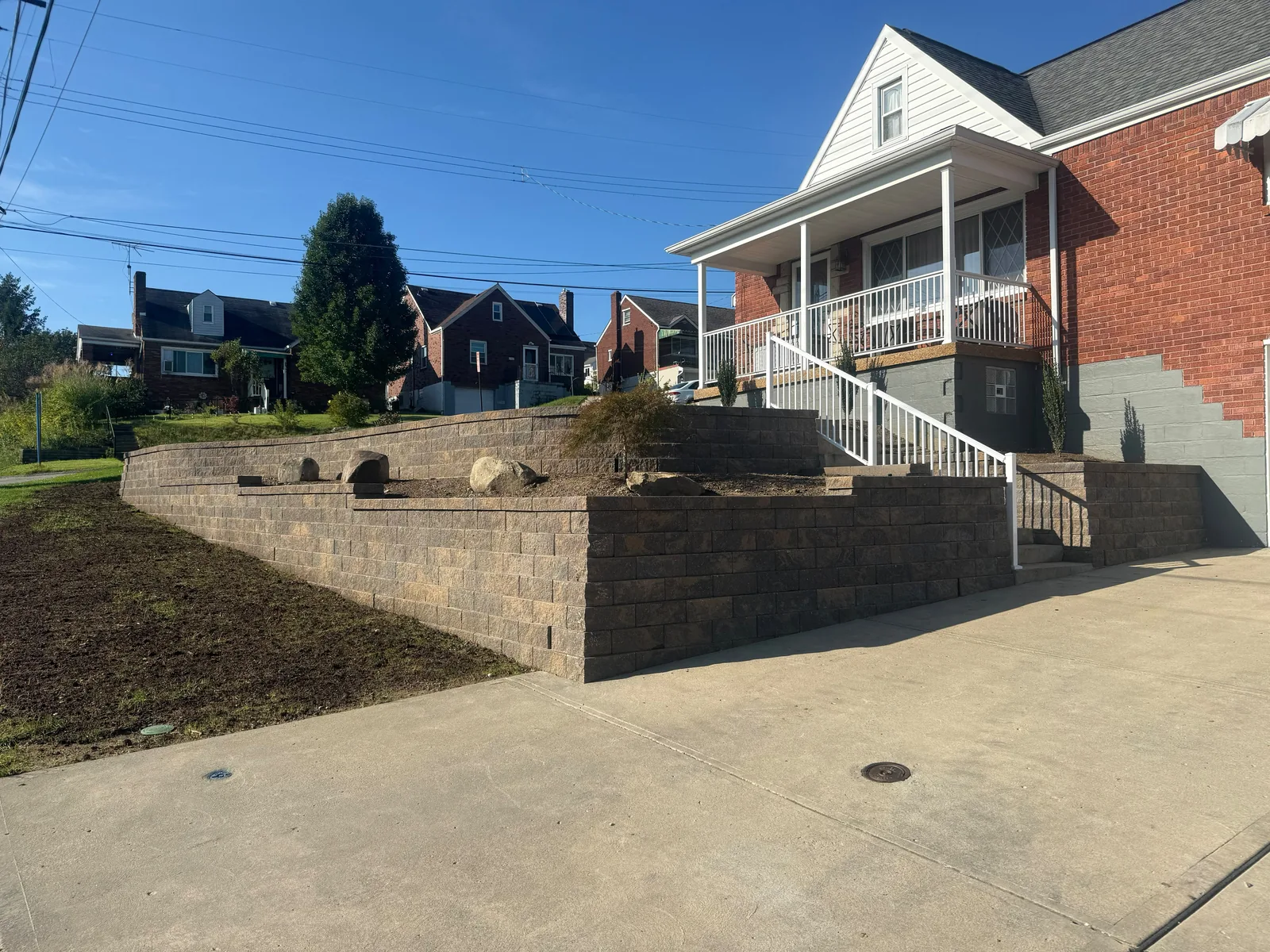
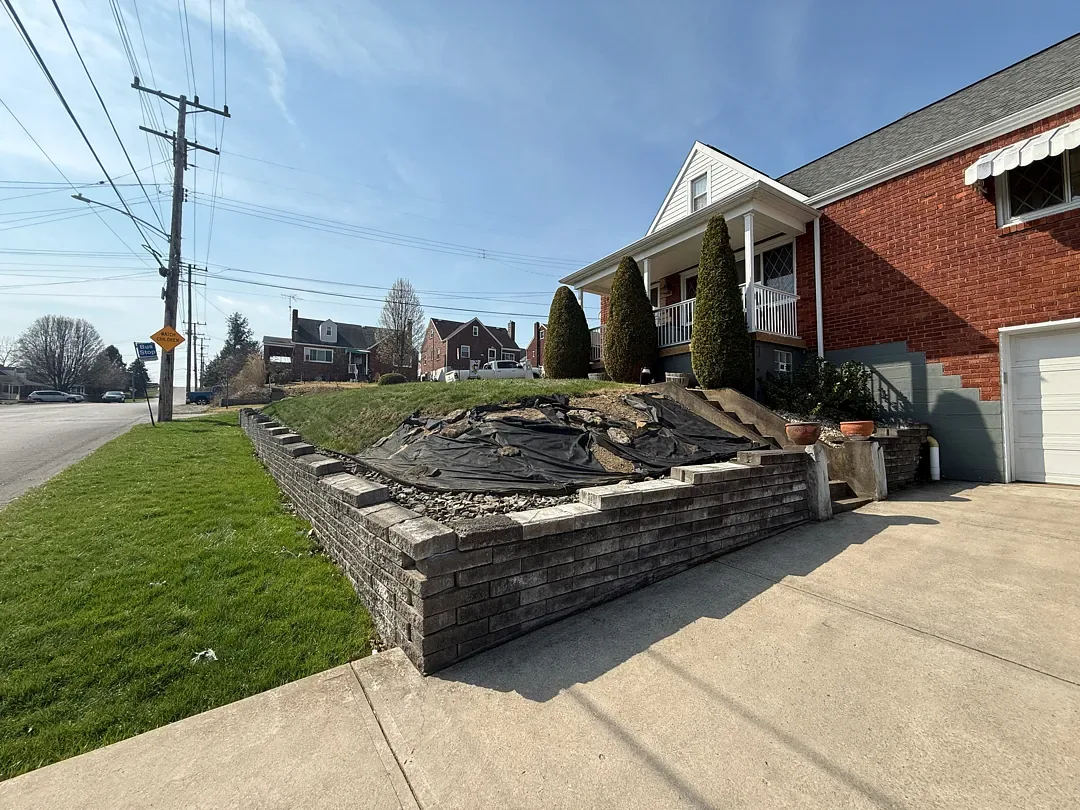
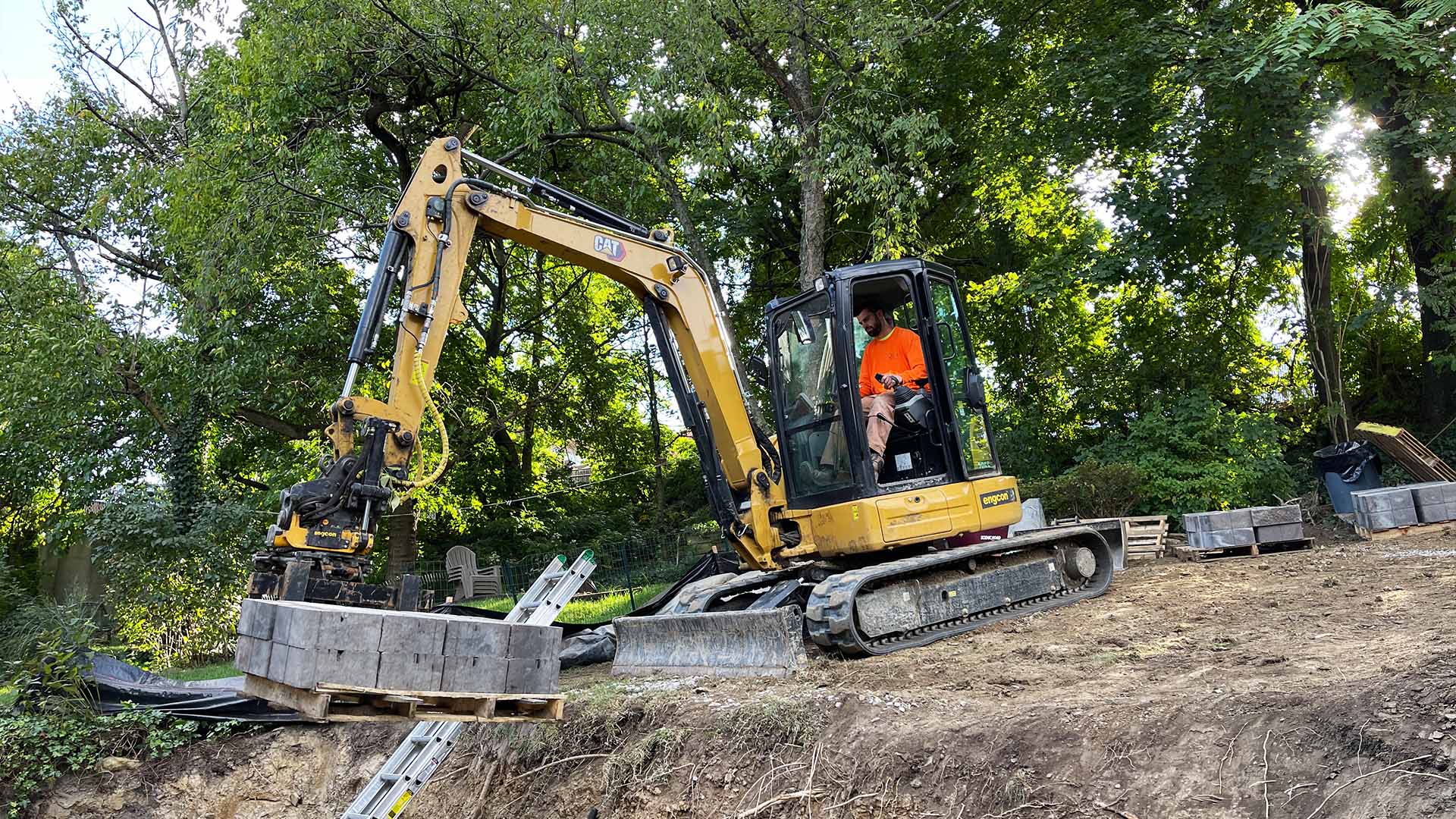
We get the calls other crews walked away from. On one recent Mt. Lebanon job, multiple other contractors had already bailed on a collapsing retaining wall. We secured the permits, hauled every piece of material through the property above, and built a Versa-Lok wall and steps that opened the upper backyard back up. Walls over about 4 feet usually need a permit and geogrid, requirements vary by town, and we help with permits. Tearing out the old wall and other difficult removals are priced at the site visit.
Walls fail on water. Fixing the drainage is usually part of the repair.
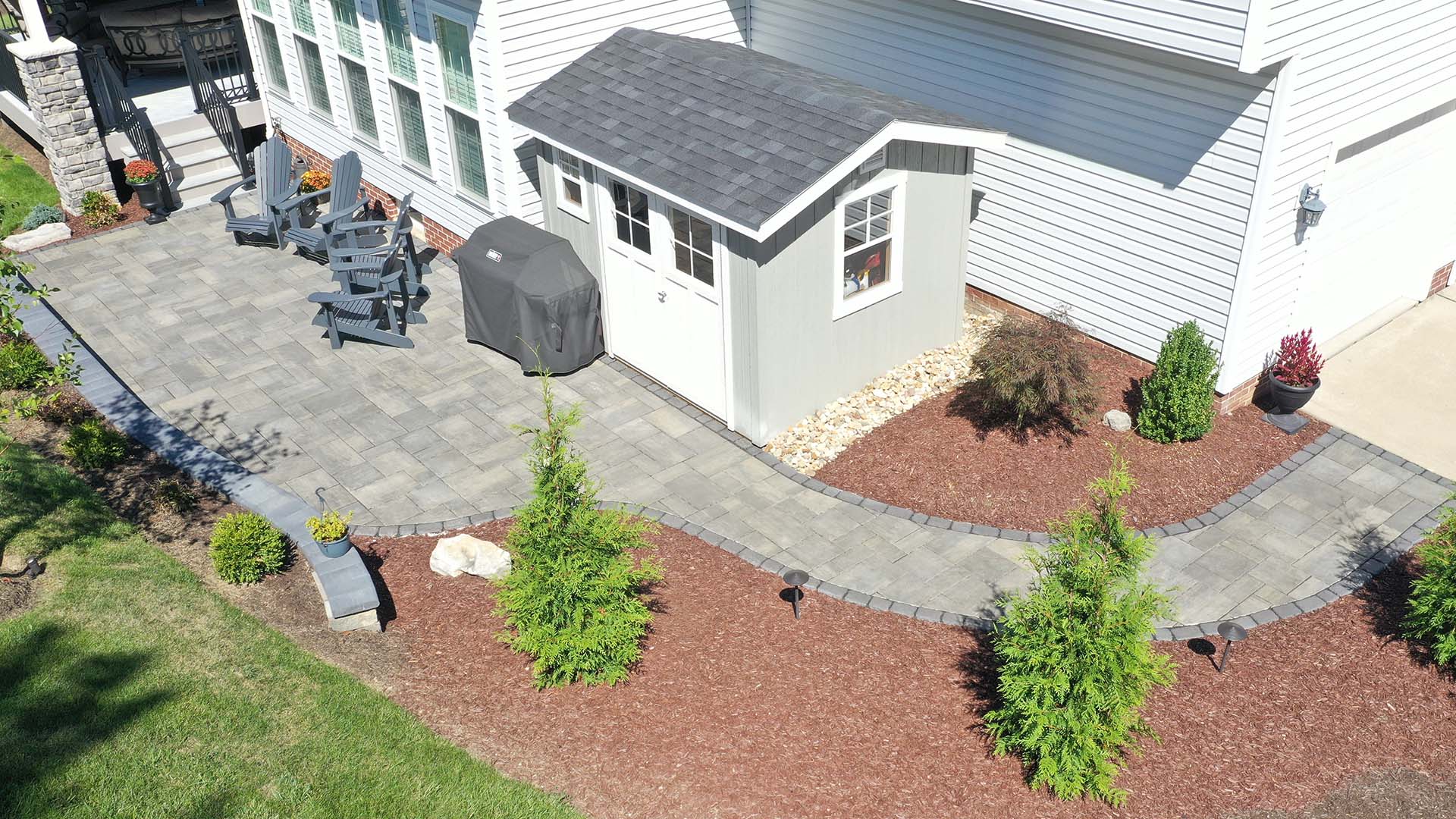
Versa-Lok, Rosetta outcropping, and boulder walls engineered for the slope, with real drainage behind every course.
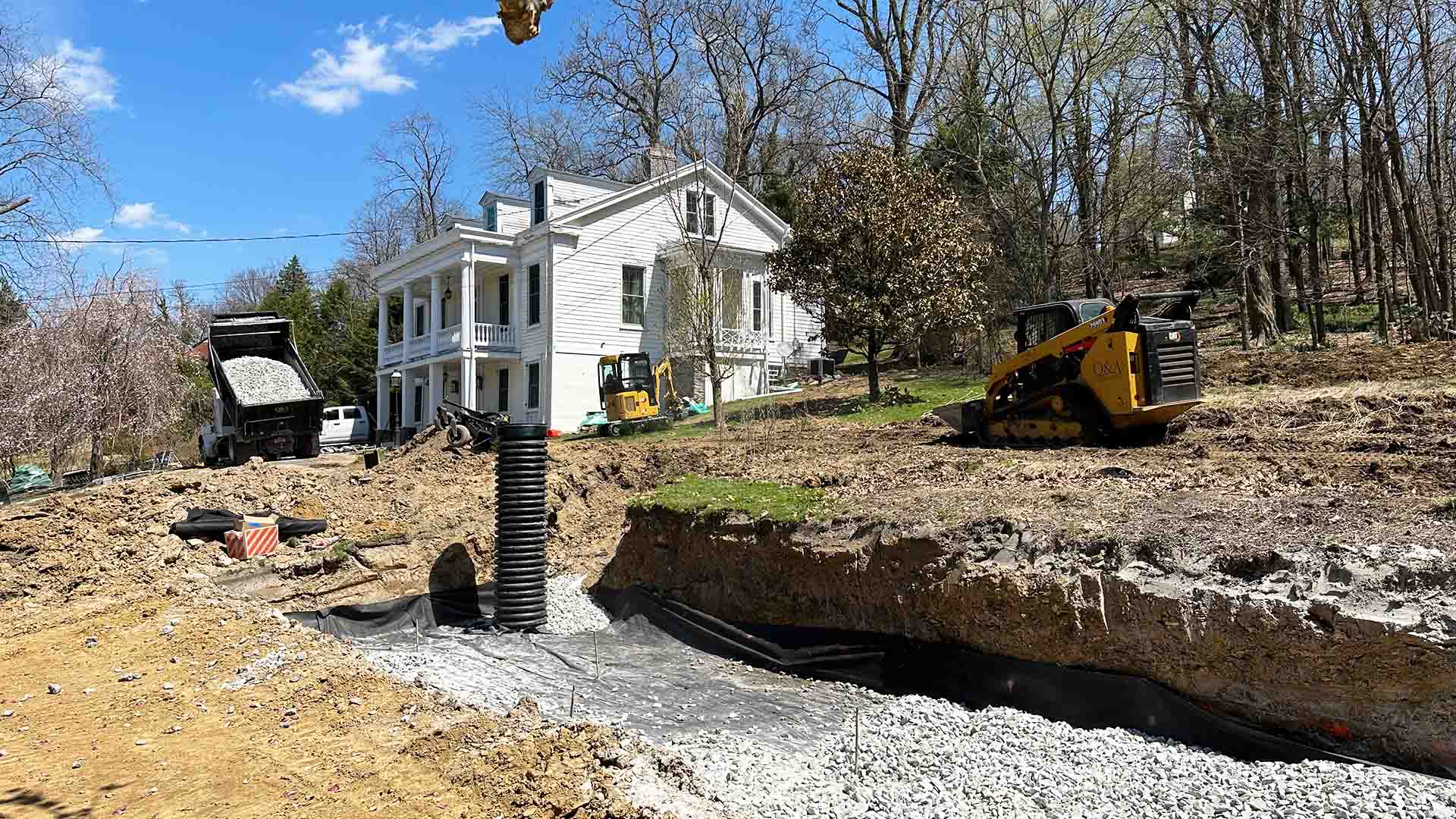
French drains, downspouts, regrading, and catch basins by an NDS certified crew.
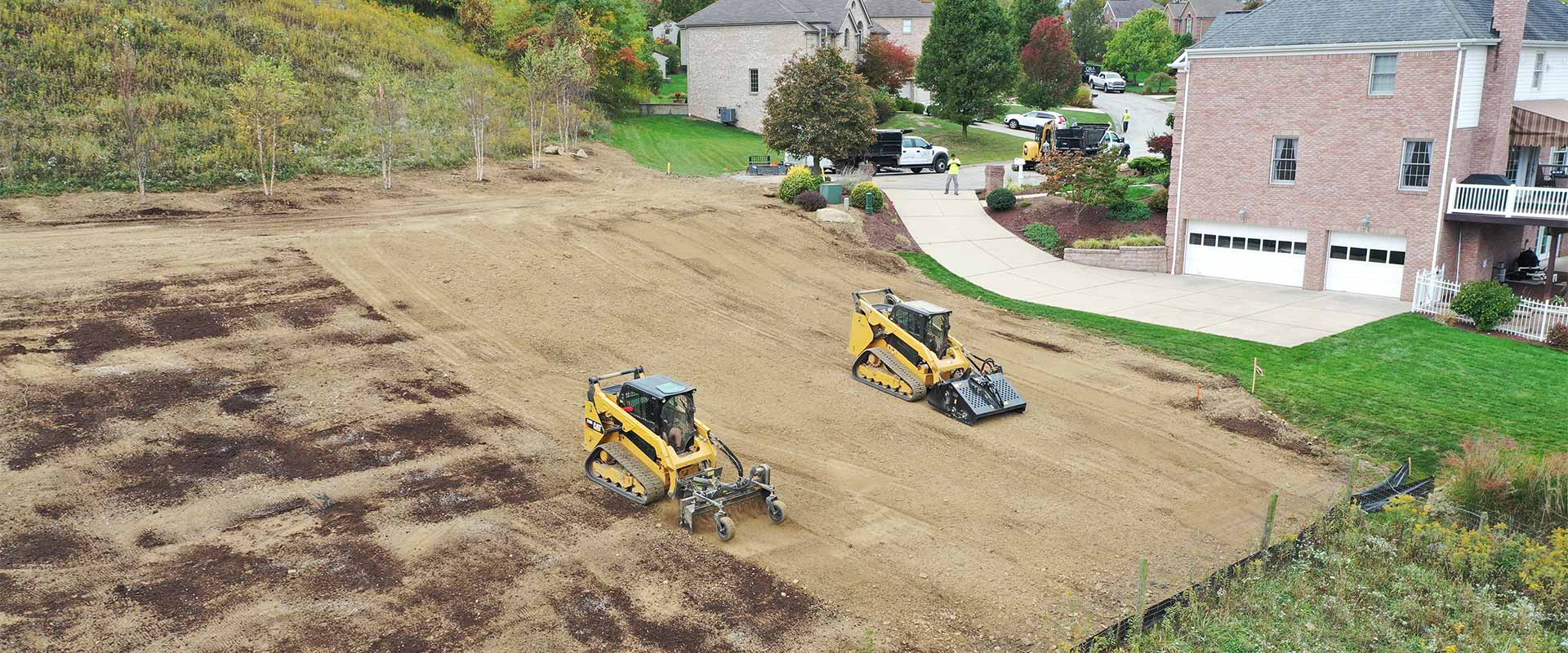
Equipment and grading for the hard-to-reach jobs, with the lawn repaired afterward.