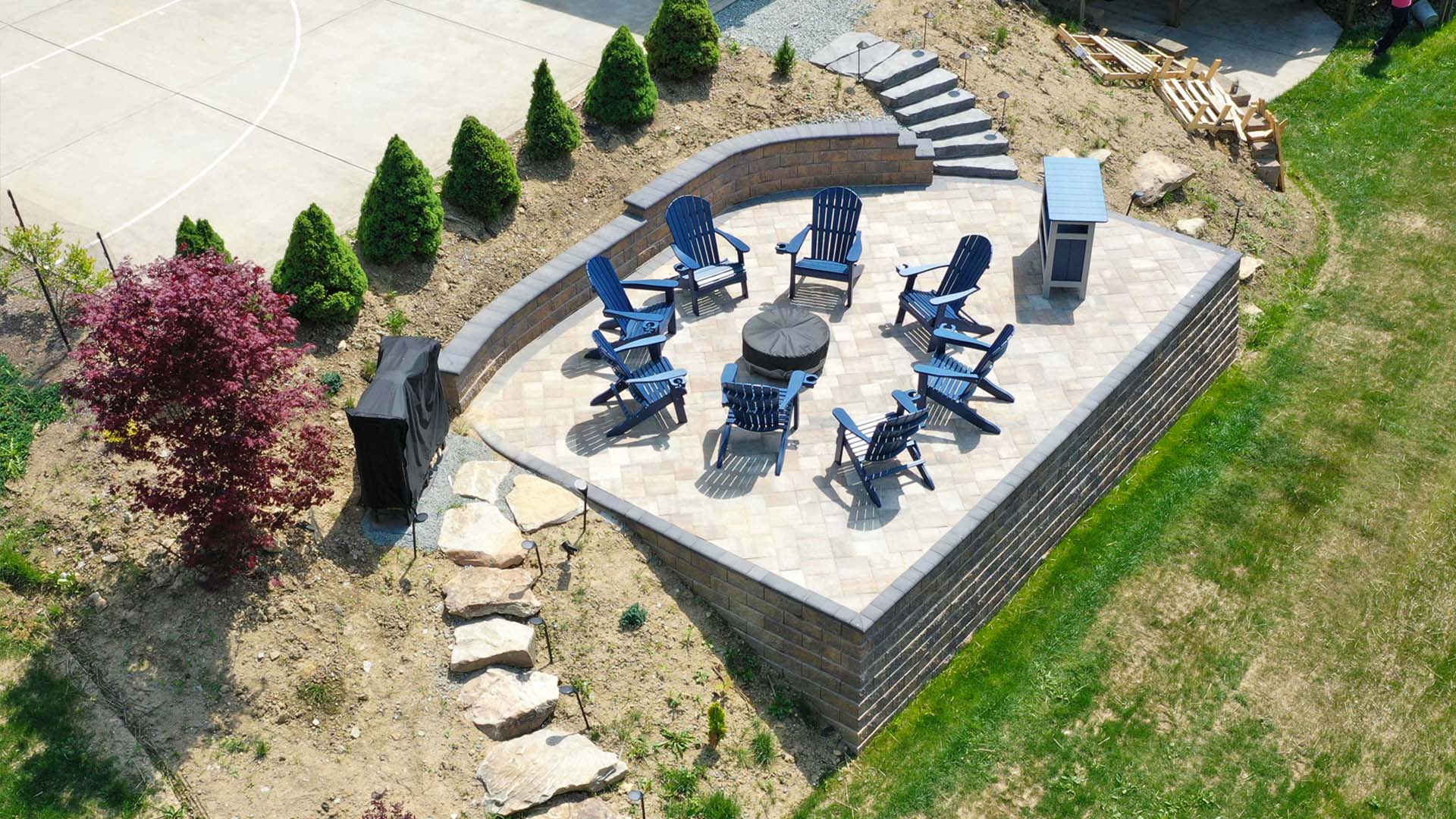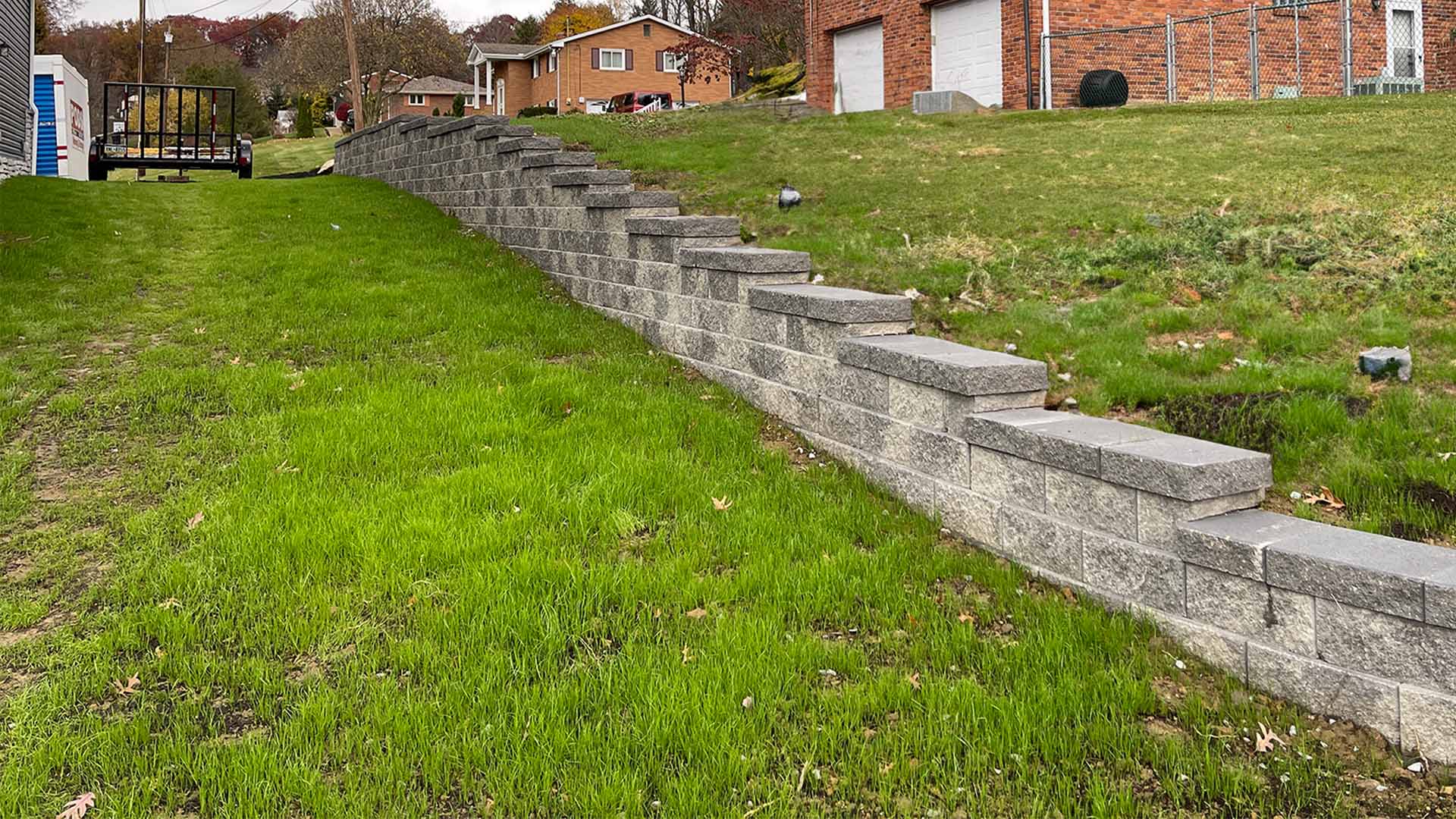
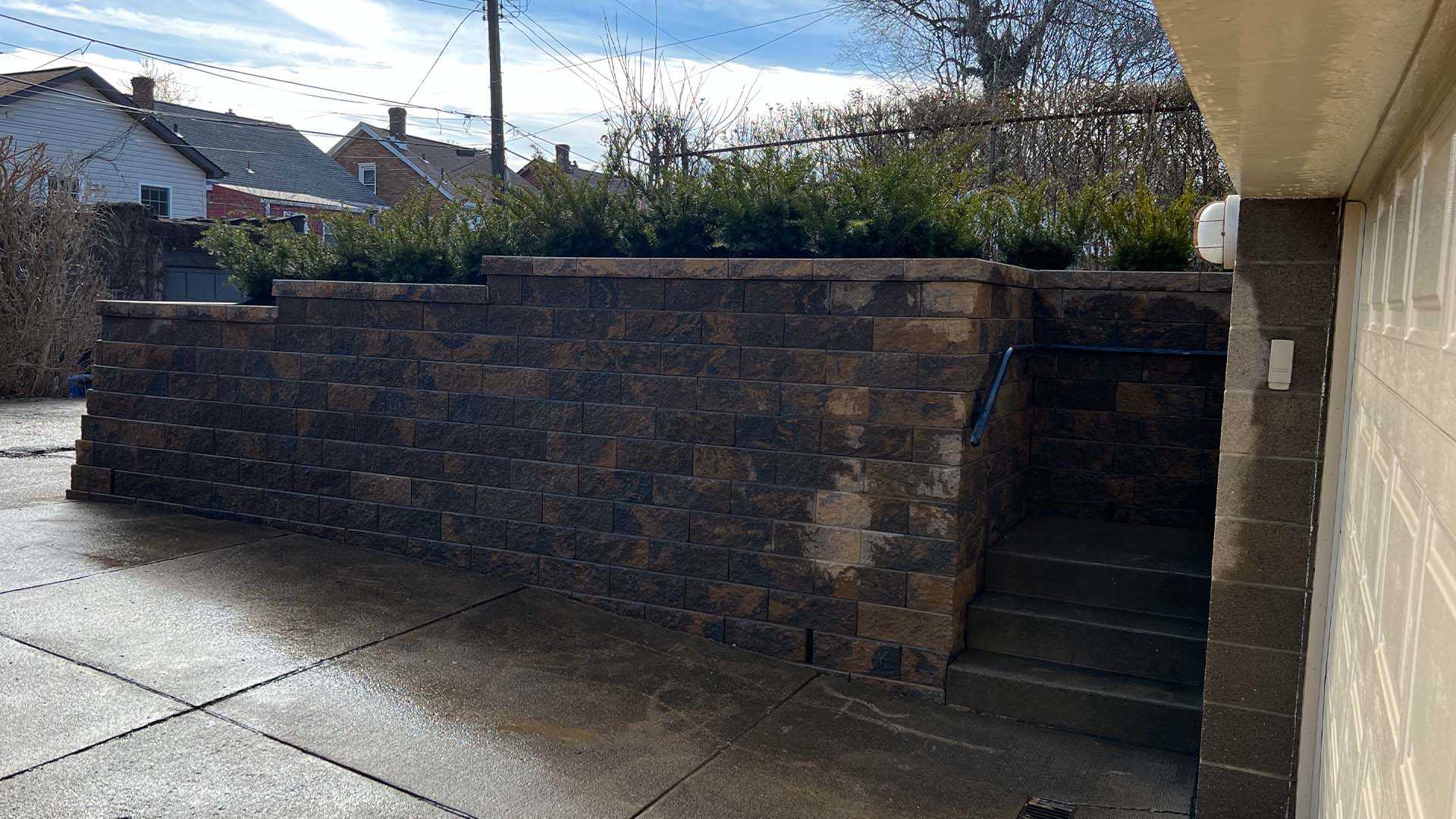
A retaining wall's job is to hold back soil, but the thing that actually destroys most retaining walls is not the soil itself. It is water trapped behind the wall with nowhere to go. Drainage is not an optional extra on a retaining wall, it is the difference between a wall that lasts for decades and one that bulges, cracks, or leans within a few years. Here is why walls fail without it, how to spot the warning signs, and what a proper fix looks like.
Soil behind a retaining wall holds water after every rain and every snowmelt. If that water has no way to drain out, it saturates the soil and builds up what is called hydrostatic pressure: the outward push of water trying to escape through the only weak point available, which is the wall itself. Unlike dry soil, which a well-built wall is designed to hold, saturated soil is far heavier and pushes with far more force.
That pressure does not let up. It pushes on the wall every time it rains, freezes and expands during Pittsburgh's winter freeze-thaw cycles, and slowly works joints, panels, and footings loose. A wall that was built strong enough to hold back dry soil can still fail within a few seasons if water is never given a path out.
Retaining wall drainage failures rarely happen overnight. They show up gradually, and catching them early is what keeps a repair small instead of a full rebuild:
Any one of these signs is worth a closer look. Several at once usually means the drainage behind the wall has failed and the wall is on borrowed time.
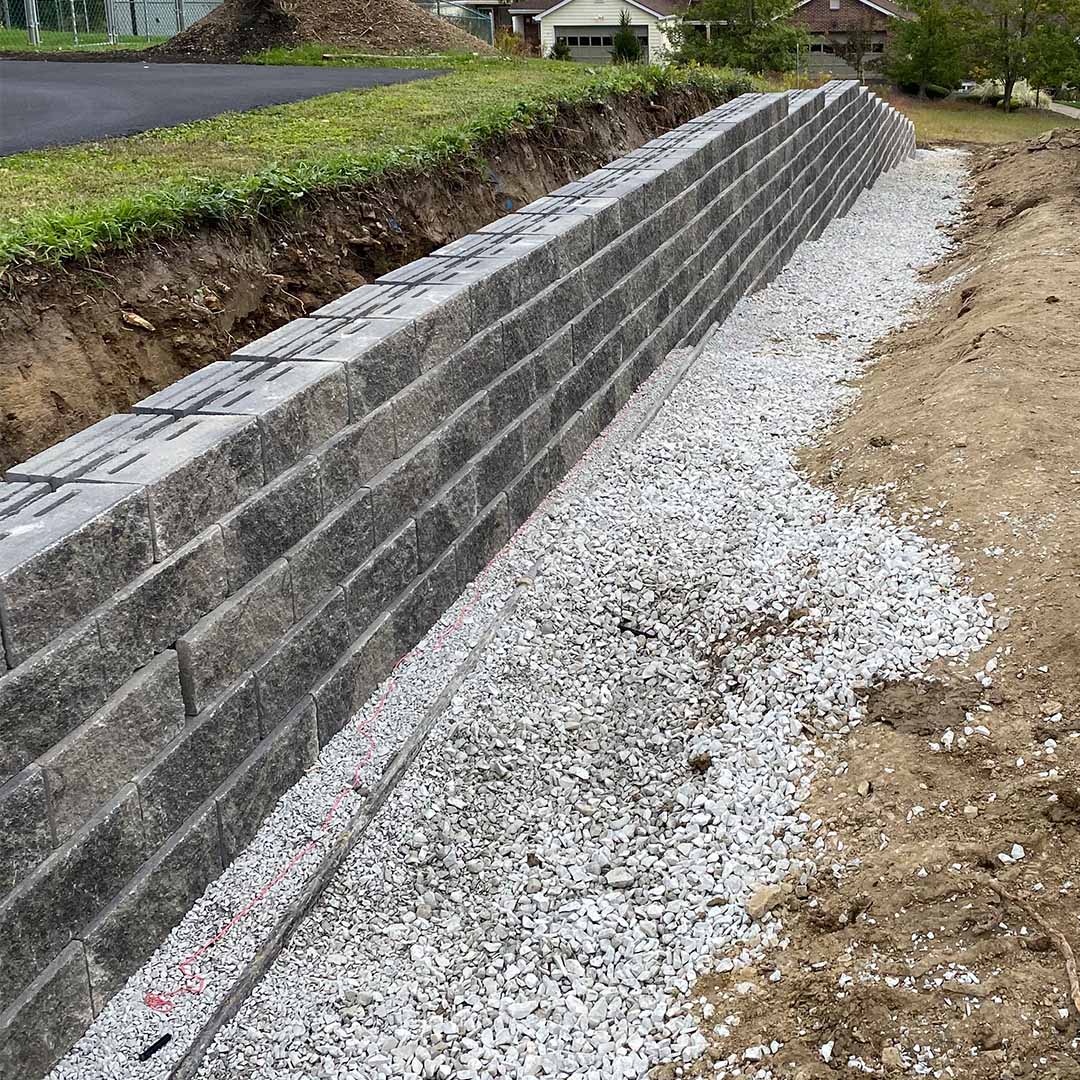
A correctly built retaining wall manages water with a few layers working together, not a single fix:
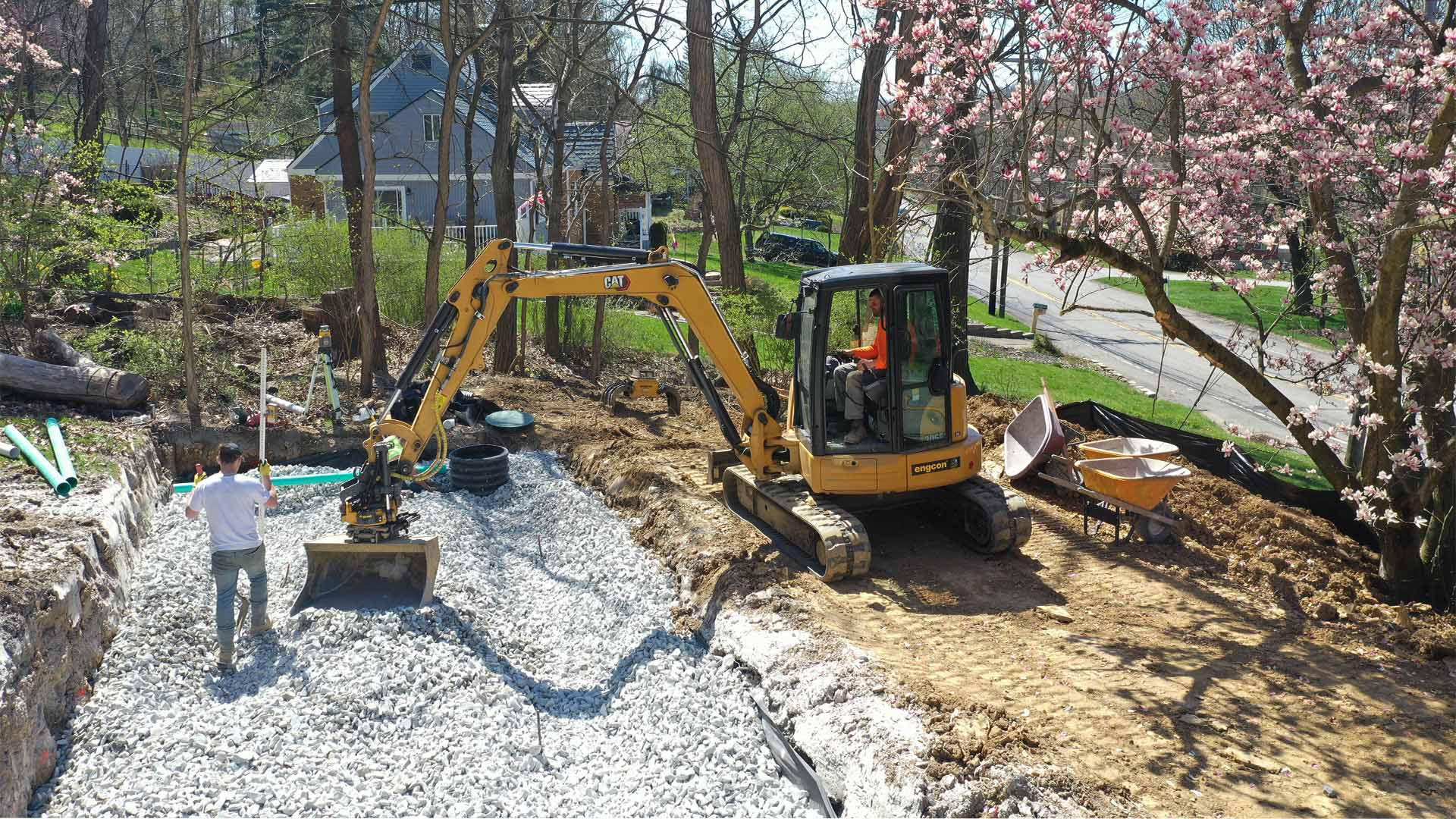
Combined, these layers give water a clear path out of the system at every stage instead of letting it accumulate. NDS, a leading manufacturer of drainage components, has a good plain-language rundown of how a French drain system works, which covers the same perforated pipe and gravel principles used behind a retaining wall.
On a lot of Pittsburgh properties, a retaining wall is not dealing with rainfall in isolation. It is also catching groundwater moving downhill through clay soil, runoff from a slope above it, or water shed from a nearby downspout. In those cases, the drain pipe behind the wall often needs to tie into a larger French drain system that carries water further away rather than just to the base of the wall. Grading above the wall matters here too: water that is directed away from the top of the wall in the first place is water the drainage system behind it never has to handle.
This is also why a retaining wall problem and a yard drainage problem are often the same problem wearing two different faces. A downspout dumping water at the top of a slope, or a low spot that never quite dries out above the wall, will eventually find its way behind the wall regardless of how well the wall itself was built. Fixing the wall without addressing where the water is coming from usually means doing the repair twice.
Not every drainage problem behind a wall requires the same amount of work. A few factors determine how involved the repair is:
A site evaluation is really the only reliable way to know which of these you are dealing with before work starts.
A short, low garden wall holding back a couple feet of soil, with visible efflorescence and no structural movement, is sometimes a fair DIY project: pull the wall, add proper gravel backfill and drain pipe, and reset it. But several signs mean it is time to call a contractor instead of tackling it yourself:
Q&A Landscaping is NDS Drainage Certified, and drainage is built into every retaining wall we design, not added as an afterthought after something fails. If you want a rough sense of project scope before reaching out, our retaining wall price calculator is a good starting point.
Bulging, leaning, efflorescence, or a soggy base at the foot of a wall are all worth a second look before they become a bigger repair. Visit our retaining wall page to see the work we do across Pittsburgh's South Hills, or reach out through our contact page and we can take a look at what is actually happening behind your wall.