We install all three, so I have no reason to push one. What I can tell you is how each behaves here, because Pittsburgh does something to patios that a warmer city does not. It freezes, thaws, and does it again all winter.
Water gets into a surface, freezes, expands, and moves whatever holds it. A paver patio is made of individual interlocking pieces set on a compacted stone base, so the ground can shift slightly without cracking a single slab. The Concrete Masonry and Hardscapes Association, a paver trade group, puts it this way in its pavers versus concrete guide: for regions with freeze-thaw cycles or shifting soil, pavers offer significant advantages with their semi-flexible nature. They have an interest in that answer, and it matches what we see.
Poured concrete does not flex. Some cracking is a normal part of how concrete ages here, and we plan for it. We compact the subbase, use wire mesh and rebar where it applies, and cut control joints so any cracking happens in planned places instead of random ones. A solid base is what keeps hairline cracks from turning into settling.
Exposed aggregate and stamped concrete are both poured concrete, so both fall under that.
This is where the difference is easiest to see. If a paver settles or stains, we lift it, fix the base underneath, and set it back. A repaired patio looks like the rest of the patio.
A cracked concrete section is harder to hide. Repairs on poured concrete often mean cutting out a section, and a patch rarely matches the original surface. Deicing salt is also hard on concrete, especially in its first year, so we recommend plain sand for traction on a new slab and sparing use of deicers after that.
For pavers, our patio packages are installed prices for 300, 500, and 700 square feet. They include layout, excavation, a compacted stone base, haul-away, pavers in your color, a darker border, and polymeric sand. The Patio Packages section lists what is and is not included, and the paver patio calculator gives a ballpark for other sizes.
For concrete, basic broom-finish concrete costs the least per square foot, stamped concrete with color costs the most, and exposed aggregate falls in between. Our concrete page covers the options. Those prices move with size, prep work, and design complexity, and we confirm them at the estimate.
Concrete costs less per square foot. Pavers cost more up front and are easier to repair. Which one is the better value depends on how long you plan to be there and how you feel about a crack.
A paver patio from us is dug out about 9 inches, with 6 inches of compacted limestone as the base and a single inch of smaller limestone chips screeded level for the pavers to sit on. That base is the reason the patio moves as one piece through the winter. Sealing is not required, but it protects against staining, keeps the polymeric sand in the joints, and can bring out the color. Past that, upkeep is mostly rinsing off debris and re-sanding joints if the sand washes out over the years.
Concrete has its own version of the same rule. We handle complete removal of an old slab, haul away the debris, and prepare the subbase with compacted gravel before pouring, because that foundation work is what keeps a new slab from cracking badly. Concrete upkeep is lighter, mostly keeping deicing salt off it.
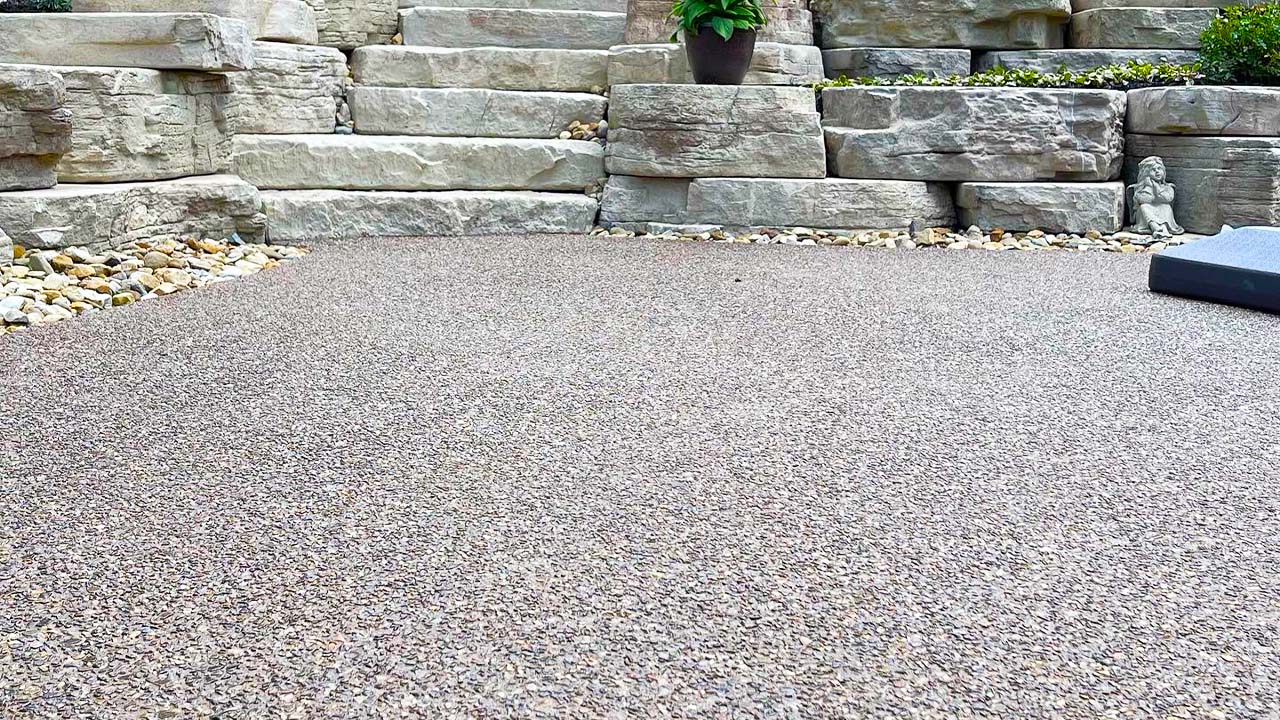
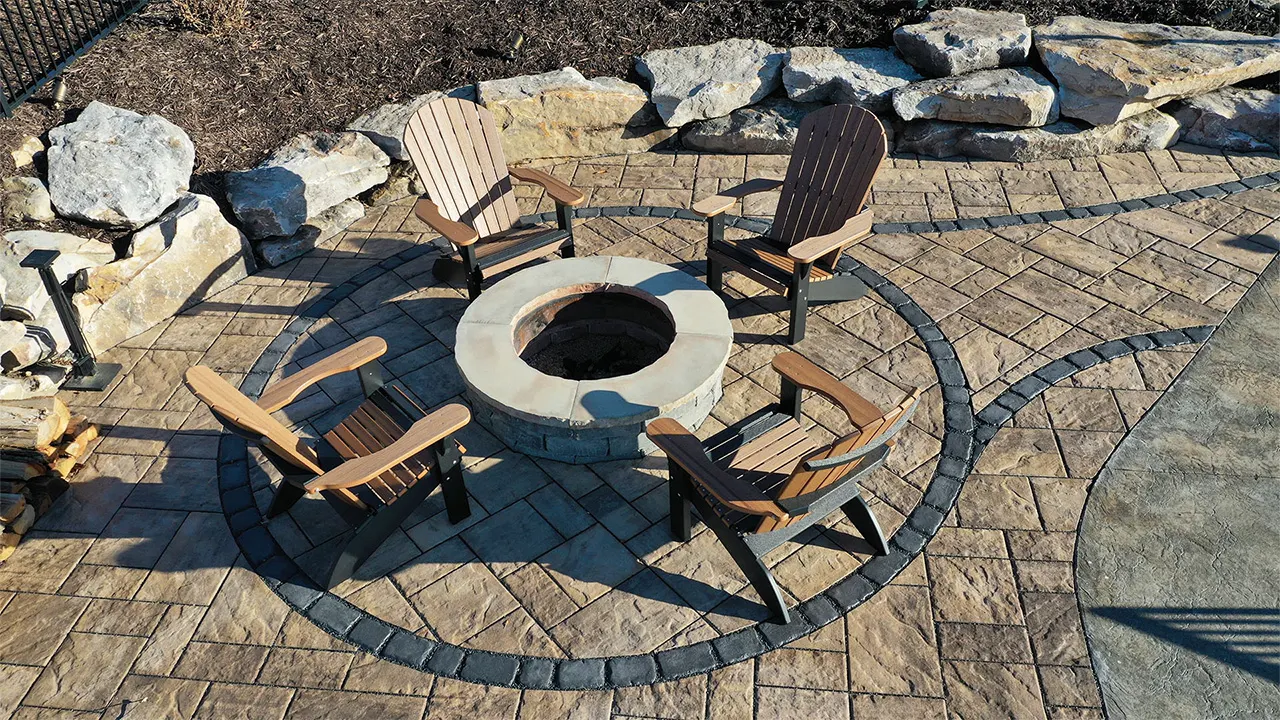
A small patio next to a stone wall, where you want a clean look and the lowest price, suits exposed aggregate. A patio that needs a shape, a border, a firepit, or a set of steps suits pavers. Stamped concrete is for people who want the look of natural stone on a poured surface and accept that it can crack.
Whichever you pick, the base does most of the work. Skip the compaction and any of the three will fail in a few winters. We build patios across the South Hills, including Mt. Lebanon, and we will walk your yard and show you samples before you decide. Reach out through the contact page.
Pavers tend to handle freeze-thaw cycles better than poured concrete, because individual pavers can shift slightly with the ground without cracking a single slab. Any patio depends on a compacted base to last.
Concrete costs less per square foot than pavers. Basic concrete is the least expensive, stamped concrete with color the most, with exposed aggregate in between. Our paver patio packages are priced for 300, 500, and 700 square feet, and we confirm every number at the estimate.
Yes, but repairs on poured concrete often leave a visible patch. A paver can be lifted, the base fixed, and the paver reset, which leaves the patio looking uniform.




From the blog
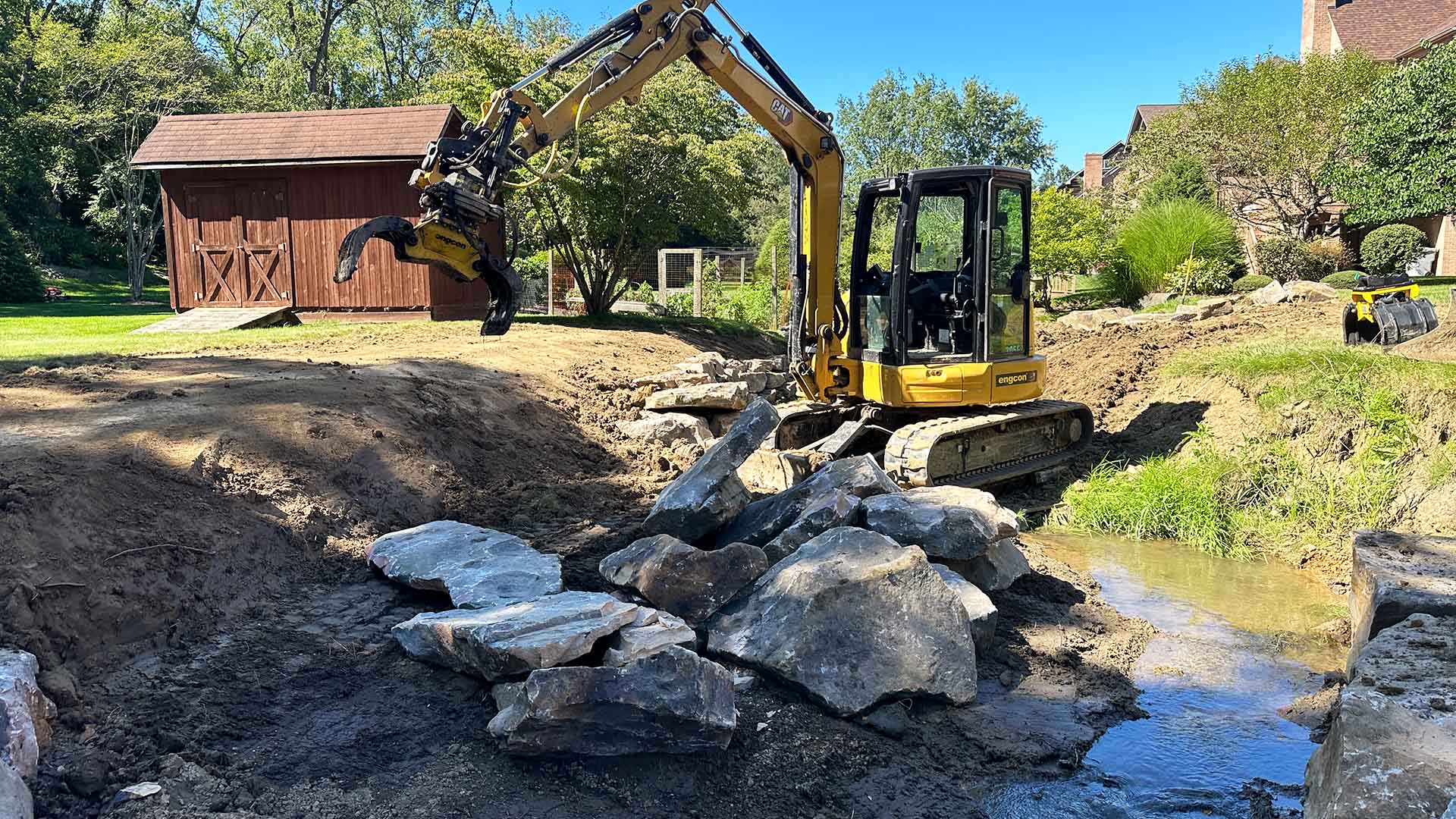 Hillside Landscaping: What Holds a Slope
Water, soil, and a good base decide whether a slope stays put. Here is how walls, boulders, and stone work on South Hills hillsides.
Read the article
 Protecting New Sod, Seed and Plantings Over Winter
What a new lawn and new plants need to get through their first Pittsburgh winter, and what to check when the ground thaws.
Read the article
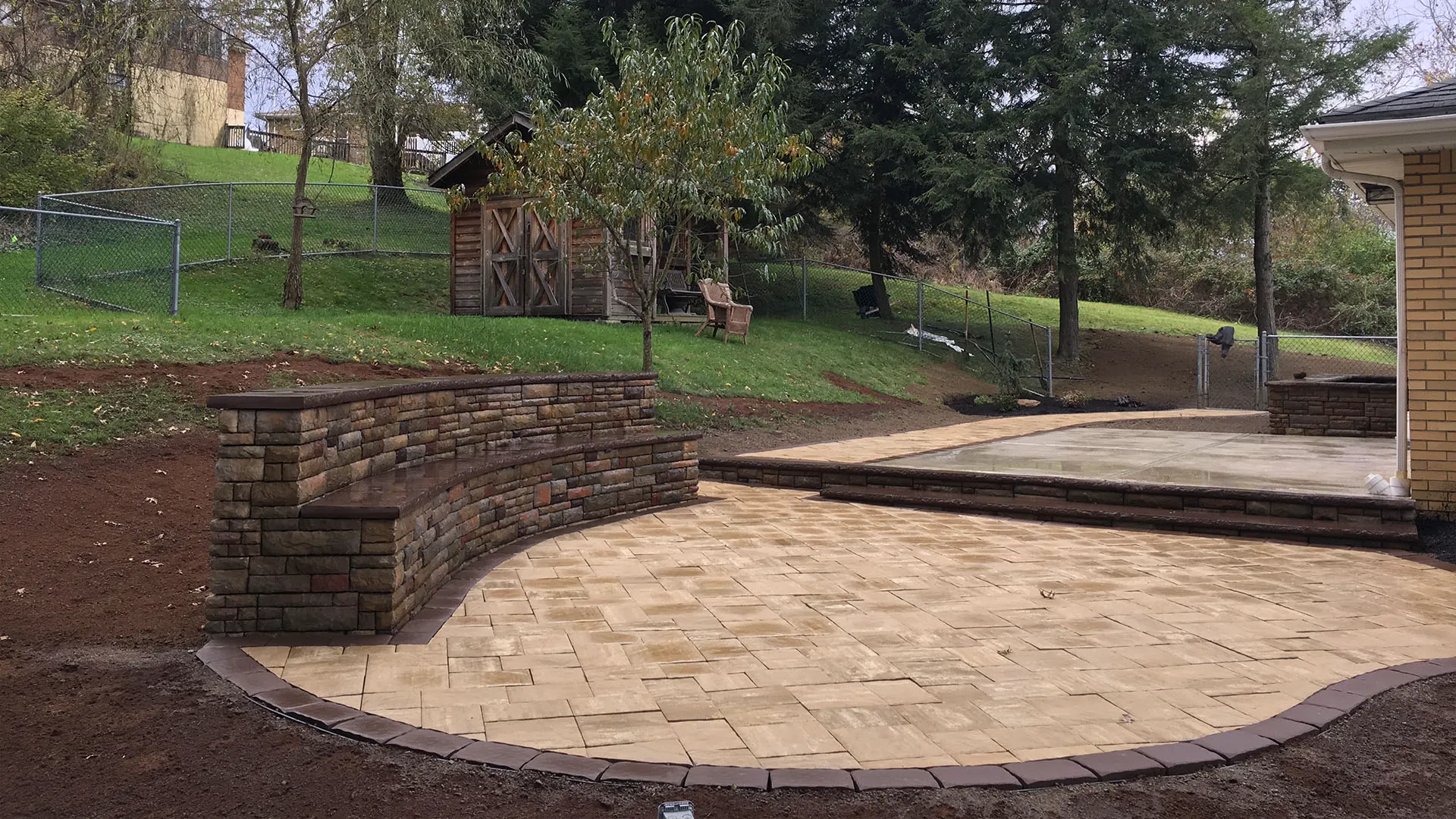 Rock Salt and Pavers: Winter Care
How salt, snow piles, and ice affect patios, walls, and steps in a Pittsburgh winter, and what to do instead.
Read the article
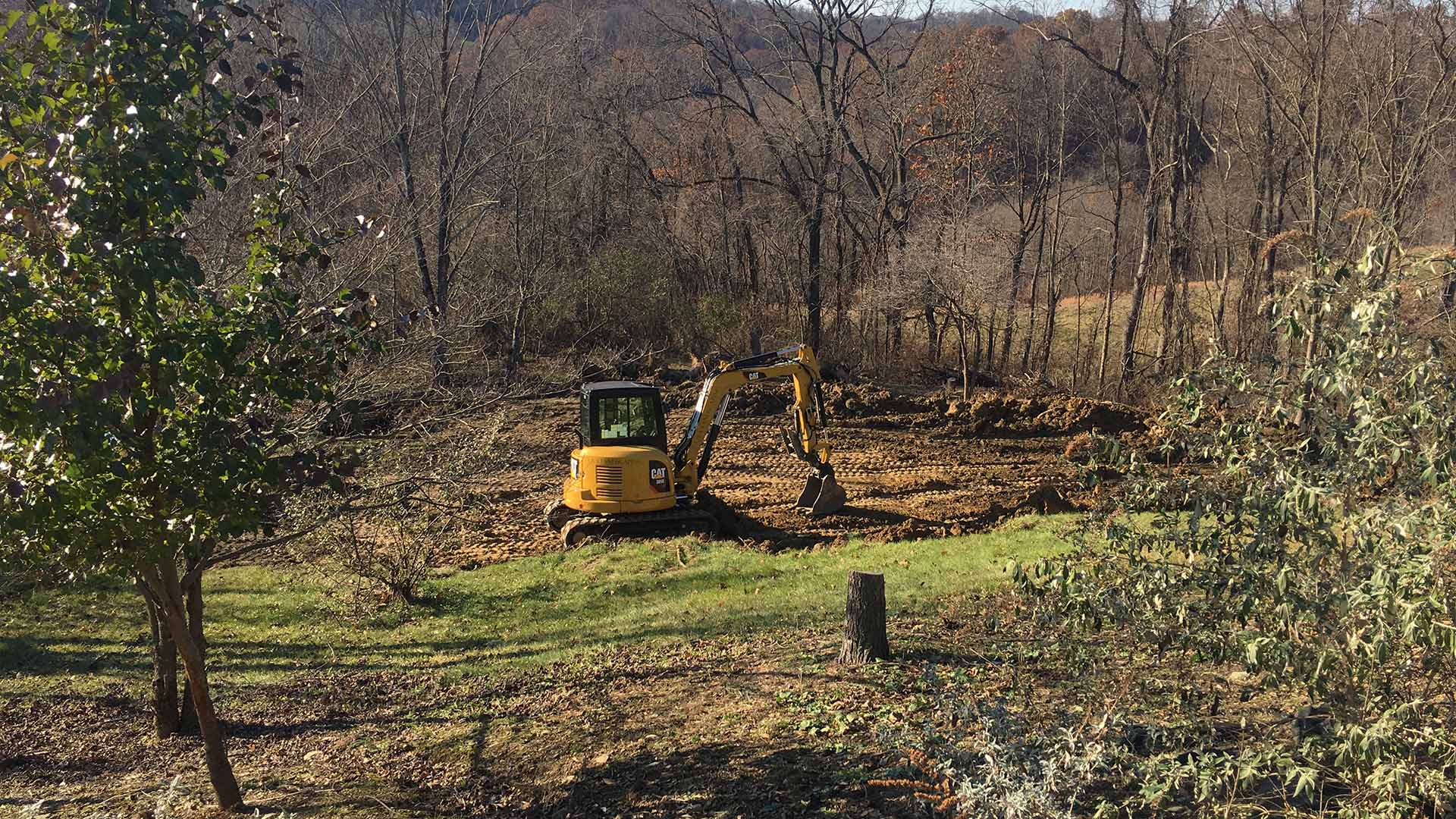 Six Signs Your Yard Needs Drainage Work
Standing water and soft ground are the early ones. Here are six signs to watch for on a South Hills property, and what to do about them.
Read the article
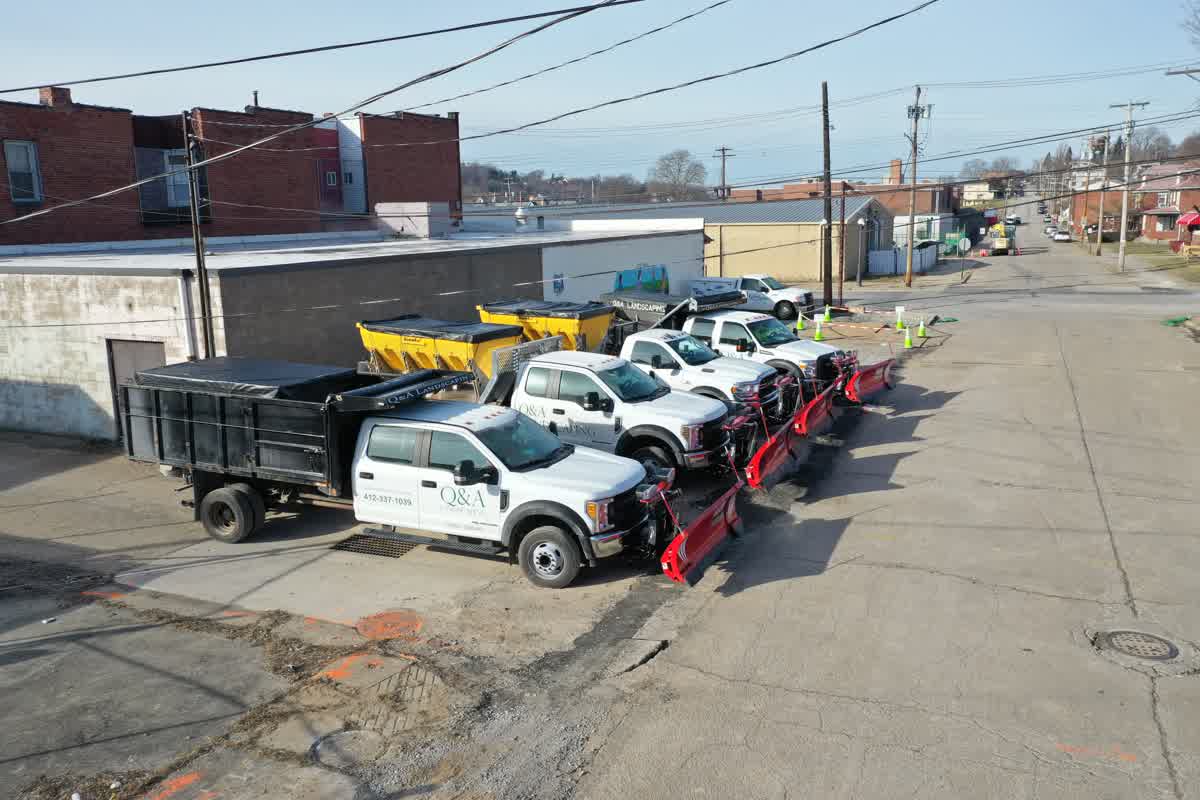 Commercial Snow Removal in Pittsburgh
What a commercial snow plan covers for the 2026 to 2027 season, how our list works, and why the time to book is before the first storm.
Read the article
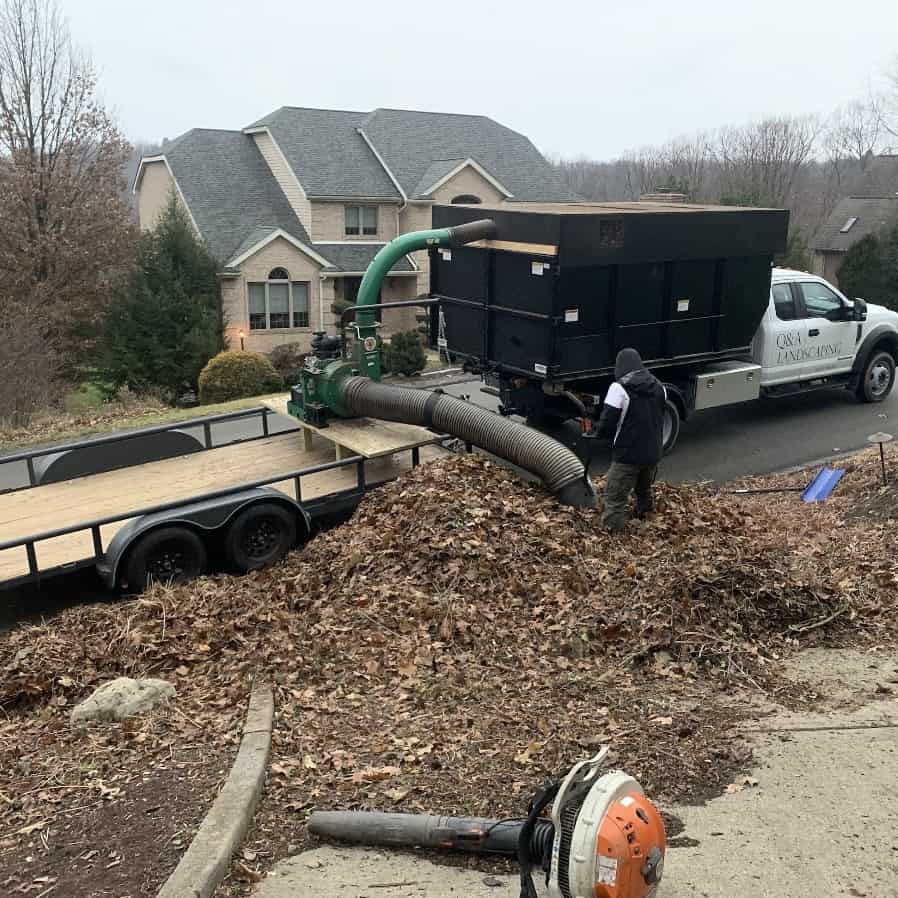 Fall Cleanup Checklist
A simple, step-by-step list for preparing your yard before winter arrives.
Read the article
Book a Spring Patio or Wall Over the Winter
The spring schedule fills early. A winter site visit and estimate gets you a spot on it and leaves the decisions made before the ground thaws.
Read the article
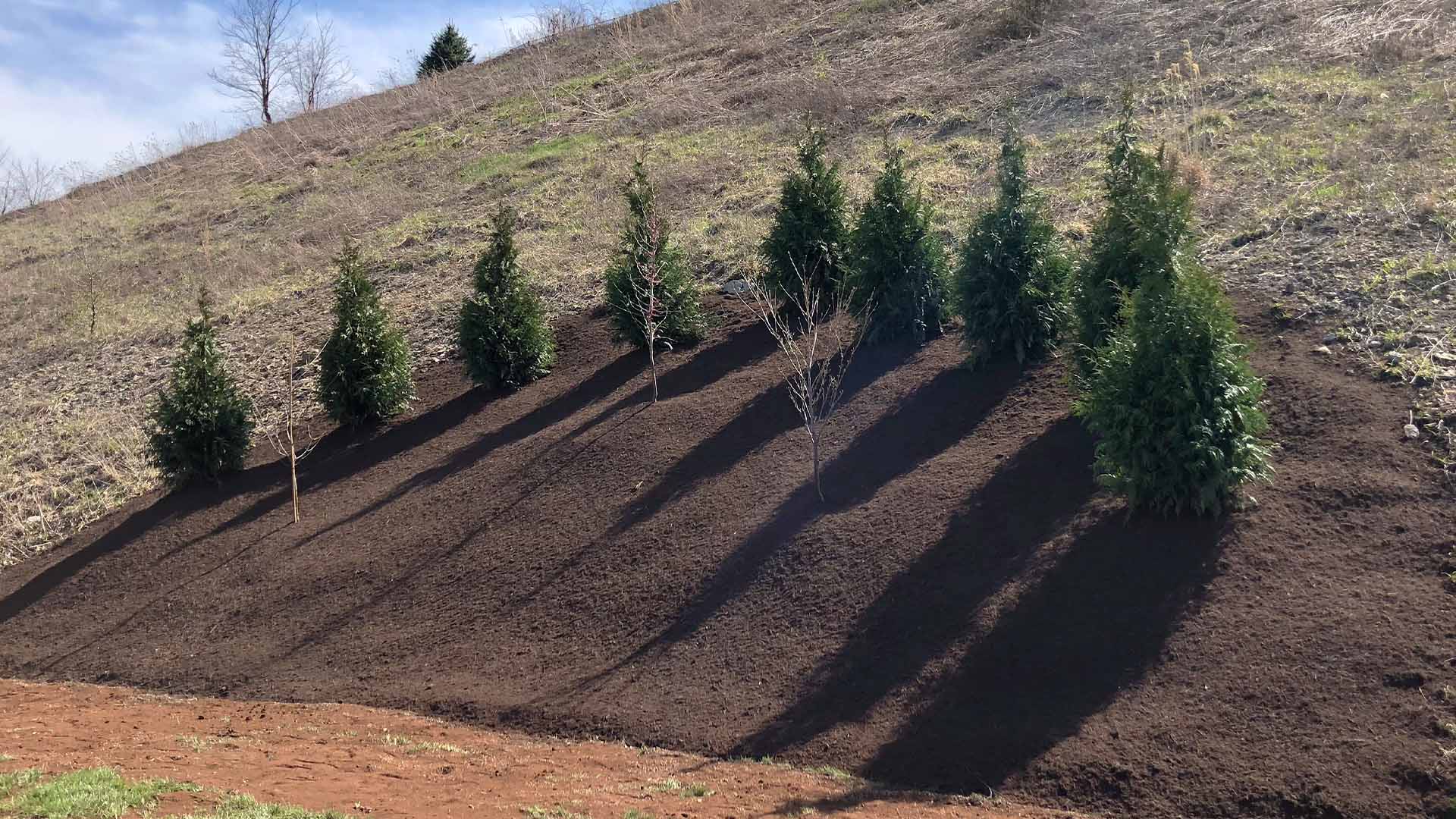 When Is It Too Late to Plant Trees and Shrubs?
Fall is a good time to plant in Zone 6a/6b, but the window closes. Here is where the line sits and how to get a new tree through its first winter.
Read the article