Most drainage problems start small and build for years. By the time water is in the basement, the cause has usually been working on the property for a long time. The signs show up earlier, if you know what to look for.
Pittsburgh's clay soil is the reason these come up so often. Water does not soak into clay the way it does into sandy soil, so it runs downhill or sits on top. These are the six signs we see most on South Hills properties.
Standing water that is still there more than 24 hours after a storm means the soil is not draining or the grading sends water to that spot. One puddle after a downpour is normal. The same spot every time it rains is a pattern.
If the lawn feels spongy and squishy days after the rain stopped, water is trapped below the surface. Walk the yard a day or two after a storm and note where your feet sink. Those spots are where a drain would go to work.
Moisture or seepage along basement walls often comes from groundwater pressing against the foundation. A mold or mildew smell below grade points the same way, to exterior drainage that is failing. This is the sign that costs the most to ignore, because water that sits against a foundation season after season does cumulative damage.
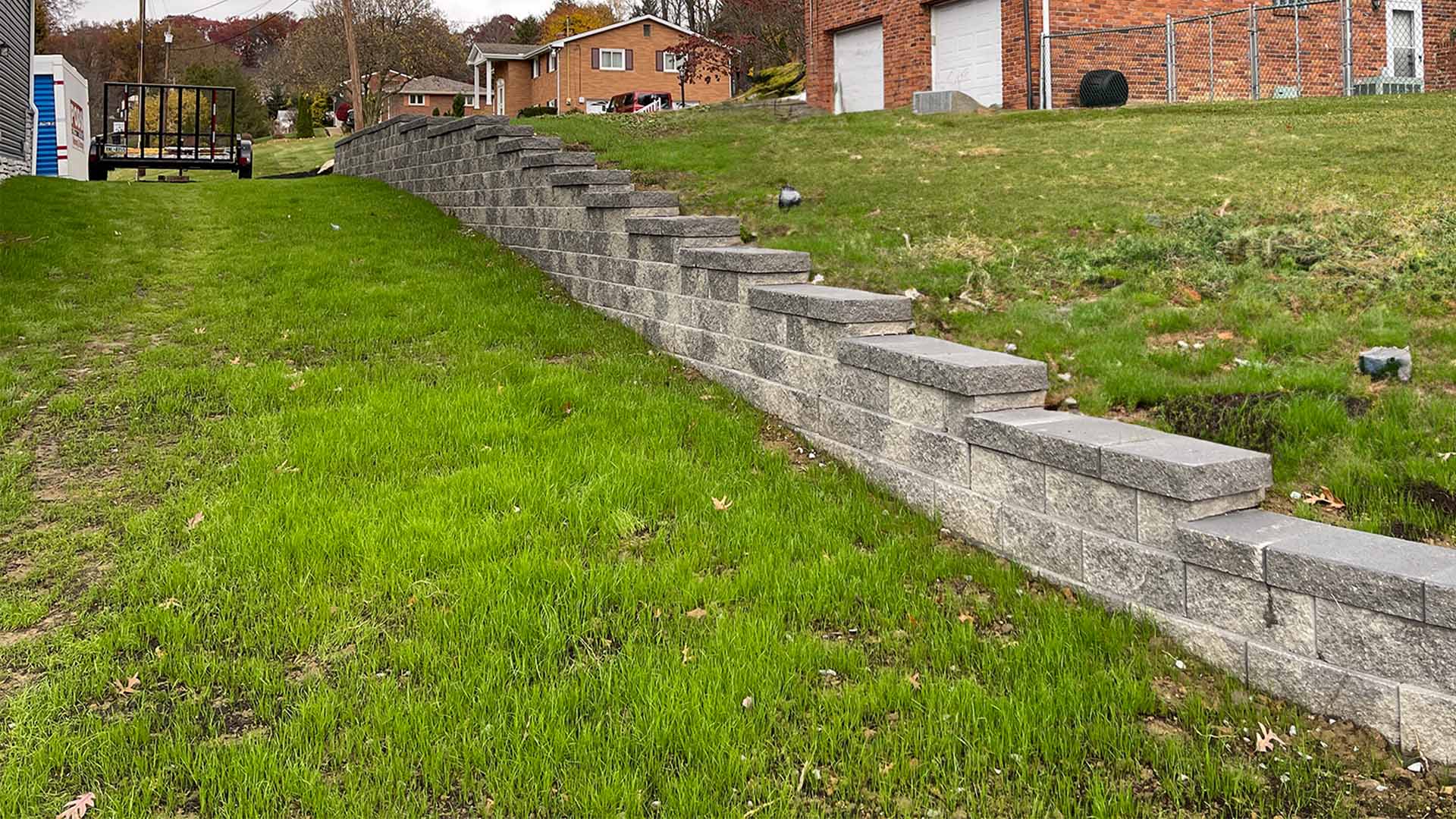
Channels, ruts, and bare soil on a hillside tell you surface water is moving fast with no path to follow. It will keep carving the same line. If your yard is on a grade, our post on what holds a slope covers how drainage, walls, and stone work together.
Grass that drowns in one low area while the rest of the yard is fine is a grading problem. The water collects there and the roots sit in it. Reseeding will not last until the water has somewhere else to go.
Foundation cracks can come from hydrostatic pressure, the push of trapped water against the wall. A retaining wall shows it a different way: bulging in the lower half, a forward lean, white chalky efflorescence, separated joints, and a soggy, mucky base. Several of these at once usually means the drainage behind the wall has failed. We cover the wall side in How to Fix Retaining Wall Drainage Problems, and a downspout dumping at the top of a slope will find its way behind a wall no matter how well it was built.
Before you call anyone, look at your downspouts. Each one should reach well away from the house, and any clogged section should be replaced. Roof water dumped next to the foundation or at the top of a slope feeds several of the signs above. On a job we look at the full picture so the water has somewhere to go.
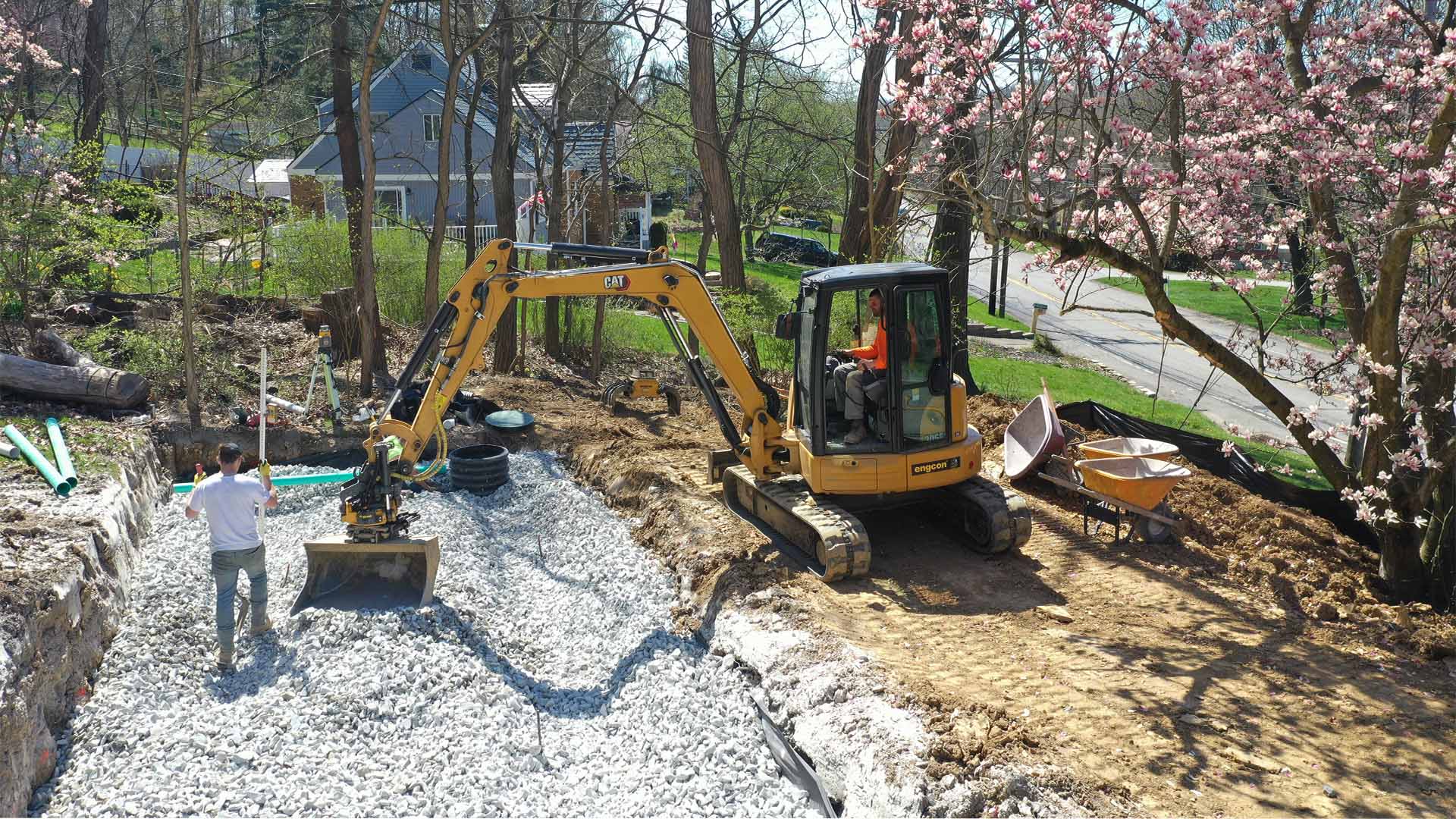
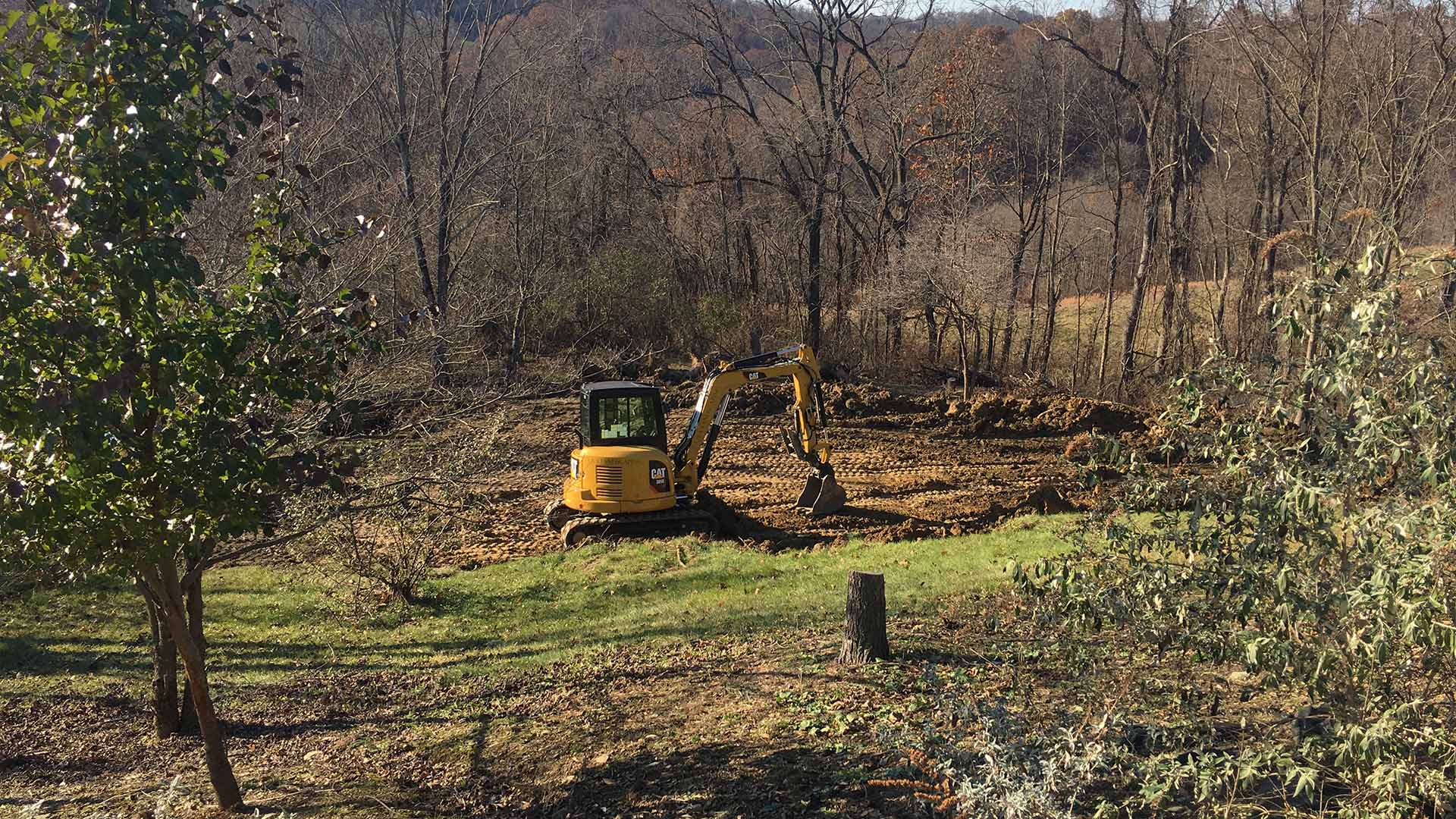
The fix depends on where the water is. A French drain is a trench of gravel around a perforated pipe, and it suits subsurface water such as a wet basement or saturated soil. A channel drain handles surface water on a driveway, a patio, or at the base of a slope. A catch basin collects water at a single low point. Regrading reshapes the yard so surface water leaves on its own, and extending a downspout moves roof water farther from the house. Many Pittsburgh homes built into a hillside get regrading and a French drain together.
Execution decides whether it works. Most drainage failures we see come from wrong pipe, bad slope, no filter fabric, or a drain that empties nowhere useful. A French drain needs a steady downhill grade, filter fabric around clean stone, the right pipe, and a real discharge point. A drain that dead-ends in the yard just moves the problem.
The steps on our jobs are the same each time. We evaluate the water source, soil, slope, and best discharge point. PA One Call marks underground utilities. We trench, lay the fabric, gravel, and pipe, backfill with clean stone, and restore the lawn with seed or sod. A drainage job is not finished until the yard looks right. Most residential French drain projects take one to three days depending on the length of the run.
Late winter and early spring are good times to plan the work, because the ground is saturated and you can see exactly where the water collects. If you are watching a spot flood this month, take photos. They help us a great deal at the estimate.
Our excavation and drainage page lists what we do, and our earlier post, Do You Need a French Drain?, goes deeper on the drain itself. We serve Upper St. Clair and communities across the South Hills, and we are NDS certified.
Puddles that linger for more than 24 hours after a storm point to poor soil drainage or a grading problem. Ground that stays soft and spongy for days is another sign that water is trapped below the surface.
No. A French drain suits subsurface water such as a wet basement or saturated soil. Surface water may need a channel drain, a catch basin, regrading, or a longer downspout, and many projects combine two of these.
Yes. Restoration is part of every drainage job. We backfill with topsoil and restore the lawn with seed or sod.