If you are asking this question in the middle of October, you are at the edge of the window and not past it. Fall is one of the better times to put a tree or shrub in the ground in the South Hills, and it does not close on a single day. It closes slowly, and what matters is how much time the roots get before the ground freezes.
The top of a tree goes dormant when the weather cools, but the roots keep working while the soil is still workable. A plant that goes in early enough spends the fall growing roots into its new hole instead of spending energy on leaves and heat. By spring it is already anchored and starts the season ahead of a plant installed in May.
We are in USDA Zone 6a to 6b here, with heavy clay and a real freeze. That clay holds water, which is useful for a new plant and a problem if it sits in a low spot all winter, so where you plant matters as much as when.
Penn State Extension says container-grown trees, shrubs, and hardy perennials can be planted from early to mid-fall, and recommends at least six weeks before the first frost so roots can settle. Their guide on whether fall is for planting is worth a read. Count back six weeks from the date your yard usually gets its first frost and that is a comfortable cutoff for most plants.
Past that date you can still plant. The ground is workable until it freezes, and Penn State notes container-grown plants can go in whenever the ground is not frozen. The risk goes up, though, and it goes up fastest for plants that are marginal in our zone or that were pot-bound at the nursery.
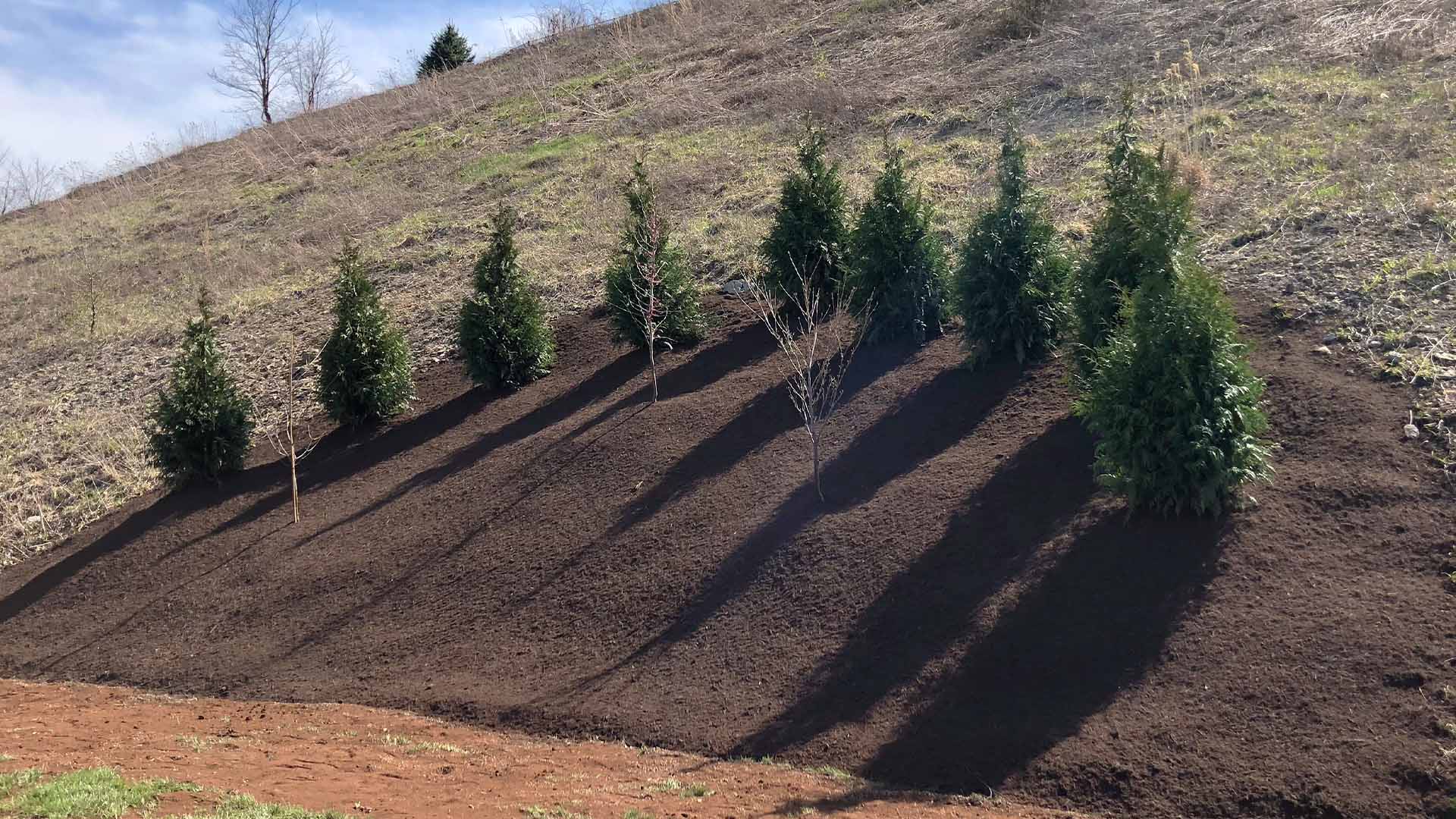
Sturdy evergreens and hardy native shrubs handle a late fall planting better than anything tender. Our fall checklist includes planting evergreens for exactly this reason: they have a full winter of color and the roots settle while nothing else is asking for water.
Anything borderline hardy for Zone 6a is better held until spring. The same goes for plants that have been sitting in a nursery pot all summer with roots circling the inside. Penn State advises against pot-bound stock and suggests cutting an X in the bottom of the root ball and shallow slits down the sides so roots can spread into the backfill.
Bare-root stock is a separate case. Penn State says to plant it while dormant, in early spring or early fall.
This is where fall plantings get lost. The leaves are down, the weather is cool, and it looks like the plant needs nothing. Meanwhile the root ball is a small patch of loose soil in a lot of clay, and it dries out faster than the ground around it.
Penn State's advice is to check new plants weekly and water if the soil is dry. Do that through the fall and keep checking until the ground freezes. Push a finger into the root ball. If it is dry a few inches down, water slowly and let it soak in. Our watering guide goes through how much and how often for new plantings.
Pittsburgh freezes and thaws all winter, and a young plant with a small root ball can be pushed up out of the ground by that cycle. Penn State says a thick layer of mulch keeps new plants from heaving out of the ground during freezing and thawing. Spread it a few inches deep and keep it back from the trunk so it does not pile against the bark. The same mulch holds moisture, which helps with the watering.
A newly planted shrub is a soft target in late winter, when other food is gone. If deer come through your yard, choose plants they leave alone and give them a season to toughen up. Our post on deer-resistant perennials covers what holds up in the South Hills.
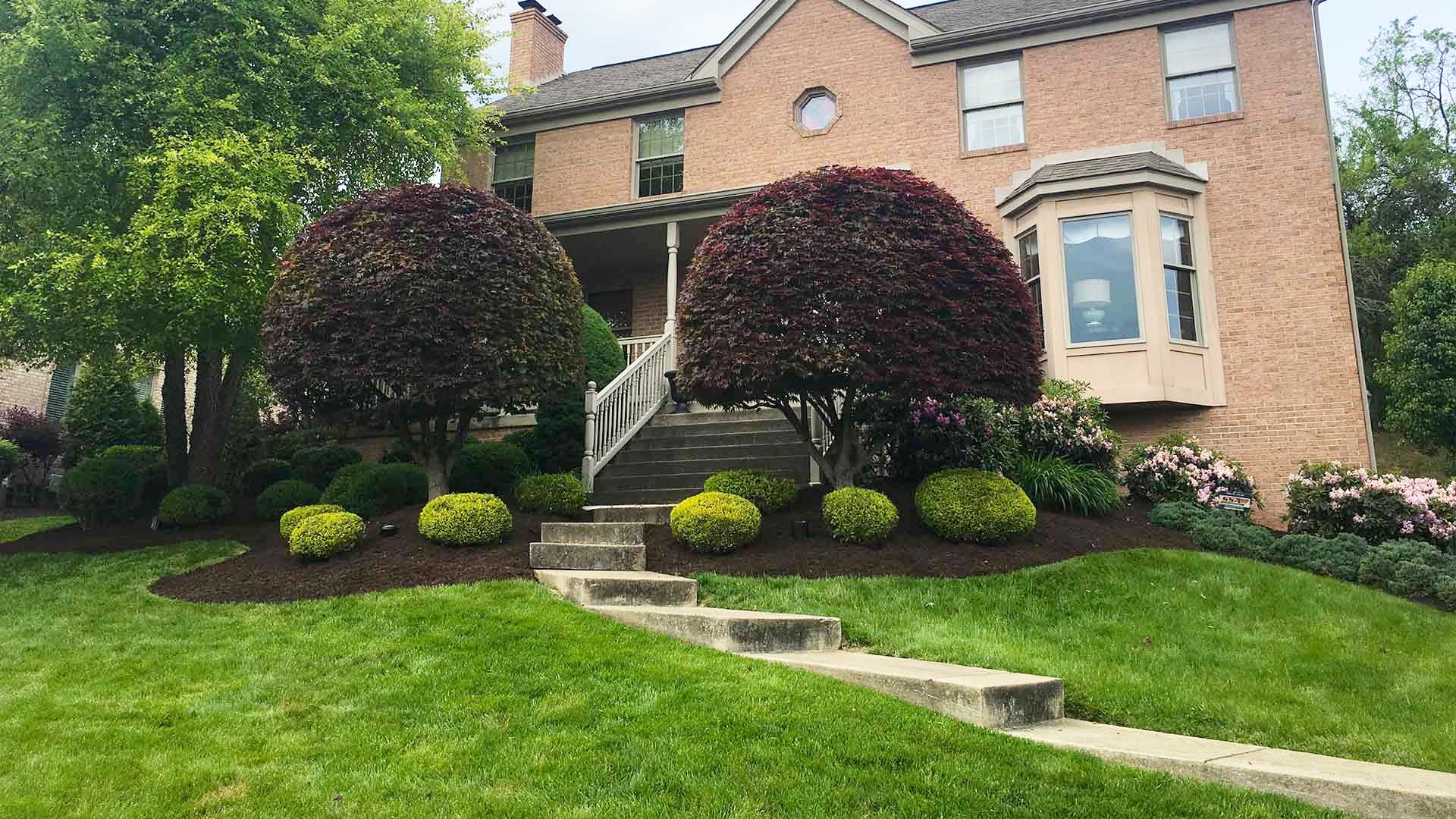
We plant trees, shrubs, and evergreens across the South Hills, from foundation plantings to privacy screens. If you are in Bethel Park or a neighboring town and want to know whether your project can go in this fall, we will walk the property and tell you. See the full range on our plants and shrubs page. If the same project includes a new lawn, the sod calculator gives you a ballpark for that part.
The answer for most yards is the same: if the ground is not frozen and you are willing to water, there is still time, and the earlier the better. If you are not sure about a particular plant, ask us before you buy it.
There is no single date. Penn State Extension recommends planting at least six weeks before the first frost so roots can settle. Count back from the date your yard usually gets its first frost. Container-grown plants can still go in after that as long as the ground is not frozen, with more risk.
Yes. Penn State Extension advises checking new plants weekly and watering when the soil is dry, and that includes the cool months. Keep checking until the ground freezes.
Spring is the safer window for plants that are only marginally hardy in Zone 6a and for stock that was pot-bound. Hardy shrubs and evergreens do well planted in fall. If you are unsure, ask us about the specific plant.