Pavers, walls, and steps are built to handle Pittsburgh winters. Freeze-thaw is the reason a base is dug deep and compacted, and why drainage goes behind every wall. What can still hurt them is what gets spread on top. Here is how to keep them in good shape through the season.
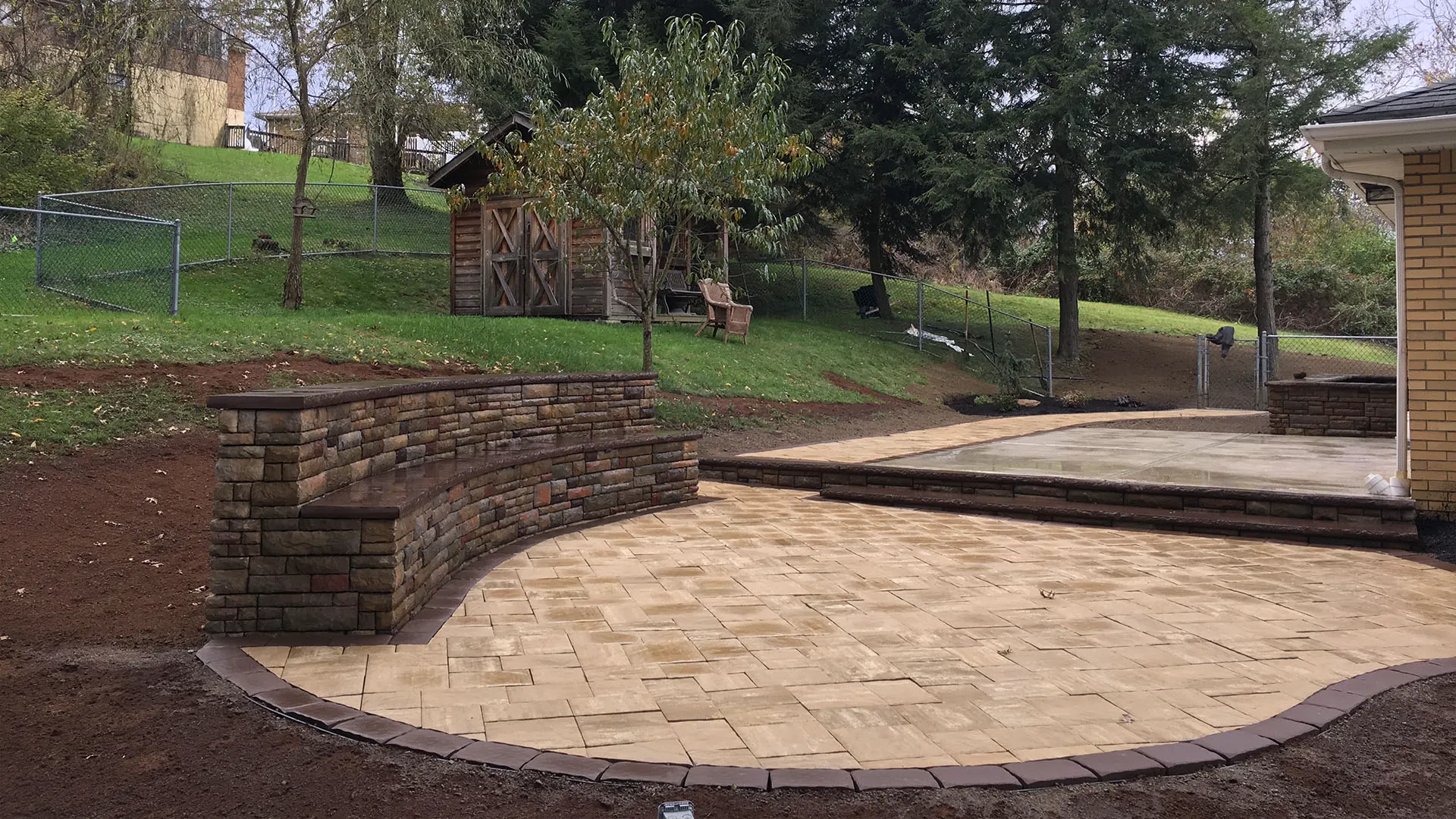
Rock salt works by keeping water liquid below freezing, which means the melted water soaks into the surface of the paver or stone and refreezes, over and over, as temperatures cross 32 degrees. Concrete is porous, and each cycle can pop a thin layer off the surface. This is called scaling. It shows up as a rough, pitted face and it is worst on newer concrete and on any surface that holds standing water.
Newly installed hardscape is the most vulnerable in its first winter. Follow the manufacturer's guidance for the product you have, and ask us if you are unsure. Salt also washes into the joints and the beds beside the patio and kills plants along the edge.
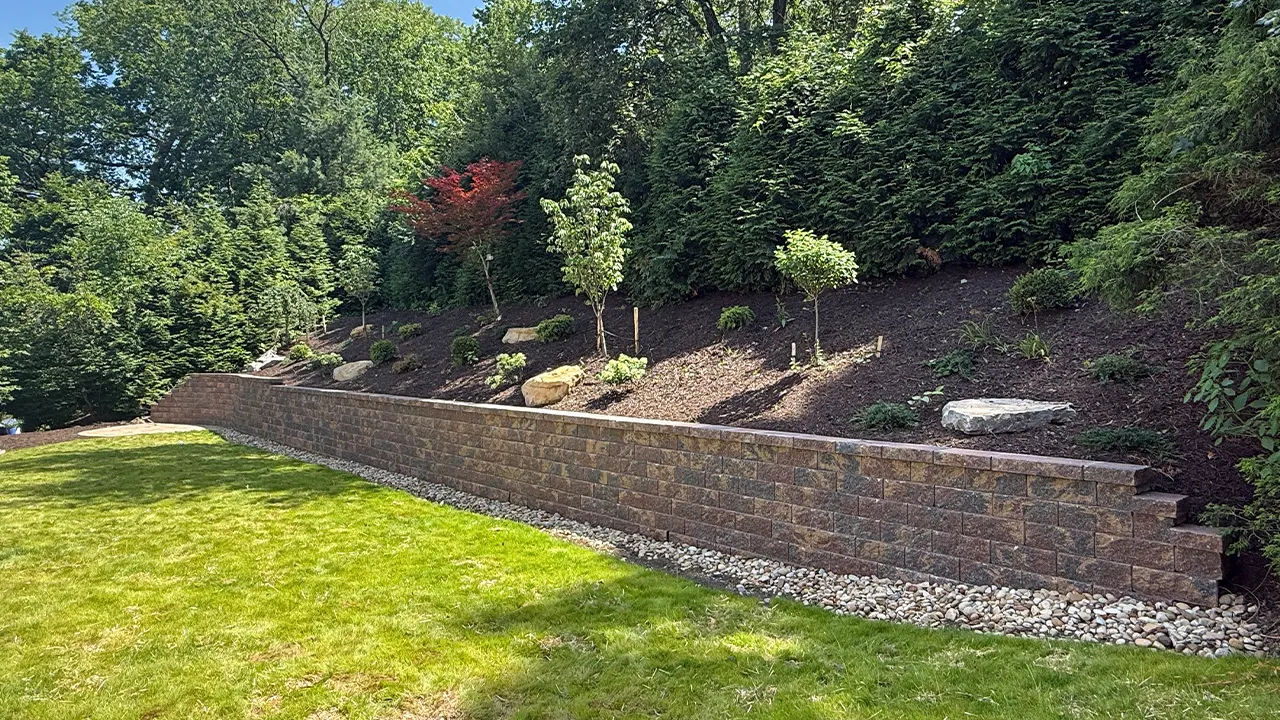
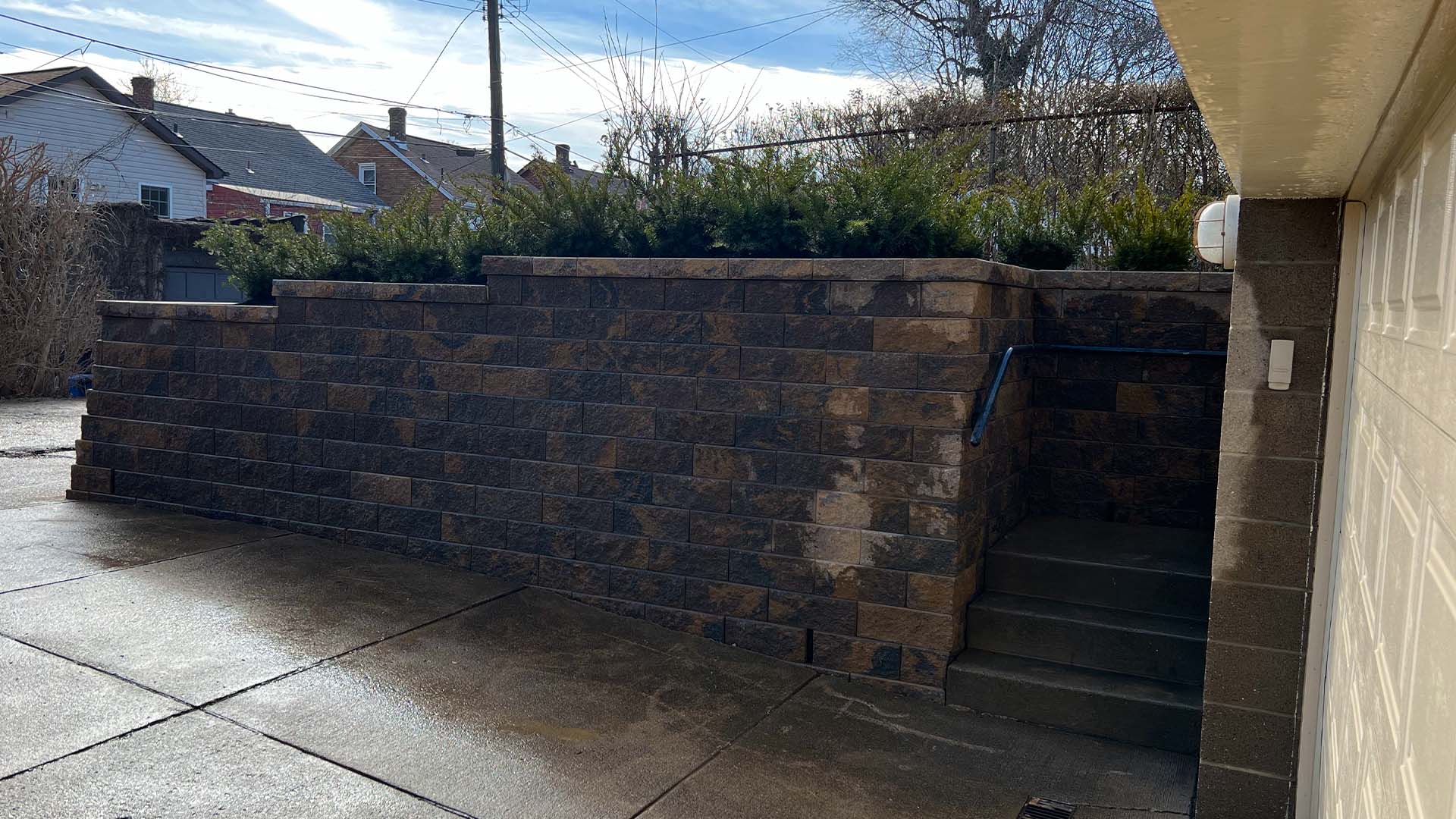
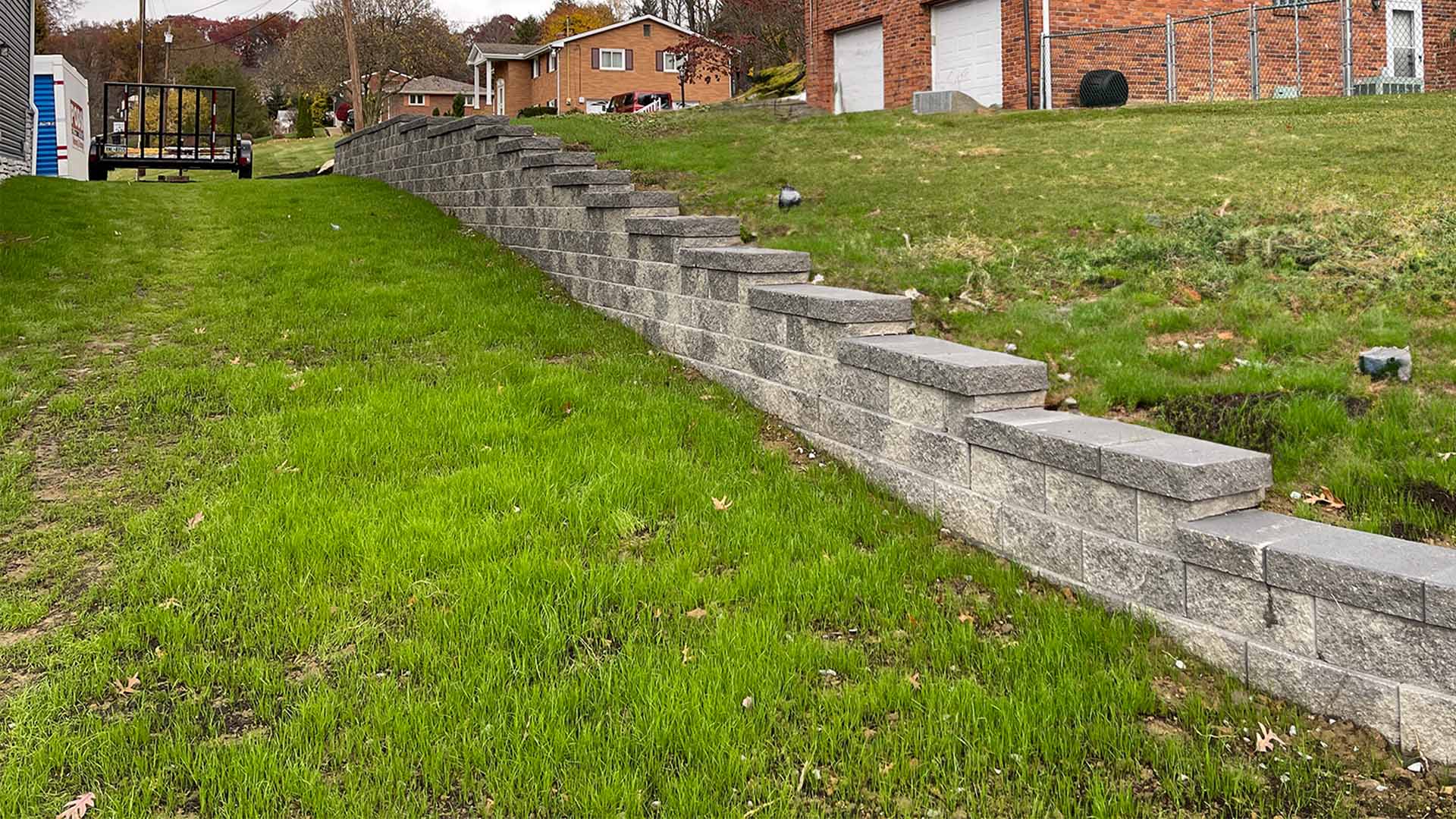
On a retaining wall, the winter risk is water, not salt. A wall with working drainage behind it lets the water out before it freezes. Keep the outlet at the bottom of the wall clear of leaves and snow, and do not pile plowed snow against the face or the top of the wall. A big pile sits there all season and drives meltwater into the wall.
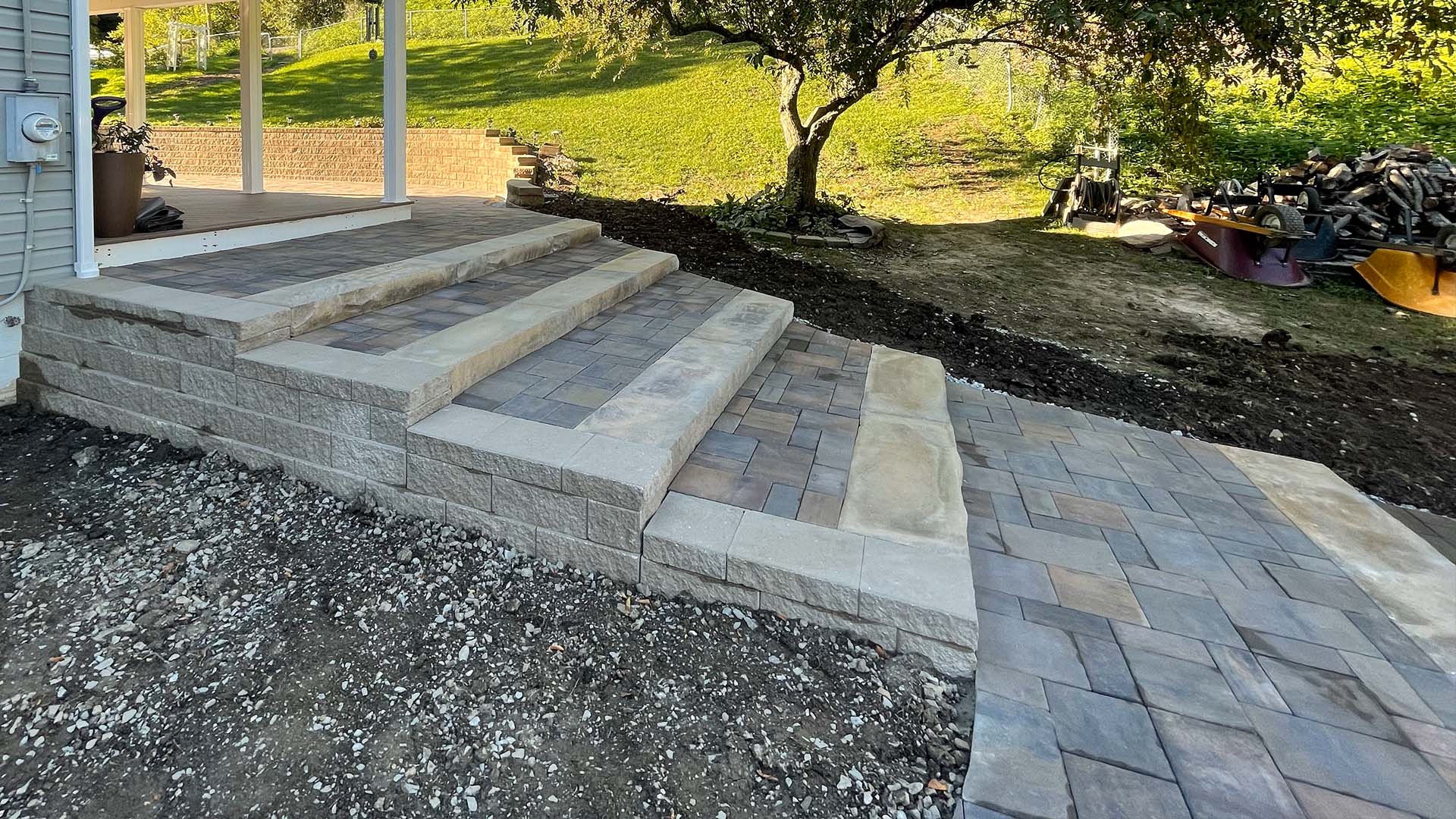
Steps are where most people reach for the salt, because ice on steps is a safety problem. Shovel them first, use sand on the treads, and keep any downspout from running onto them. If a step keeps icing over, a drainage fix is better than more salt every week.
When the thaw comes, look at the joints and the edges. Sand that has washed out of paver joints can be swept back in, and a paver that has settled is easier to fix early than late. Look at the base of each wall for water that is not draining. If you see a problem, send us a note and we will take a look.
We build patios and retaining walls across the South Hills, including Upper St. Clair, Bethel Park, and Peters Township. For help with a winter booking, see Book a Spring Patio or Wall Over the Winter.
It can be. Salt lets meltwater soak in and refreeze repeatedly, which can scale the surface, especially on new concrete. Shovel early and use sand for traction where you can.
Yes. Plain sand gives traction on ice and does not harm pavers. Sweep it up in spring so it does not clog drainage or wash into beds.
Shovel them right after it snows, use sand on the treads, and fix any downspout or low spot that sends water across them. Ice that keeps coming back usually has a water source.