A hillside yard in the South Hills is mostly a question about water and weight. The clay soil gets heavy when it is wet, and it wants to move downhill. Whatever you build on a slope has to deal with both, and it has to keep dealing with them through years of freezing and thawing.
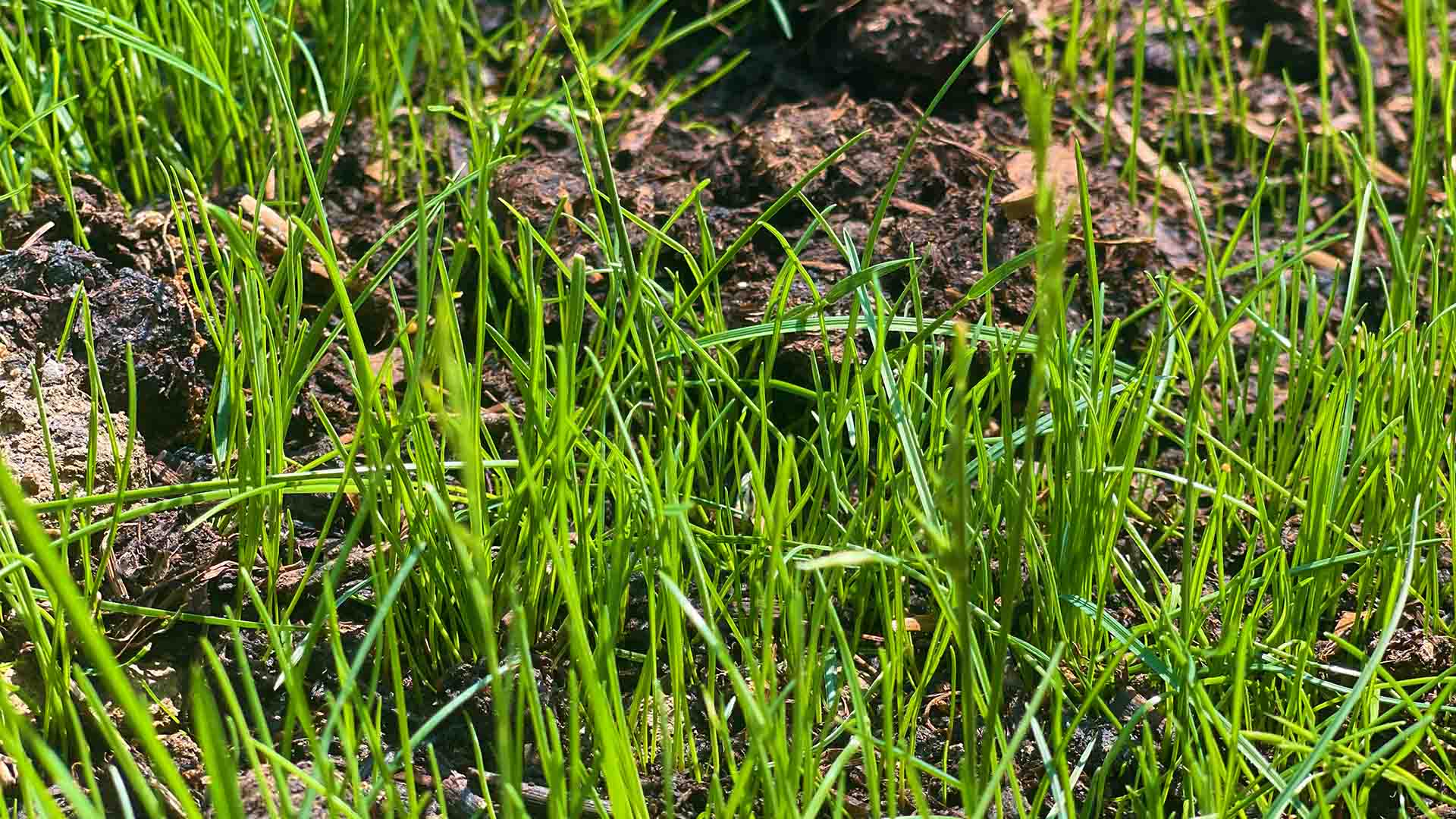
Pittsburgh clay does not let water soak in the way sandy soil does. After heavy rain, water runs across it or sits on top of it, which is why hillside erosion and soggy low spots are so common here. A slope that is losing soil usually has water moving across it too fast with no path to follow.
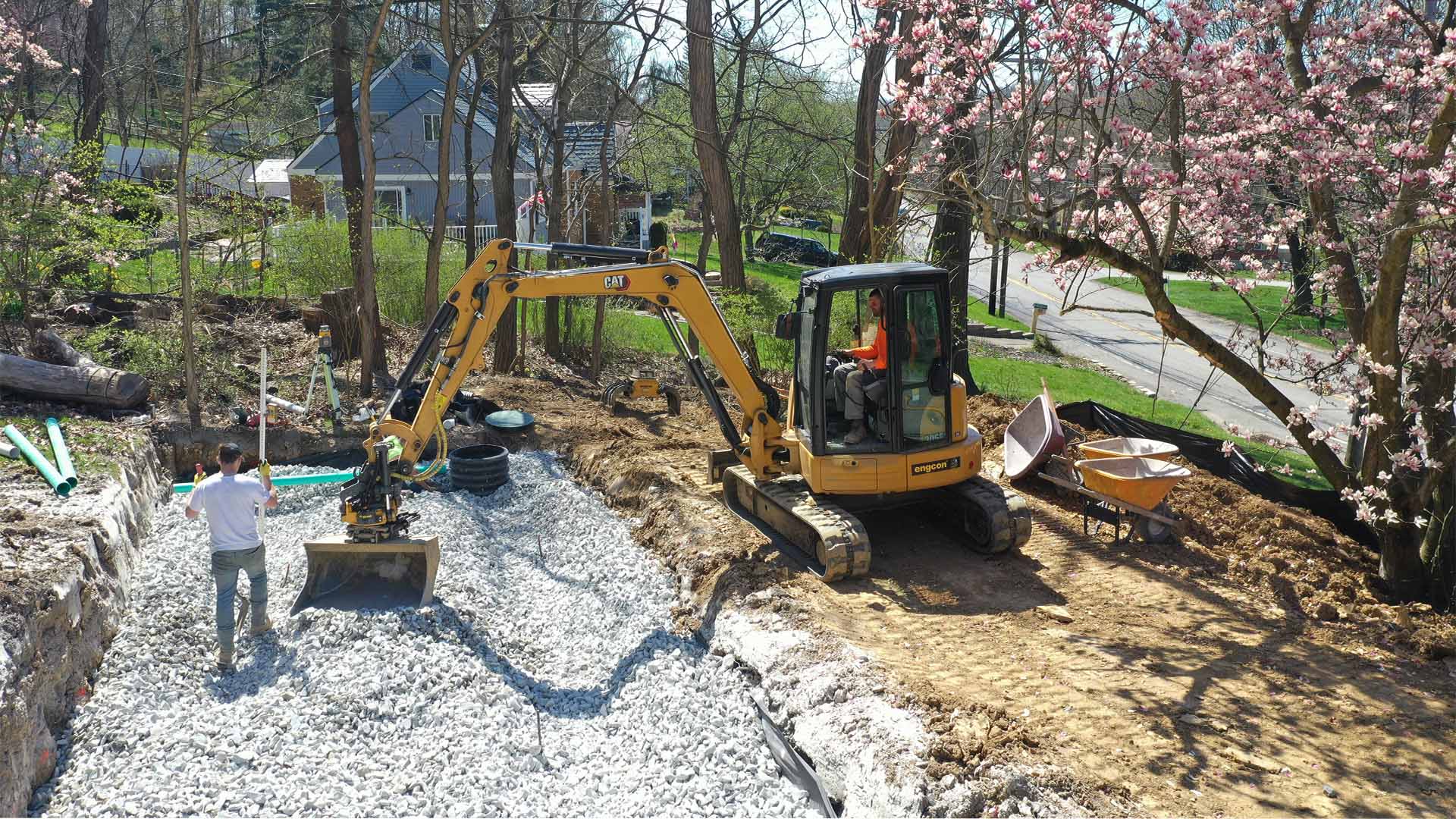
Every other fix works better once that is handled. Grading, a channel for surface water, or a French drain comes before any wall or planting. Our excavation and drainage page covers how we do that, and we are NDS certified for the drainage side.
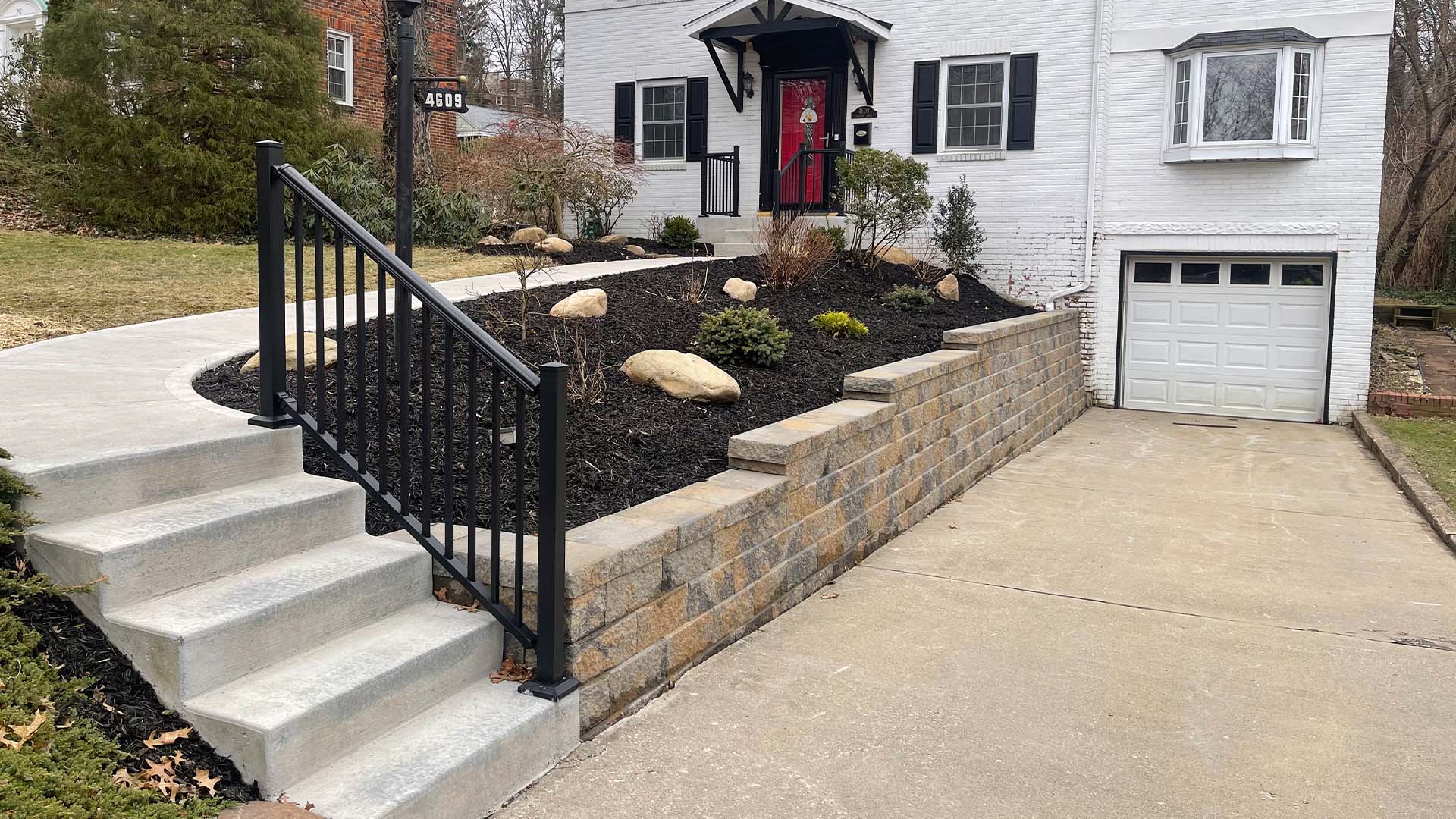
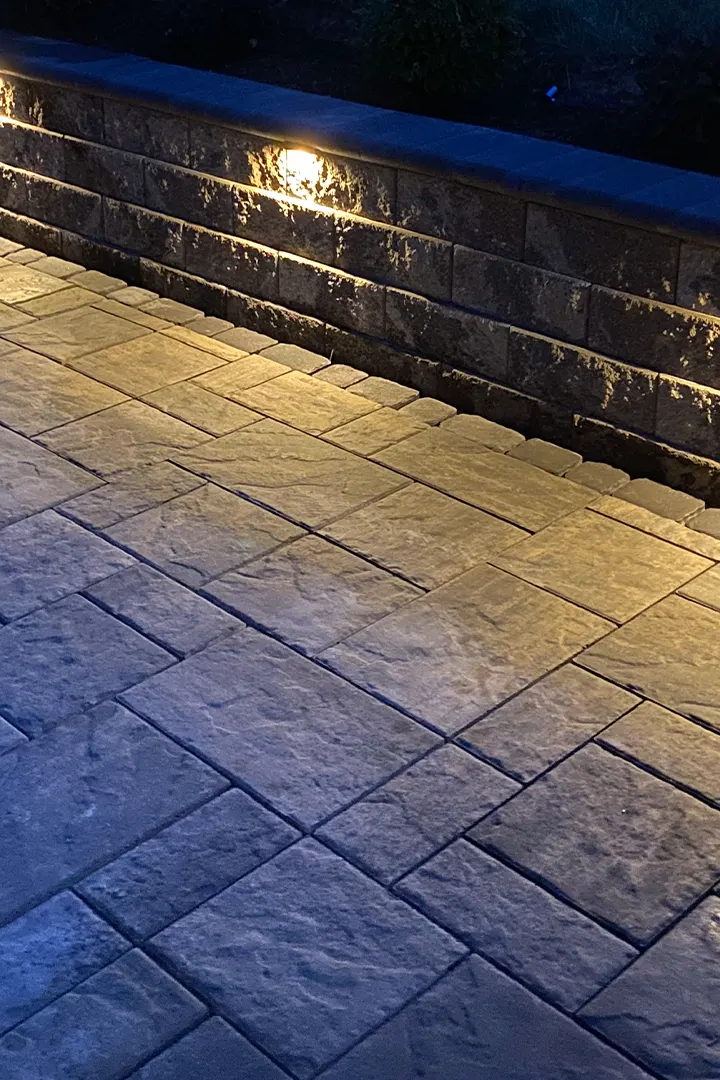
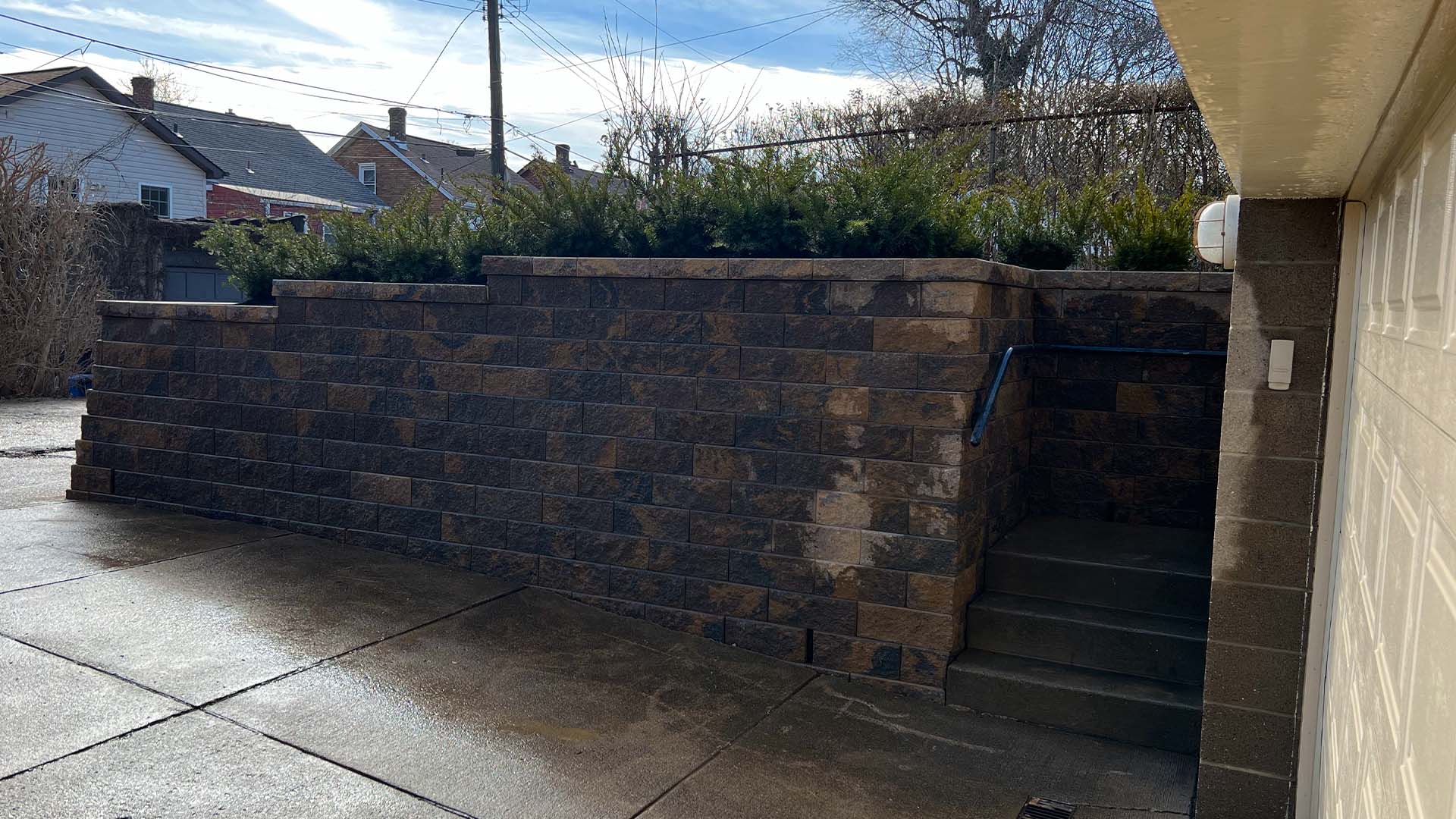
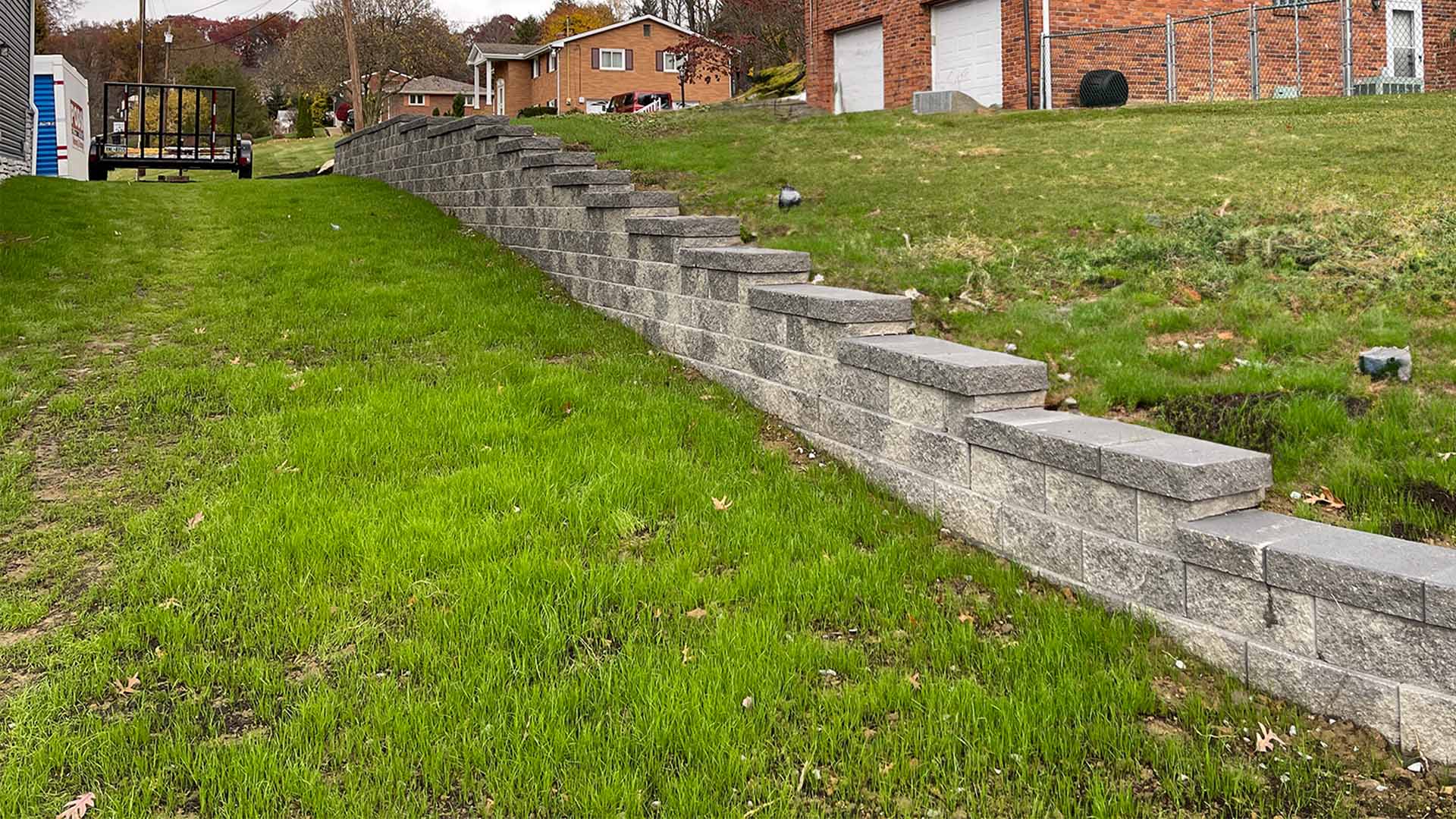
When you want a usable terrace, a patio, or a flat run of lawn, a retaining wall is how you get it. We build most of ours from Versa-Lok interlocking block on a compacted stone base, with a drain along the bottom and clean 2B limestone behind the wall. Where the height calls for it, geogrid is laid between courses and stretched back into the hill, so the soil behind the wall helps hold it in place. Compaction of the base is the most important part of the job.
The wall also needs a way for water to leave. Water trapped behind a wall builds pressure, and that pressure is what makes walls bulge, lean, and crack. Gravel backfill, perforated pipe at the base, weep holes, and filter fabric give it a path out. We explain the whole system in How to Fix Retaining Wall Drainage Problems. If you want a number for a block wall, the retaining wall price calculator prices walls up to 200 square feet.
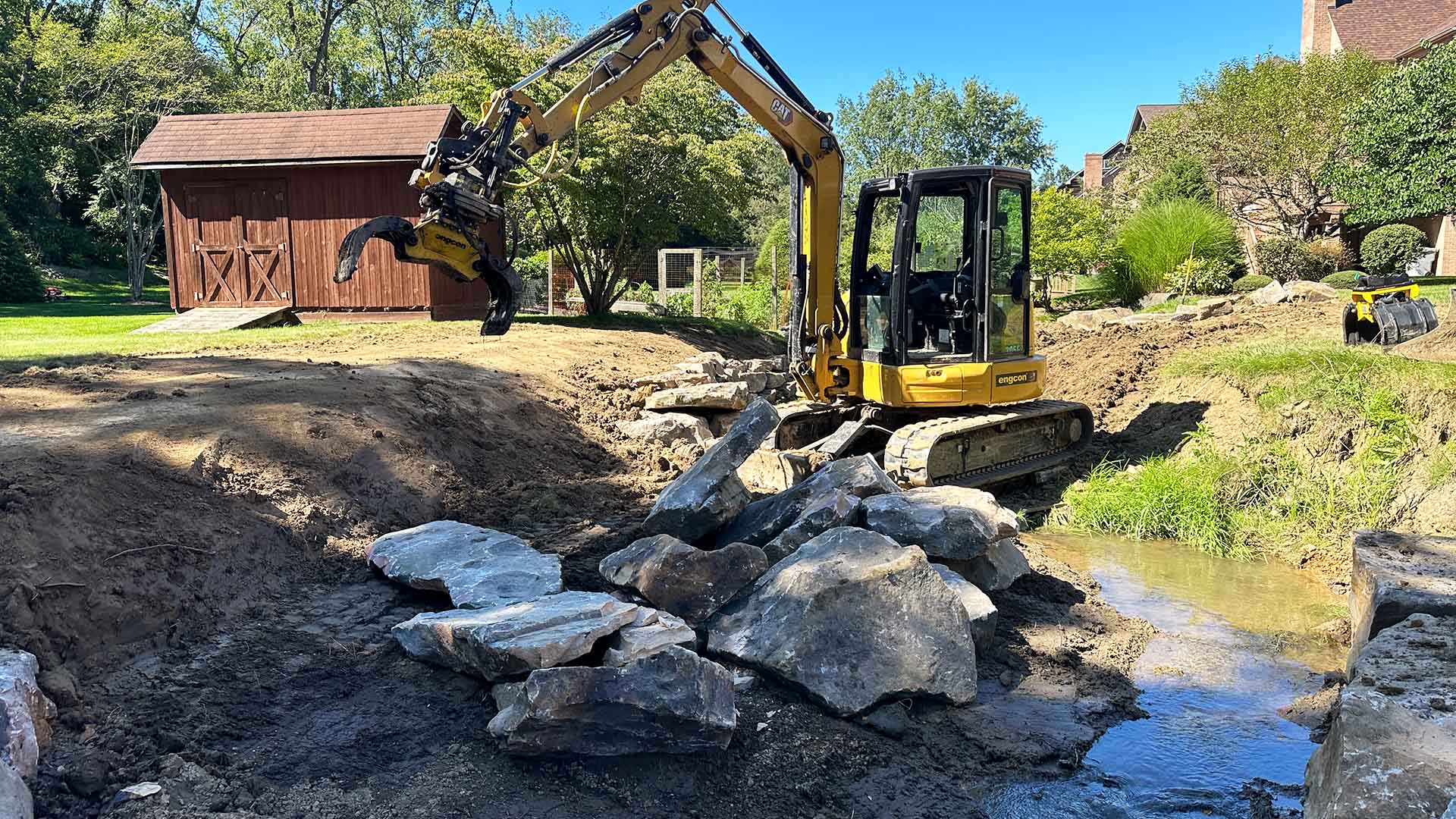
Boulders break up a slope, slow the water, and give erosion control along hillsides, stream banks, and drainage outlets. We place them with excavators and skid steers fitted with grapple attachments, and we bury about a third of each stone so it sits naturally and stays put. That equipment gets stone into tight backyards that many companies skip.
A boulder wall is the natural-stone alternative to block, and it tends to suit steep, informal grades. It needs drainage behind it like any other wall. You can see the range of work on our boulders page.
Not every slope needs a wall. A gentler grade often does fine with a rock garden or a planted bed. For steep hillside stone we recommend a larger jagged stone like #3 limestone or a large jagged red stone, laid over heavyweight landscape fabric. One customer wrote that we stoned in their hillsides and called Q&A a 10 out of 10.
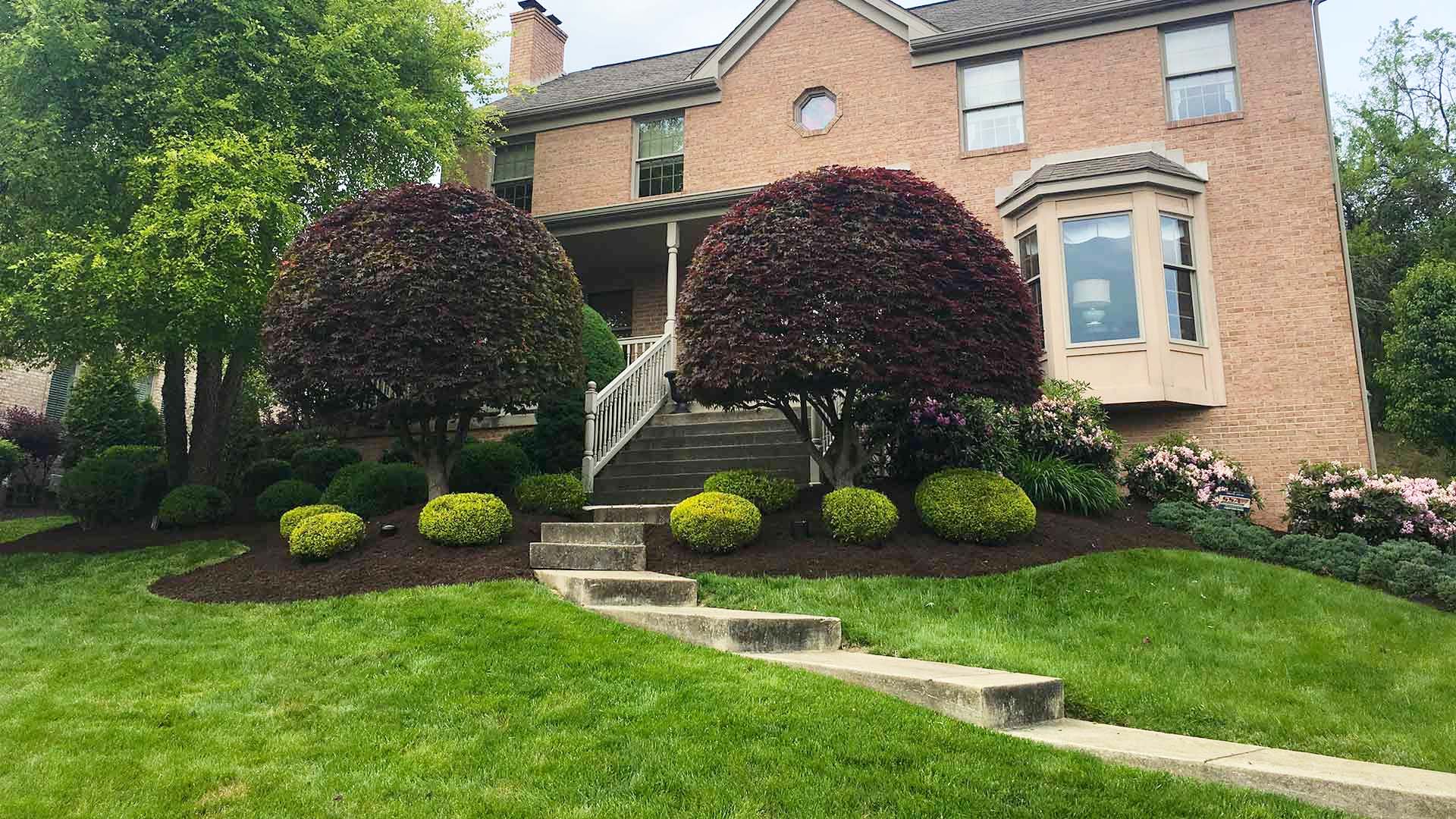
Where you want greenery without much work, mulch and low-maintenance plants such as hosta or goldthread cypress make a clean look, and a dark mulch makes the green stand out. The mulch blower lets us reach hillsides without driving across your lawn.
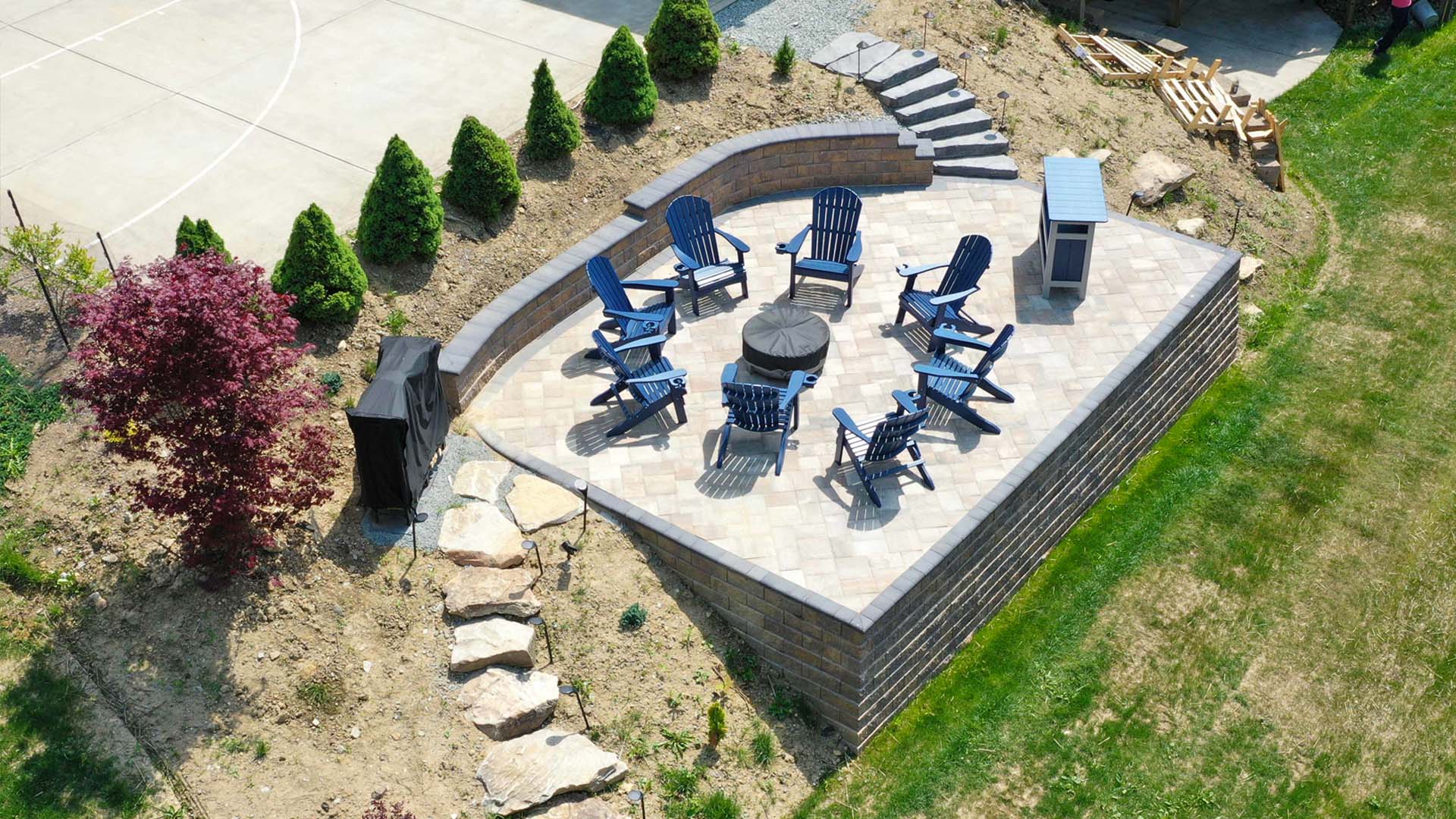
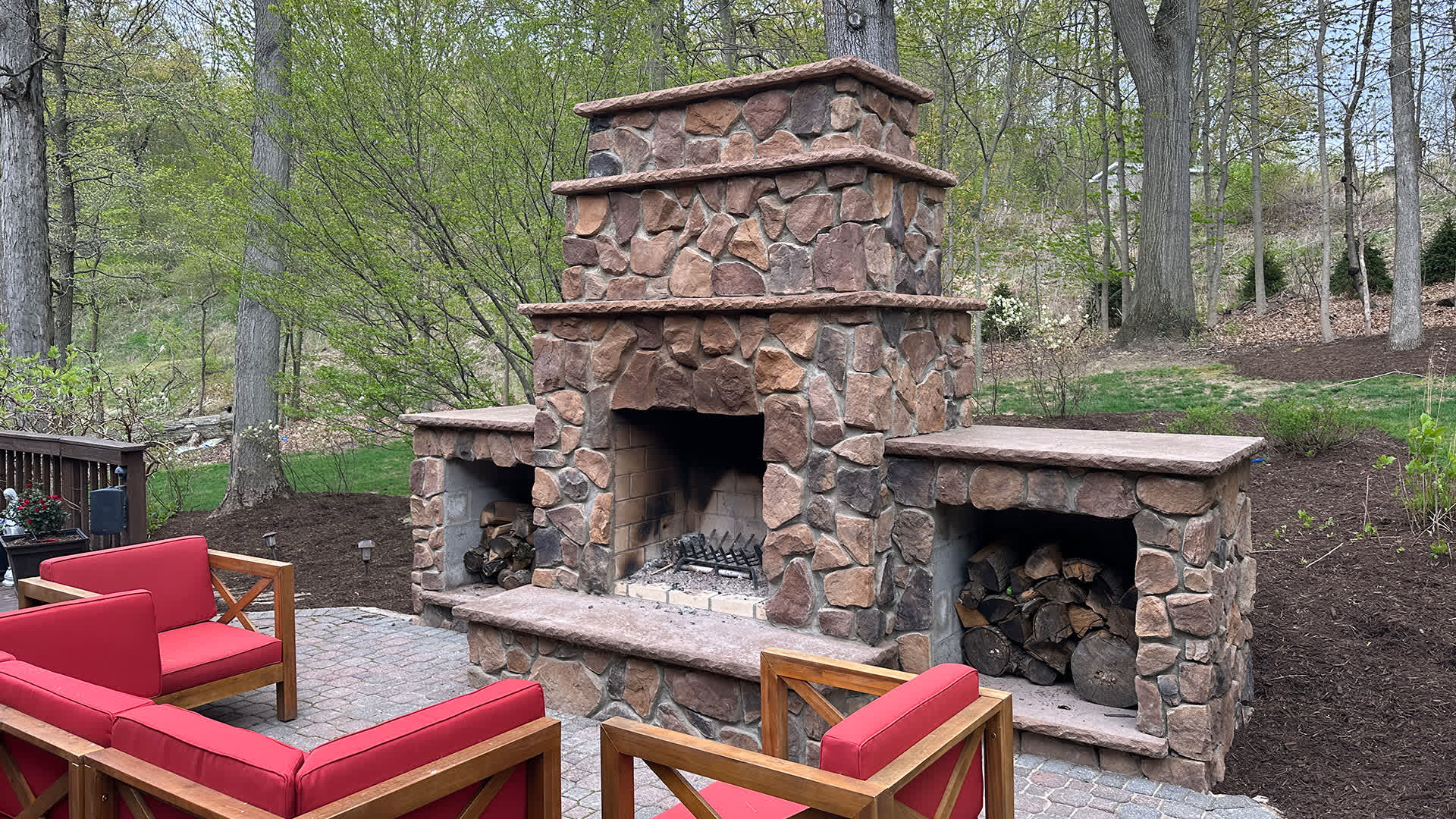
A hillside can be an asset. We have built raised patios that overlook the yard, stair paths with terraced walls, and planter boxes cut to fit the grade. Our hillside landscaping ideas page walks through six of them. A raised patio on a slope usually brings a retaining wall with it, so the two get planned together.
A slope that needs walking up and down can carry its own stairs. One of our projects used steps with a terraced retaining wall to double as a path to the backyard. To keep a stair garden low maintenance, use rock in place of plants.
We walk the property before anything else. The grade, the soil, the roof and downspout water, and where the water leaves the yard decide what the right mix is. Many hillside yards end up with a block wall where they need flat ground, boulders on the steeper stretch, and a drain tying it together. Our walls come with a 5-year craftsmanship warranty, and we clean up and replant grass when the work is done. If your property is in the Peters Township area or another South Hills town, send photos through our contact page and we will tell you what we see.
Start by controlling the water. Grading and drainage come first, then stone or boulders to slow the flow. Strategically placed boulders slow water and prevent erosion on slopes, along stream banks, and at drainage discharge points.
Only if you want flat, usable ground or the soil is actively moving. Gentler slopes often do well with a rock garden or a planted bed. We walk the property and tell you what it needs.
Yes. Any wall that holds back soil needs a way for water to escape. Gravel backfill, a perforated pipe at the base, and filter fabric are the standard approach.